Run Through The Jungle: Colombia’s JUNGLA Commandos

By N.R. Jenzen-Jones

In writing this article I consulted senior DEA Special Agents who have worked extensively with the Jungla commandos in Colombia. Their identities have been withheld by request.

This post originally appeared at Small Wars Journal, here

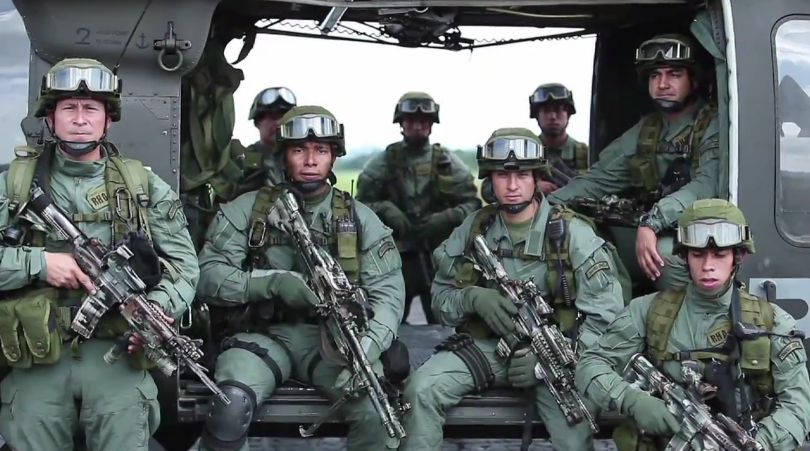
The Jungla Commandos, or Compañía Jungla Antinarcóticos (Counter-narcotics Jungle Company; JUNGLA), as they are properly known, are Colombia’s premier national counter-narcotics (CN) interdiction unit. Falling under the Dirección de Antinarcóticos (Directorate of Counter-narcotics; DIRAN) of the Policía Nacional de Colombia (National Police of Colombia; PNC), the Junglas were formed from 120 men in 1989, with the support of both the US and UK. The first course, in 1989, was conducted with training from the British Special Air Service (SAS), although the US Army’s 7th Special Forces Group (7th SFG(A)) provided some behind-the-scenes support and translators. The SAS continued to take the lead until 1991, when US Special Forces took over primary responsibility. In 1998, training responsibility was handed off to the JUNGLA cadre, with ongoing US support.

In recent years, training has been supported primarily by the US Drug Enforcement Agency (DEA) and US Army Special Forces. DEA agents embed with the Junglas during High-Value Target (HVT) capture and interdiction missions, as well as providing specialised tactical and firearms training, and the US Army provides specialised land warfare training. Funding comes primarily from the US State Department’s Bureau for International Narcotics and Law Enforcement Affairs (INL) and the Narcotic Affairs Section (NAS) at the US Embassy in Bogotá. The US Department of Defense, Central Intelligence Agency (CIA), Immigrations and Customs Enforcement (ICE), and other US government entities have also been involved in training and providing support for the Junglas. According to sources I spoke with, the Junglas have very little crossover with the Colombian military; however they have conducted some joint operations with the Fuerza Aérea Colombiana (Colombian Air Force; FAC). It is also believed that British MI6 agents (and possibly SAS and SBS personnel) continue to support interdiction efforts in Colombia.
Continue reading

Small steps for Australia-Indonesia relations

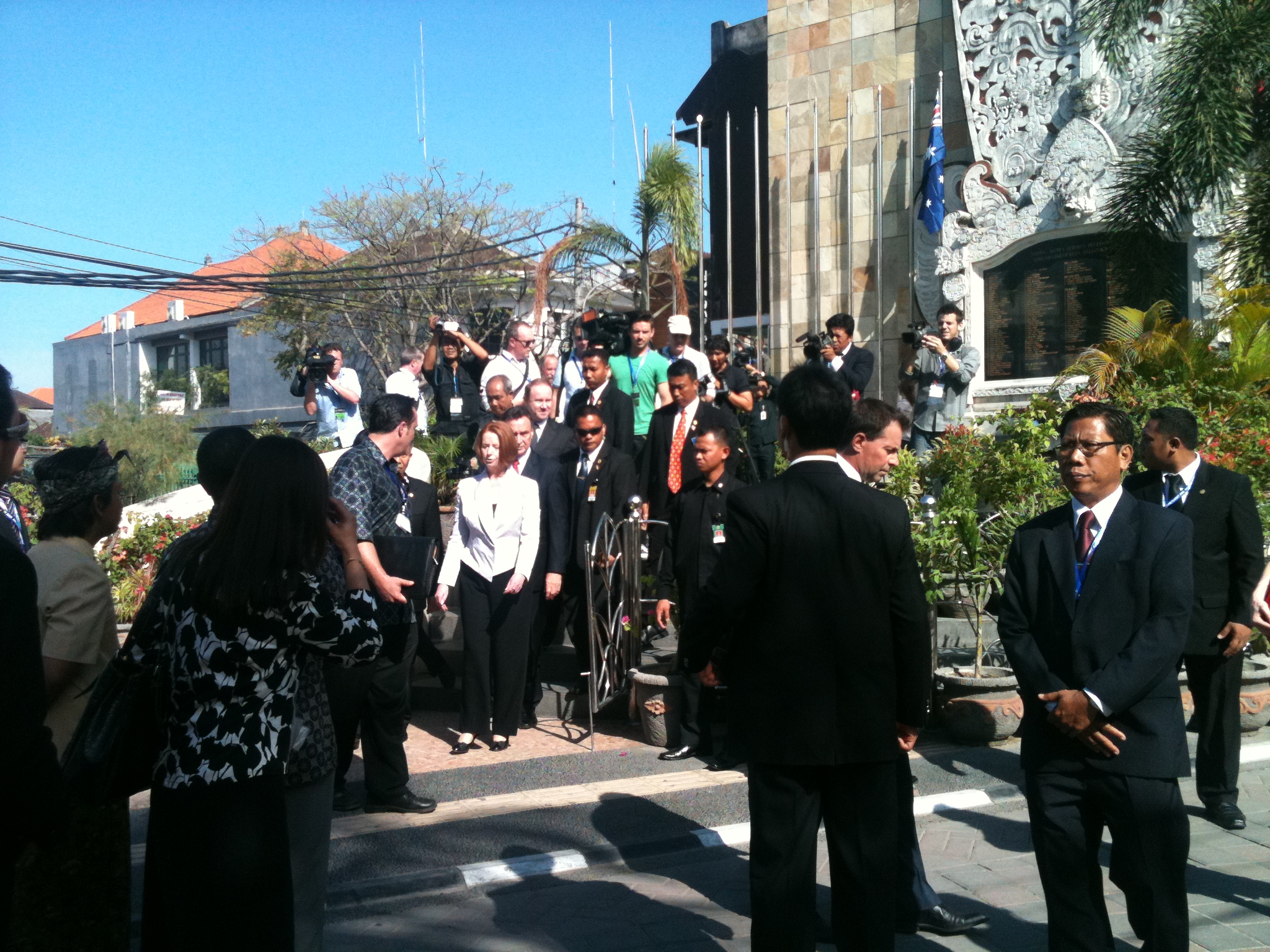
Security was tight. With the dozens of beret-clad and armed POLRI, squads of the special reaction unit (Gegana) dressed in black, military police, army, and rooftop snipers, journalists and onlookers were more concerned about getting on their wrong side that morning than of any terrorist attack.

However, once the Australian Prime Minister arrived to pay her respects to the victims of the 2002 Bali Bombing, all eyes were on her. In Bali for the ASEAN and related summits, the PM’s visit to Ground Zero was a small yet symbolically important part of her tightly-packed schedule.

Australia-Indonesia diplomatic relations have had a number troughs over the past twelve months. A few days ago, Indonesia’s foreign minister and military chief voiced their respective concerns about the newly-announced initiative to place US Marines in Darwin from 2012 (with the FM noting he’d only been told informally a few days prior to the announcement). Add to that a Prime Minister who has publicly stated that foreign affairs is not her forte, failed to coordinate with her Foreign Minister on policy changes, and announced asylum seeker initiatives without alerting the countries in question.

Continue reading

A sniper’s view of Bali Ground Zero

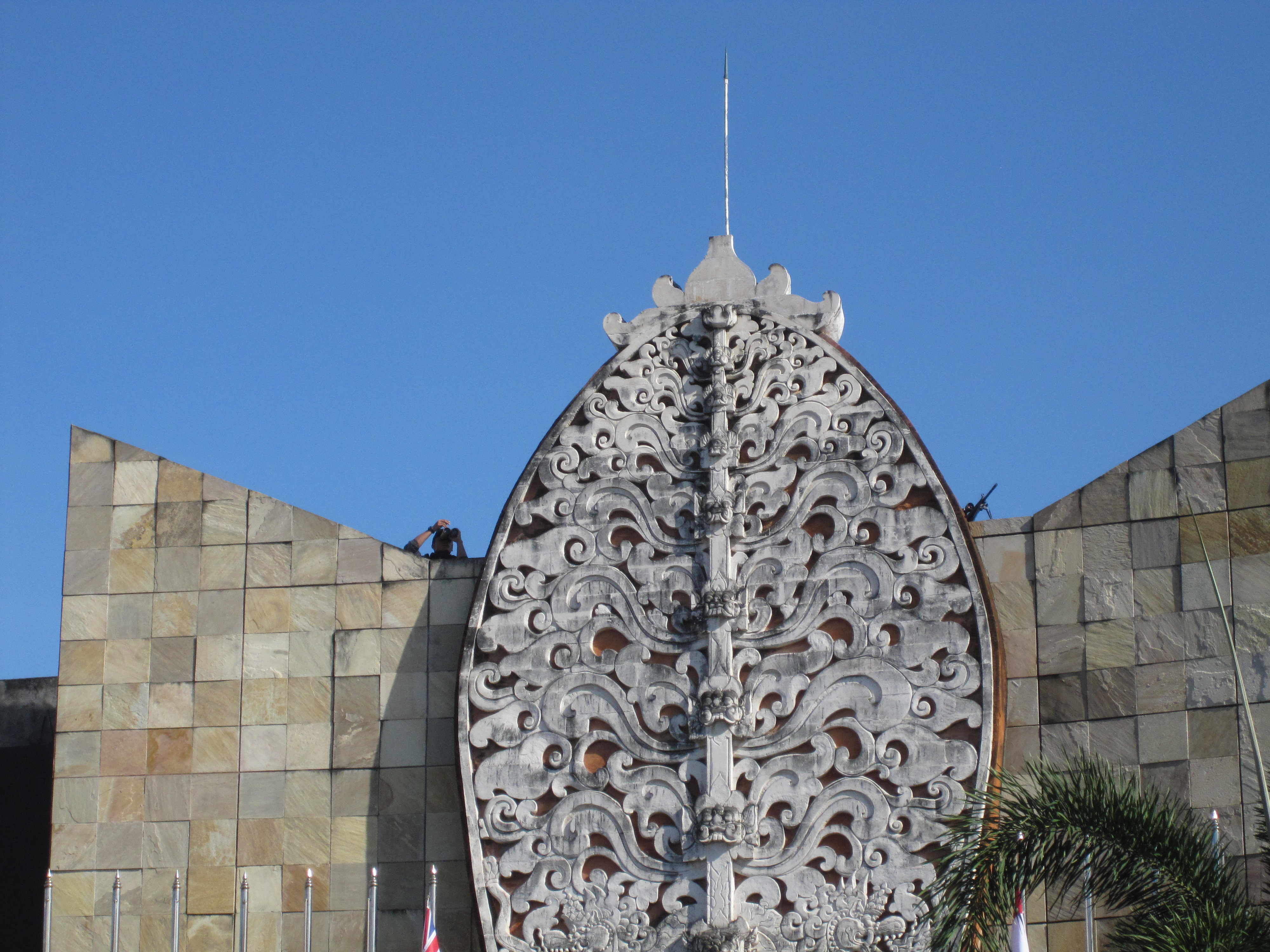
From the top of the Bali 2002 Bomb Memorial, two snipers (above) kept watch while Prime Minister Julia Gillard and other officials paid their respects yesterday morning.

Dressed in black, complete with facemasks, the snipers were most likely from Detachment C (anti-terror) of Gegana, a branch of Indonesia’s special operations police force (BRIMOB) and ostensibly tasked with police special operations duties.

Continue reading

Update: KRISS SYSTEMS (K10, KARD, Sphinx SDP Compact)

By N.R. Jenzen-Jones

Some of the information in this update was provided by a KRISS SYSTEMS spokesperson, in response to my queries.

The KRISS K10, discussed briefly in my earlier piece here, represents the evolution of the KRISS Vector SMG. The K10 will be designed as a multi-calibre platform, supporting .45 ACP, 9x19mm NATO and .40 S&W. These three calibres are the most popular handgun cartridges in Western military and law enforcement use. The lower receivers will be interchangeable, allowing operators to easily switch between calibres, should they desire. The new submachine gun will also feature a quad-Picatinny rail fore end, giving the firearm a lot more flexibility for mounting aftermarket accessories.

The K10 will, of course, be based around the KRISS Super V System (KSVS), making use of in-line design and asymmetrical recoil (the ‘vectored bolt’ technology) to greatly reduce felt recoil and muzzle climb. The K10 also features a much larger charging handle (that can be reconfigured to suit left or right handed shooters), a telescoping, five-position stock (unlike the Vector’s folding stock), an ambidextrous magazine release on the fore grip, and a muzzle designed to accept KRISS DEFIANCE series suppressors. A proprietary magazine is also being developed, and this will reportedly be interoperable with another KRISS weapon under development, the KARD. Limited information on the KARD can be found here, and here. I have been informed that the KARD is an ongoing project, and that no date has been set for its release as yet.

Continue reading

Update II: AK-103 Exports to Libya

By N.R. Jenzen-Jones

AK 103-2 in Libya

I stumbled across the sole post on this almost vacant WordPress site this morning. It features photos which show close-up detail of an AK-103, apparently from Libya. These are the first photographs I have seen that show sufficient detail of the receiver to conclusively establish the provenance of the weapons in question. These images, along with the evidence shown in the last update, lend more weight to one of my original speculations that these weapons were exported to Libya from Russia.

The receiver bears the designation ‘AK 103-2’, indicating that the weapon features a three-round burst function. More tellingly, to the left of the serial number, on the trunnion, can be seen the factory marking of the Izhevsk Machine-Building Plant, or IZHMASH (ИЖМАШ), an upright arrow inside a triangle. The serial number, beginning with the two digits ’07’, indicates that the rifle was manufactured in 2007.

Continue reading

Update: Australian MultiCam Pattern (AMP)

By N.R. Jenzen-Jones

Over the last few weeks I have been in correspondence with various officials from Defence, discussing the specifics and the impact of the upcoming Australian MultiCam Pattern (AMP). This new pattern is being developed by Crype Precision for the ADF – you can read more about this in an earlier Security Scholar article, here.

The following is a series of official responses from an ADF spokesperson to some of my questions:

Will the new AMP pattern follow the British MTP example and feature Crye’s MultiCam palette with a modified design, or are the colours being adjusted in any way?

Response: The prototype pattern has retained the Crye Multicam palette as it is these colours that have proven to be effective in Afghanistan. During the testing of the Australian Multicam Pattern Defence will confirm both the pattern and the palette meet the requirements for Afghanistan as well as examining what changes, if any, would improve its performance across the range of environments where Australian troops are operating.

Continue reading

The Bali 2002 bombing: nine years on

For the next two months, I will be travelling through and writing from Indonesia; the first stop on my itinerary was Bali.

Bali is a bustling place right now: the traffic flows, the tourists chatter, the smiles are abound, and there is general busy-ness in every direction. Even the surfer dogs are upbeat. But nine years ago, it was not always like this. Today, we commemorate the ninth anniversary of the first Bali bombing that took place in 2002; an explosion that tore through the Sari nightclub on a busy Saturday evening, claiming 202 lives and injuring 240.

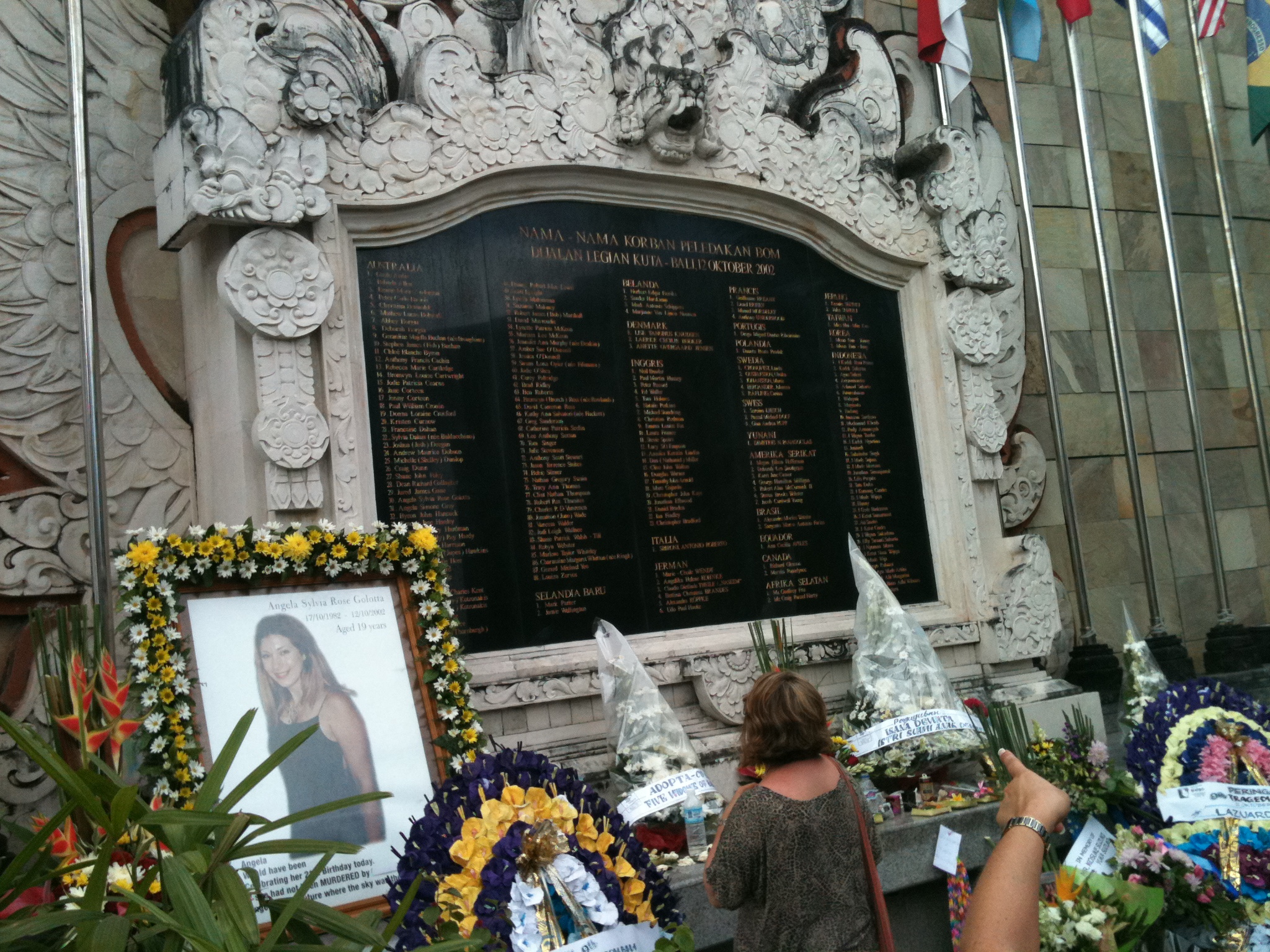
I spent most of the day around the bomb memorial—a magnificent Hindu carving in the wall where the nightclub once stood, with bouquets of flowers hugging its base. My aim was to get a ground-level snapshot of how life went on a day like today.

Continue reading

Nancy Wake isn’t enough: the challenges of ADF gender reform

Now women are to be allowed to serve on the front line becoming an infantry officer is a real possibility. But there are hurdles for the Australian military to overcome in these challenging, yet hopeful times.

Politics and policy

First, we cannot separate the politics from the policy. The Minister for Defence has declared that the policy of opening all ADF roles to women will be rolled out within five years.

I believe in gender equality in the armed services, but we should be clear about the timing of the announcement and its impact on this deadline.

Continue reading

The strategic implications of a gender equal ADF

In the wake of the decision to open all roles of the ADF to women, much attention has lingered on the physical and psychological dimensions of close quarter combat. There are legitimate concerns about this, and I will examine them in forthcoming posts, however less attention has been given to the strategic implications of opening up all roles in the ADF and the contribution of female personnel.

Continue reading

KRISS Vector SMG for the Australian Federal Police?

By N.R. Jenzen-Jones

In writing this post I consulted a senior representative from KRISS USA, as well as a serving member of the AFP who is familiar with current TRT practices. Their identities have been withheld at their request. I also requested an official comment from the AFP, but only received the following from a spokesperson: “For operational reasons, it would not be appropriate for the AFP to provide this type of information about its accoutrements and their use”.


By now, most people interested in small arms have at least heard of the KRISS Vector; in fact, the KRISS Vector SMG caused quite a stir when it was showcased in early 2007. It is a selective fire submachine gun featuring single, two-round burst and fully automatic modes, and chambered (currently) for .45 ACP. It has a cyclic rate of 850-1100 rounds per minute, and fires from a closed bolt using a mechanically-delayed blowback system. Built around the KRISS Super V System (KSVS), the Vector utilises in-line design and asymmetrical recoil (the ‘vectored bolt’ technology) to greatly reduce felt recoil and muzzle climb. KRISS themselves claim that the KSVS can reduce felt recoil by up to 60%, and barrel elevation by 95%; the claimed muzzle rise is about 1.8 degrees.

I attended SHOT Show 2011 in January, and had the opportunity to examine and fire the Vector SMG for myself. Whilst there are many others who have spoken on the relative merits of the weapon, I was very impressed. The Vector SMG was comfortable, well balanced, and controllable during fully-automatic fire. What really impressed me, however, was the accuracy of the weapon when firing two-round bursts. The KRISS website shows the rather impressive outcome of one such burst here.  In certain scenarios, the practical applications of being able to put two .45 ACP rounds on target with lightning speed and precision are very significant indeed.

Continue reading