Why has Security Scholar been so quiet lately?

You may well ask. Well, fear not, Nat and I are both very much alive.

As a few of you probably know by now, I’m in the process of undertaking a pretty big research project. I’m attempting to compile a ‘complete-as-possible’ database of small arms used in the recent Libyan conflict. To do this, I’ve been collecting OSINT photos and video stills from a number of media outlets, social networking sites, and so on. I’m also working with some NGOs and PSCs on the ground in Libya, as well as having developed a few local sources of my own.

I have a post up at my personal, more informal blog, The Rogue Adventurer.

I would love any input from readers, particularly detailed photos of weapon receivers (serial numbers, factory marks etc.) or weapon crates, or just photos of unusual small arms that have cropped up. I’m also keeping an eye out for different types of optics that have turned up, for a smaller side project.


Nat’s been pretty active as well. As many of you know she is travelling throughout Indonesia, conducting research on a few different topics and also brushing up her Indonesian language skills. You can follow her most recent adventures on her new blog, Notes From The Field.

Her last few posts have explored the fascinating Balinese ceremonial traditions, showcasing everything from blessings given to firearms to cremations!

As you can see, both of us are still working away. Nat continues to bring us fascinating updates from the field, and I’m up to my eyeballs in picture of unusual firearms that have cropped up in Libya. Business at Security Scholar is just as it has always been – unpredictable, unusual, and fascinating.

In the meantime, don’t forget you can keep track of us on Facebook as well! 

Small steps for Australia-Indonesia relations

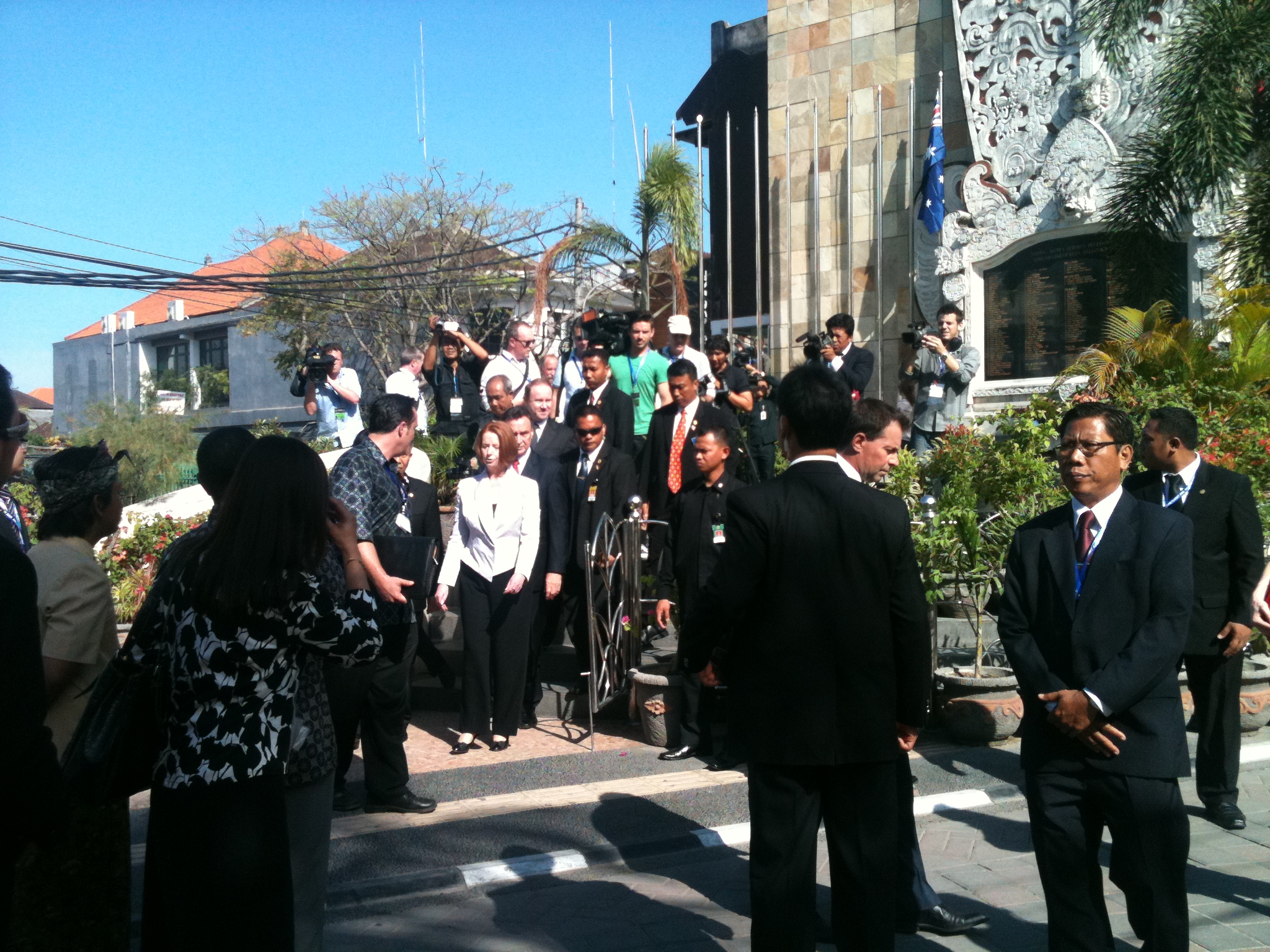
Security was tight. With the dozens of beret-clad and armed POLRI, squads of the special reaction unit (Gegana) dressed in black, military police, army, and rooftop snipers, journalists and onlookers were more concerned about getting on their wrong side that morning than of any terrorist attack.

However, once the Australian Prime Minister arrived to pay her respects to the victims of the 2002 Bali Bombing, all eyes were on her. In Bali for the ASEAN and related summits, the PM’s visit to Ground Zero was a small yet symbolically important part of her tightly-packed schedule.

Australia-Indonesia diplomatic relations have had a number troughs over the past twelve months. A few days ago, Indonesia’s foreign minister and military chief voiced their respective concerns about the newly-announced initiative to place US Marines in Darwin from 2012 (with the FM noting he’d only been told informally a few days prior to the announcement). Add to that a Prime Minister who has publicly stated that foreign affairs is not her forte, failed to coordinate with her Foreign Minister on policy changes, and announced asylum seeker initiatives without alerting the countries in question.

Continue reading

A sniper’s view of Bali Ground Zero

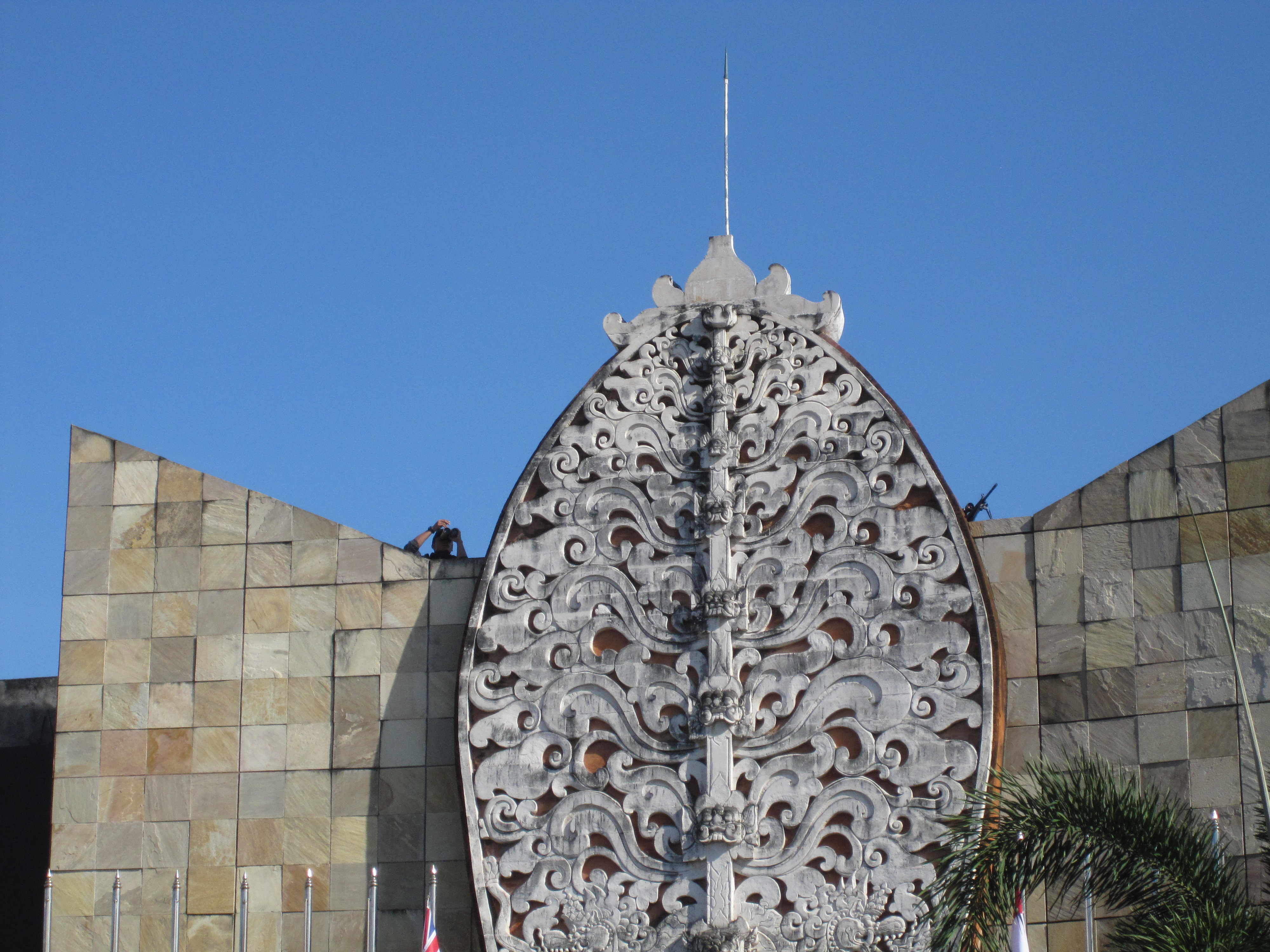
From the top of the Bali 2002 Bomb Memorial, two snipers (above) kept watch while Prime Minister Julia Gillard and other officials paid their respects yesterday morning.

Dressed in black, complete with facemasks, the snipers were most likely from Detachment C (anti-terror) of Gegana, a branch of Indonesia’s special operations police force (BRIMOB) and ostensibly tasked with police special operations duties.

Continue reading

The Bali 2002 bombing: nine years on

For the next two months, I will be travelling through and writing from Indonesia; the first stop on my itinerary was Bali.

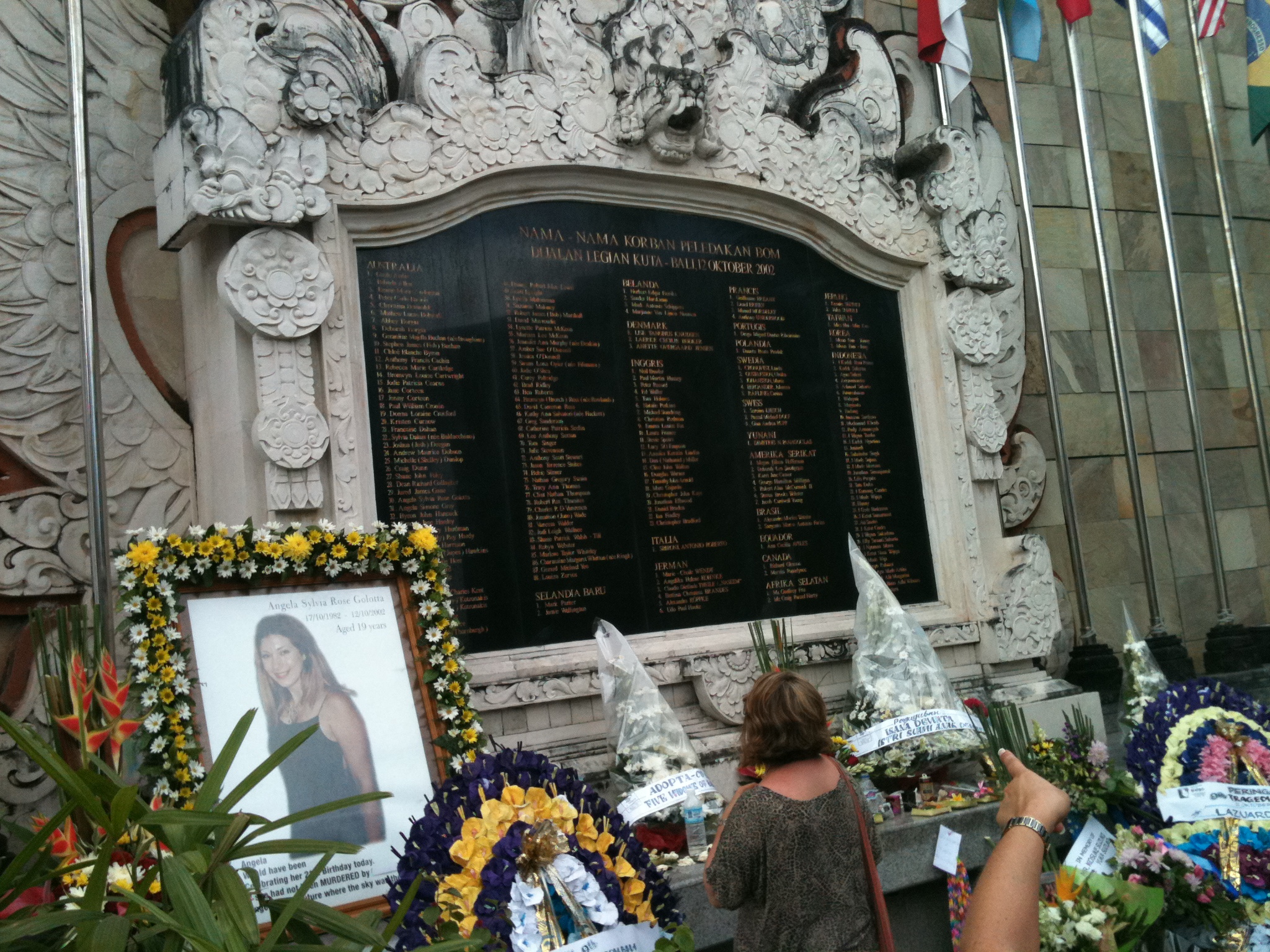
Bali is a bustling place right now: the traffic flows, the tourists chatter, the smiles are abound, and there is general busy-ness in every direction. Even the surfer dogs are upbeat. But nine years ago, it was not always like this. Today, we commemorate the ninth anniversary of the first Bali bombing that took place in 2002; an explosion that tore through the Sari nightclub on a busy Saturday evening, claiming 202 lives and injuring 240.

I spent most of the day around the bomb memorial—a magnificent Hindu carving in the wall where the nightclub once stood, with bouquets of flowers hugging its base. My aim was to get a ground-level snapshot of how life went on a day like today.

Continue reading

What Wibowo means for Australia

Natalie Sambhi is an ANU Hedley Bull Scholar graduate and co-editor of Security Scholar.

Greta Nabbs-Keller, in her 7 July post  on the promotion of Lieutenant General Pramono Edhie Wibowo to Army Chief of Staff, is right to highlight the tenacity of Indonesia’s martial roots in its present-day democratic setting. However, this and other recent posts on Indonesia’s military (TNI) miss the implications of such developments for Australia. In the case of Wibowo, there are three questions for Australia.

First, what does Wibowo’s immediate promotion mean? Greta does not mention that Wibowo is the former head of the Indonesian Army Special Forces (Kopassus). The good relationship enjoyed between Australian special forces units (particularly the Special Air Service Regiment) and Kopassus is indicative of strong ADF-TNI cooperation. Security cooperation has, after all, been a significant and enduring part of Australian engagement with Indonesia, and these links have served us well, particularly in times of diplomatic strain.

Second, to what extent will Wibowo’s promotion affect military ties with other partners? Indonesia has stepped up its cooperation with Chinese and US special forces. Exercise Sharp Knife, a joint anti-terrorism exercise held between Kopassus and Chinese special forces in early June, marked a step towards thawing military relations between the two countries. The US lifted its ban on engaging with Kopassus in June of last year. Since then, the relationship — seen by some as the ‘barometer’ of overall US-Indonesia relations — has been steady.

Third, if Wibowo rises to greater political heights, how will Australia reconcile this with his track record on human rights and the perceived nepotism behind his appointment? As I have argued here previously, reconciling our democratic values with regional strategic imperatives is not impossible, but no cakewalk.

If generals are, as Greta suggests, what Indonesian political parties want, then Australian leaders, both civil and military, should fully appraise the role that figures like Wibowo will play and should use the relationships we have built with them.

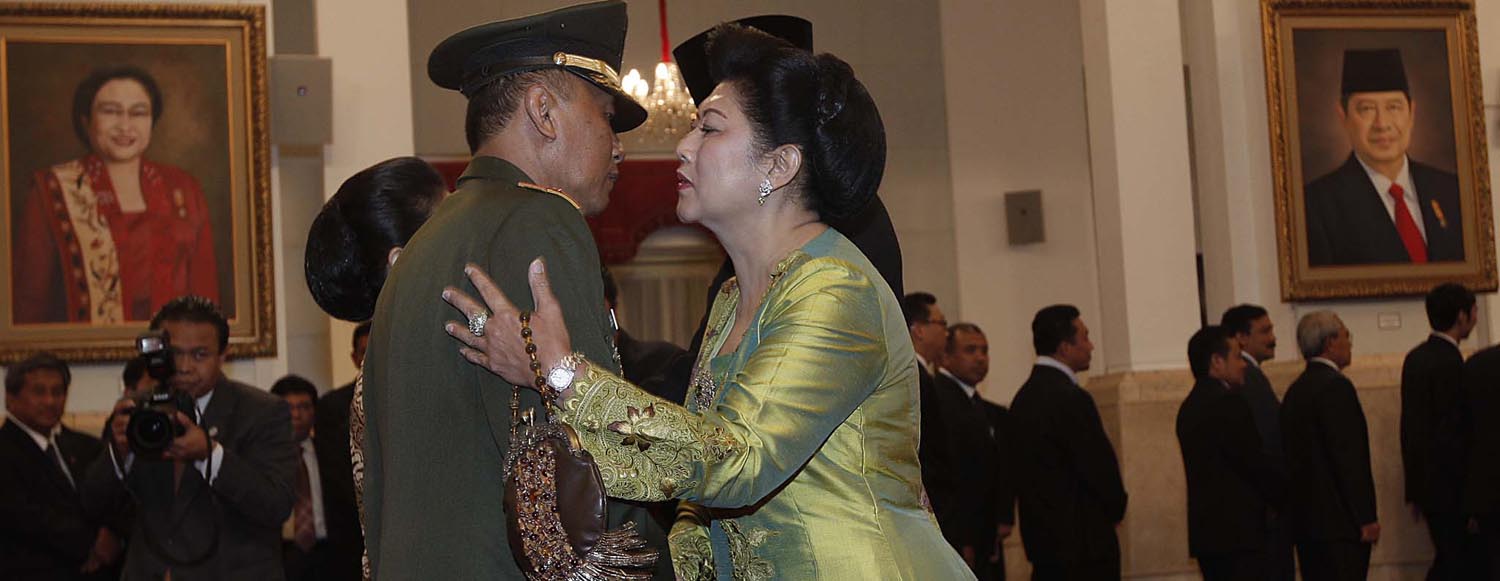
Photo courtesy of official website for the President of the Republic of Indonesia: First Lady, Ibu Ani Yudhoyono congratulations her brother, LTGEN Wibowo, at his promotion ceremony.

A version of this post first appeared on the Lowy Institute’s blog, The Interpreter.

Australia-India-Indonesia ties: strategic choices and national identity

Two recent news stories—one on Foreign Minister Kevin Rudd’s pledge to strengthen ties with Indian Ocean Rim states, and the other on Australian business lobby’s plea for greater emphasis on Asian language training—got me thinking again on why Australia’s engagement with India and Indonesia warrants attention. There are pragmatic and philosophical gains from this engagement. Three points:

First, of the Indian Ocean Rim states, India and Indonesia will have an increasingly more prominent role in Asia-Pacific region. India is the world’s largest arms importer, a fact that will shape the balance of military power and stability in the region. The world’s ninth most popular investment destination, Indonesia will have the ability to transfer its economic growth into military capability. While the US remains Australia’s security guarantor and China the largest trading partner, in light of the shifting geo-strategic balance between the US and China in Asia, stronger relations with India and Indonesia may be a prudent hedging strategy. Moreover, as one scholar notes, India-Indonesia relations hold great potential; it would be opportune for Australia to investigate potential trilateralism while strengthening bilateral ties with each country.

Second, Australia’s success in capitalising on the potential stronger bilateral (even trilateral) ties will lend credence to its ‘activist foreign policy’ and its status as a middle power. Andrew McIntyre argues that Rudd’s foreign ministership is a good opportunity for Australia to maintain momentum in an active foreign policy outlook, especially where Asia is concerned given Rudd’s expertise. Taking the lead on shaping maritime security issues of concern to Australia, India and Indonesia such as piracy, narcotics, border protection, and people smuggling would be exemplary behaviour of an active and effective middle power.

Third, the emergence of India and Indonesia, and most notably the permanent geo-political significance of the latter to Australia, should provide imperative to reinvigorate Asian language training in schools. Asian languages received a considerable boost in the 1980s and 1990s based on the ascendency of the Asian Tiger economies, but now enrolment in Asian languages is on the decline. While security risks to students in Indonesia (amongst other factors) have imperilled Indonesian language training in Australia, if Australia is serious about engaging with Indonesia, government intervention via scholarships and the like is warranted. Interestingly, Indonesian is not in the first wave languages to be taught under the national curriculum. With regards to India, while English is an official language (the other being Hindi), interest in Indian languages and culture would assist somewhat in building cultural bridges in light of attacks on Indian students in Australia in 2009 and 2010.

In closing, I will lay my cards on the table. I have an interest in Australian-Indian-Indonesian relations, but this is not because I have an Indian father and an Indonesian mother, and I am Australian. Although these facts have, no doubt, shaped my view of Australia’s place in the world, I am interested in the direction this nation is heading. Questions about Australia’s choices about its place in the Asia Pacific are not just about strategic pragmatism but, as Graeme Dobell and Hugh White note, go to more philosophical questions about who we are as a nation. In my mind, there is a nexus between our strategic alignment, our self-conceptualisation as a nation, and the development of our national language curriculum. Does our national identity allow us to align more strategically to the Asia Pacific? Does the prioritisation of Asian languages sit comfortably with our national identity? Perhaps greater engagement with India and Indonesia, coupled with and bolstered by a more active domestic language policy, will help spur debate on whether our strategic alignment is based on more cultural or national roots.

Indonesia’s military: it’s business, baby!

TNI Commander Admiral Agus Suhartono

Over the past 13 years, there have been several attempts to reform the deeply entrenched practice of the Indonesian military (TNI) to self-finance. However, as discussed below, without reforms that dismantle core cultural and structural traits of TNI, change in both legal and illegal business practices will be slow and incremental. During Suharto’s presidency, such behaviour was pursued not only out of budgetary necessity, but became culturally entrenched in a military that was autonomous in outlook and considered itself omnipotent in Indonesia’s socio-political realms.

To a large extent, cultural traits of TNI have been the source of resistance to attempts in the post-Suharto era to reform business practices, and have led to the consequential impotence of such reforms hitherto. There are several factors to this outcome. First, successive presidents after Suharto failed to implement reforms and enforce laws that would have weaned TNI from self-financing, particularly in illegal and corrupt practices.[1] Second, although TNI ostensibly withdrew from the political sphere by virtue of Paradigma Baru (New Paradigm)[2], their continued influence was demonstrated under Presidents Abdurrahman Wahid and Megawati Sukarnoputri; they played a decisive role in Wahid’s undoing and were left to self manage under Megawati.[3] Third, while some debate on the matter was entertained under Wahid[4], no steps were taken to seriously dismantle TNI’s territorial command system and hence pervasive archipelagic presence. When considered in totality, these factors have led TNI to believe that, in the post-Suharto period, it still wields considerable influence and is autonomous, despite its withdrawal from a prominent public role. This belief has not, therefore, provided an ideological fissure with the past; rather it has allowed TNI to act in such a way that is in keeping with its pre-Reformasi practices.

The ability of TNI to maintain its structural influence through self-financing have been further enabled by permissive environments at the subnational level. These permissive environments have been brought on through decentralisation processes (Laws 22/1999 and 25/1999) that, in the devolution of power to the kabupaten (district) and kota madya (local) levels and the reallocation of funds in the form of dana alokasi umum (translating to 25 percent of domestic revenues), have shifted money politics and corruption away from the centre.[5] By virtue of their territorial presence, TNI have been able to access these networks and continue business practices at this level.[6] Weak governance and accountability structures coupled with poor security have meant that illegal business activities such as logging, drug-smuggling and prostitution have been able to thrive.[7] In order to mitigate the effects of the East Asian Financial crisis on its wealth, TNI increasingly fostered informal ties with private businesses[8] that, at the local level, employ TNI to provide security.[9]

Many attempts at reform under the current President Susilo Bambang Yudhoyono founder on their inability to address the root causes of continued TNI business practices. One attempt to audit TNI businesses in preparation for transfer to civilian control lacked clear terminology and was hence ineffective in identifying the extent of TNI business assets.[10] Some observers point to individuals such as former Defense Minister Juwono Sudarsono for his perceived soft approach to pushing reform under Law 34/2004 which calls for the transfer of TNI business to civilian control.[11] Overall, these official channels have had a limited effect on addressing TNI’s whole culture of self-financing ostensibly because they target only legal practices and declared business holdings. They fail to address illegal practices for two main reasons. First, pervasive reforms on military business practices have not been framed in such a way that seeks to root out corruption and money politics at the local level. Without increased governance and oversight of local and district commands, there is little incentive for TNI to alter its behaviour. Second, and perhaps most important, is that these reforms still fail to address the deeper ideological question of why TNI’s pervasive archipelagic presence is still justified. In practical terms, one could argue that, if reduced in size, oversight of TNI could be more manageable and moreover, with a leaner military, arguably the need for extra-budgetary fundraising might be circumvented. That said, Defense Ministry and TNI officials would argue, official budgetary increases over the past few years have rectified, in part, the latter shortcoming.[12]

Returning to the ideological challenge of TNI’s territorial structure, perhaps the greatest obstacle to reform is posed ironically by Paradigma Baru. While the new military doctrine signalled a shift away from direct political meddling, it simultaneously placed greater emphasis on TNI’s role as the guarantor for national security while making clear the police were responsible for internal matters. With the police being largely ineffective (and arguably unable to demonstrate better performance with the constant presence of and rivalry with TNI), TNI has been able to put forward arguments for maintaining its territorial presence based on the fear of regions such as Papua seceding.  Effective reforms must be crafted in such a way that addresses this issue but does not inadvertently allow the police to assume TNI’s place in corrupt local practices from the power vacuum created.[13] Aside from the ideological implications of Paradigma Baru, as has been demonstrated by recent cases of torture and human rights abuses[14], there are practical implications resultant from TNI’s perceived right and duty to maintain its territorial presence when coupled with its culture of impunity.

Overall, profound changes in TNI’s business practices will need to be approached holistically, not least in the regions in which it is allowed to thrive. While developments such as the announcement[15] on 15 March 2011 of the “complete transfer” of all TNI holdings (except for assets such as state land) are to be welcomed, until there is complete transparency on such transfer processes, they are best seen as incremental steps rather than a fait accompli. As has been mentioned, illegal practices at the local level continue due to ostensibly structural and cultural factors that, at the outset of reformasi, were left unaddressed. Hence, veritable reform to business practices will come from efforts at dismantling territorial structures, addressing both military and civilian corruption at the local level through better governance, security sector reform, and the remodelling of an appropriate narrative for TNI that neither negates nor undermines these reform attempts.

Photo courtesy of Jakarta Post.

Postscript: This piece is a short essay (submitted as part of my course assessment) based a presentation I delivered on the state of TNI business practices. It provides only a cursory outline of some of the issues involved; for a more detailed examination, I direct you towards any of the books and reports cited in the footnotes. 


[1] Marcus Mietzner, Military Politics, Islam, and the State in Indonesia: from turbulent transition to democratic consolidation, ISEAS, Singapore, 2009, pp. 217-219.

[2] The military doctrine of dwifungsi (dual function) that justified ABRI’s (as TNI was known during the New Order) engagement in politics was replaced in 1998 with a new doctrine that explicitly eschewed prominent and direct political involvement and promoted power sharing with civilians: Jun Honna, Military Politics and Democratization in Indonesia, Routledge, London, 2003, p. 166.

[3] Notably, TNI were left to self manage from August 2003 to October 2004 following the departure of then Defense Minister Matori Abdul Djalil (p. 227): Mietzner, Military Politics, pp. 219-227.

[4] Mietzner, Military Politics, pp. 213-214.

[5] Marco Bünte, ‘Indonesia’s protracted decentralization: contested reforms and their unintended consequences’, in Marco Bünte and Andreas Ufen (eds), Democratization in Post-Suharto Indonesia, Routledge, London & New York, 2009, p. 110: Lex Reiffel and Jaleswari Pramodhawardani, Out of Business and on Budget: the challenge of military financing in Indonesia, Brookings Institution, Washington DC, 2007, p. 21.

[6] Mietzner, Military Politics, p. 315.

[7] ‘Jakarta accused over Papua’, The Age, 23 December 2010, http://www.theage.com.au/world/jakarta-accused-over-papua-20101222-195na.html, accessed 3 March 2011.

[8] Human Rights Watch, ‘Too High a Price: The Human Rights Cost of the Indonesian Military’s Economic Activities’, vol 18, no 5(c), June 2006, p. 16.

[10] Human Rights Watch, ‘Unkept Promise: Failure to End Military Business Activity in Indonesia’, Report, New York, January 2010, pp. 4-6.

[11] Human Rights Watch, ‘Unkept Promise’, p. 4.

[12] In encouraging the military to give up its business practices, in 2009, SBY pledged a 30 percent increase in the 2010 budget: ‘SBY Urges Armed Forces To Accelerate Transfer Of TNI Businesses to Govt’, Jakarta Globe, 9 October 2009, http://www.thejakartaglobe.com/indonesia/sby-urges-armed-forces-to-accelerate-transfer-of-tni-businesses-to-govt/333777, accessed 20 March 2011.

[13] Human Rights Watch, ‘Too High a Price’, p. 16.

[14] ‘SBY orders thorough probe of Papua torture video, Jakarta Post, 23 October 2010, http://www.thejakartapost.com/news/2010/10/23/sby-orders-thorough-probe-papua-torture-video.html, accessed 17 March 2011.

[15] ‘TNI assets transfer proceeding’, Jakarta Post, 15 March 2011, http://www.thejakartapost.com/news/2011/03/15/tni-assets-transfer-proceeding.html, accessed 21 March 2011.

Reader reply: Australia and Kopassus

Associate editor at Australian Policy Online and Researcher with the Monash Global Terrorism Research Centre at Monash University, Andrew Zammit provides comment to my post on Australia’s options with Kopassus.

Comer’s critique of the Leahy amendment highlights many flaws in its implementation, but his suggested modifications don’t really provide a way forward for dealing with Kopassus. His suggestion that Leahy should include a mechanism to re-legitimise units which have cleaned themselves up and purged human rights-abusers is perfectly sensible. But the problem with Kopassus, made clear in the human rights reports mentioned in the Deutsche Welle article you cited, is not only past violations but continuing ones, albeit on a far lesser scale. So a Leahy amendment with Cromer’s modifications would probably continue to restrict aid to many Kopassus units.

A theme underlying Comer’s piece was that efforts to tackle human rights abuses are more likely to be successful when they are consistent. I’d suggest it follows from that that Australia’s position should be closer to that of the US Congress.

US Congressional efforts to hold the Indonesian military accountable have repeatedly been undermined by those who, I’d argue, should have been supporting them. In the mid 1990s the Clinton administration provided high levels of assistance to the Indonesian military that at very least violated the spirit of the Congressional restrictions. The Bush administration criticised the restrictions publicly and repeatedly, which may have signalled to the Indonesian military that the US was not completely serious about human rights reform. As your post pointed out, Obama also undermined Congressional efforts in 2010. In addition to this, throughout these past two decades Australia provided military assistance to Indonesia with fewer restrictions than the US (excluding the period immediately after the East Timor referendum, when both the US and Australia cut off military aid).

These inconsistencies would have greatly weakened the pressure that the Leahy amendment and other restrictions were intended to apply, and may well be more important than the specific flaws in the Leahy amendment described by Comer.

Current Kopassus commander, Major General Lodewijk Paulus, has stated that he hopes America’s position on assistance to the Indonesian military becomes closer to Australia’s; I hope it’s the other way round.

Australia’s options on Kopassus and human rights

Last week, the Indonesian National Commission on Human Rights (Komnas HAM) released its preliminary report into the alleged torture of Papuans by the Indonesian military (TNI). Quoted in a Deutsche Welle report on 4 January, the head of the commission, Ifdhal Kasim, confirmed that members of TNI had “grossly violated human rights”. The DW piece finished with Phil Robe’s (deputy director of Human Rights Watch’s Asia Division) call for Australia to put pressure on Indonesia to reform TNI’s Army Special Forces, Kopassus, or risk losing credibility as a country that respects human rights. I was curious to know exactly what HRW meant by “pressure”.

In their open letter of 26 October 2010, HRW recommended two lines of action for the Australian Prime Minister: first urge the Indonesian government to undertake further investigations and disciplinary action into allegations of abuse by the military, to adopt legislation to provide civilian criminal court jurisdiction over military personnel responsible for offenses against civilians, and to investigate allegations against Detachment 88; and second tighten up and make public Australia’s vetting procedures for Indonesian security forces.

While there have been perennial calls (ostensibly by HRW but also within the Australian press, most recently here) for Australia to get involved, here I examine how much credence HRW’s recommendations deserve.

The first set of recommended actions—even if they are in keeping with Australia’s foreign policy leanings—is tantamount, from Indonesia’s perspective, to meddling in another country’s affairs; President SBY warned Prime Minister Gillard ahead of her November visit to Jakarta that Australia’s interference in torture cases was not welcome. Later, during her trip, Prime Minister Gillard accepted President SBY’s assurance that a “full and transparent investigation” would take place. In light of the resultant investigations carried out by Komnas HAM, it is highly unlikely that any other tangible and productive outcome would have transpired from more vocal chiding on behalf of Australia.

The second set of HRW recommendations—that is, for Australia to adjust its own rather than Indonesia’s approach to human rights concerns—is far more appropriate. As I have proposed elsewhere, the adoption of a legal standard against which Australia can measure human rights reform within foreign militaries is, albeit complex and ambitious, a pragmatic way of reconciling our foreign policy with our defence engagement. A useful departure point could be the Leahy Amendment to the Foreign Assistance legislation (see s502B and subsequent appropriations legislation). In short, Leahy prohibits US security assistance to military units where there is credible evidence that they have committed “gross violations of human rights”.

That said, Leahy is no silver bullet, and it is worth examining some of the challenges involved in adopting a similar legalistic approach. Many of the finer points of these challenges are elaborated further in Charles K. Comer’s critique, but here, I will draw out a few.

First, the wording of any test for human rights standards and vetting must be carefully constructed. In the case of Leahy, funding is barred for units rather than individuals where credible evidence demonstrates a gross violation of human rights. In the case of the US and Indonesia, two TNI officers with exemplary records who were denied US funding despite having been born after the violations alleged to have been carried out by their unit occurred (Comer: 63-64). This situation is somewhat mitigated by Australian vetting procedures which seek to minimise contact with individuals who have backgrounds of concern, however there remains a lack of accountability to which standards these backgrounds are compared. The framework provided by Leahy could complement current vetting procedures.

Second, if adopted, Leahy must be applied consistently to all foreign military partners. As Comer notes, “[i]n the case of Indonesia, units, either cohort or composite, receiving training must undergo full vetting to include the history of the unit itself. By comparison, unit vetting in the Philippines consists of vetting only the unit commander or most senior individual in the case of a composite unit.”

Third, Wikileaks cables released in December 2010 revealed that a ban on training (enacted by Leahy) between the US military and Kopassus was lifted due to pressure by Indonesian President SBY (Indonesia denies pressure was applied to lift the ban). Unsurprisingly, this brings to light the ways in which legal protection of human rights standards can be trumped by realpolitik concerns. In the words of Australian Defence Force Academy associate professor Clinton Fernandes, ”[t]he decision to renew links shows contempt not only to the victims of gross human rights violations but to members of the US Congress.” Nonetheless, that Leahy continues to serve as a yardstick of US expectations on human rights remains important, when applied and upheld correctly.

By no means should Australia be merely reactive to the calls by organisations like HRW, however, it is worth continuing to debate options proposed and perhaps draw closer to reconciling a desire to uphold human rights and an imperative to engage with Indonesia’s military.
Welcome

Welcome to my blog. The posts reflect my research interests in military and security affairs in Southeast Asia (predominantly Indonesia and Malaysia) and Afghanistan. Over the coming weeks I’ll be putting together some new blog posts, but for now, here is an example of the sorts of opinions I advance on subjects like Kopassus, human rights and Australian foreign policy. Greta Nabbs-Keller’s response is here, and my reply here.