Australia and a Post-bin Laden Pakistan

By N.R. Jenzen-Jones and Natalie Sambhi.

Nic Jenzen-Jones has had several years’ experience working with and producing analyses for private defence and security contractors. He currently consults on a freelance basis.
The death of Osama bin Laden undeniably brings a sense of closure to many and marks an important moment in the 9/11 chapter of history. Yet it brings to a head the many uncomfortable questions raised about Pakistan over the past years. The bin Laden episode highlights, as commentators like Joshua Foust explain in more detail, the steady degradation of US-Pakistan relations. What the killing of bin Laden demonstrates is that the US is capable of conducting complex operations within Pakistan, such as acquiring a high-value target, with what seems to be minimal (if any) assistance from the Pakistani security forces. Does this state of relations cause a necessary shift-of-mission for the US? And if so, is this a shift towards an approach more focussed on counter-terrorism operations?

With Pakistan’s ability to enjoy, hitherto, financial and material backing from the US (some US$18 billion between 2001 and 2010) and other Coalition partners like Australia, questions will need to be asked about how the Coalition will move forward in light of these developments. There is no denying that Pakistani assistance has been valuable in the ongoing war in Afghanistan, in particular in the support of targeting insurgent-rich areas bordering Afghanistan and Pakistan. The US has based drones within Pakistan, and the Pakistani military has even captured high-ranking terrorists, and conducted airstrikes against Taliban targets sheltering in the tribal regions. However its many transgressions—particularly those of the ISI—have often come to light as well. They include ISI connections to the bombing of the Indian embassy in Kabul, the tipping off of insurgents, and allegations of close relations with the Haqqani network.

In light of this balance sheet, Coalition partners will have to reflect upon the most effective way to continue to operate with such an ally. Citizens around the world, most certainly from those countries which have committed troops to Afghanistan, will demand an answer as to how the world’s most wanted man was allowed to operate under the watch of Pakistan’s intelligence service (the ISI) for so long and, astoundingly, so close to a Pakistani military training academy and a nearby police station.

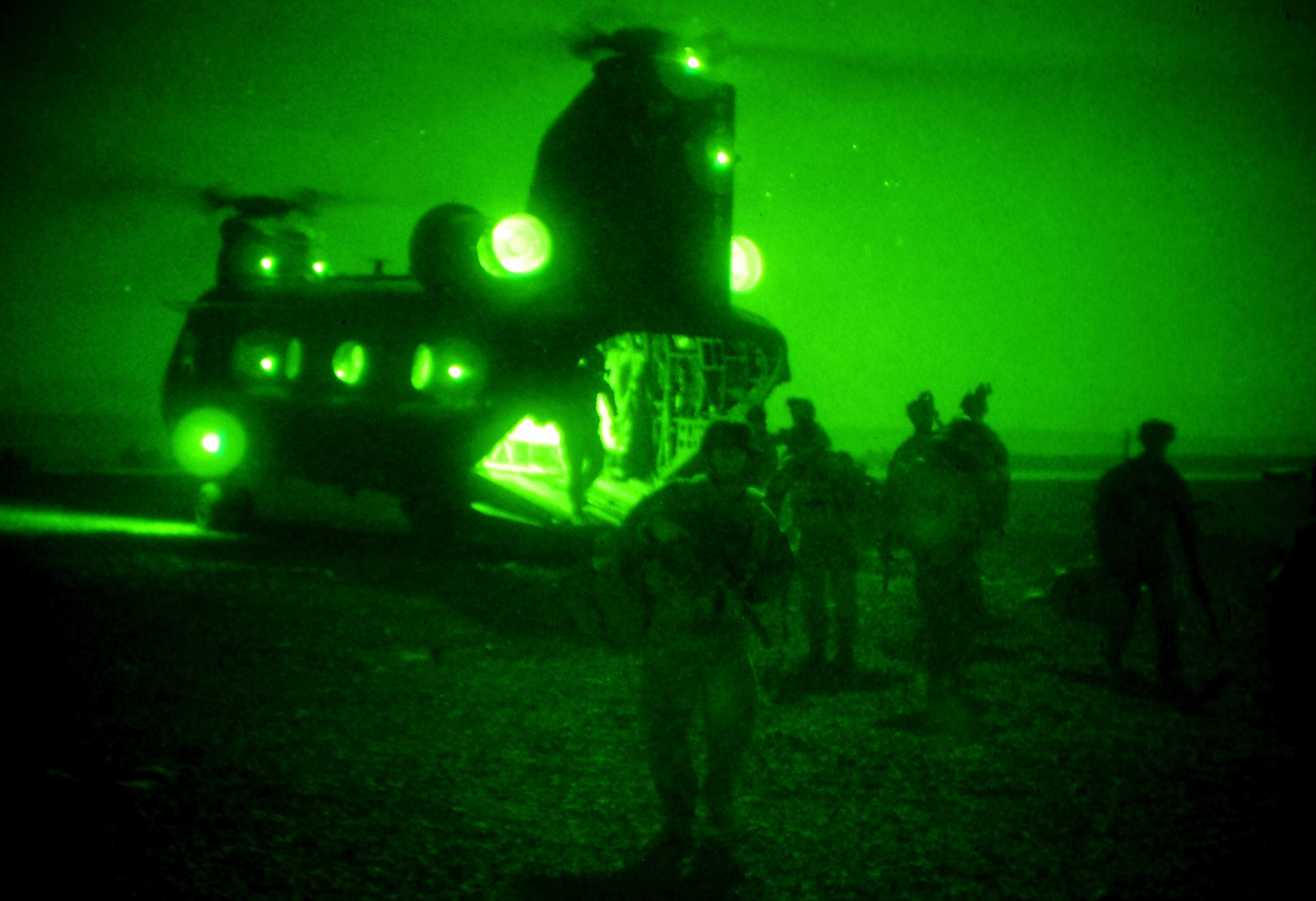
If the current state of relations between the US and Pakistan—the determinant of the broader relationship between the Coalition and Pakistan—continues, what does this mean for Australian operations overseas? As our Prime Minister and others have observed, this episode will likely leave our Mentoring Task Force mission of training the Afghan National Army relatively undisturbed until the withdrawal of 2014. On the other hand, if continued Pakistani intransigence leads to the US adopting a more counterterrorism-centric approach (along the line of Joe Biden’s light footprint plan), there is a good chance Australia’s Special Operations Task Group (SOTG) mission will be affected. At present, the main focus of the SOTG is disrupting insurgent networks in and around the province of Uruzgan. To date, they have also conducted operations in Kandahar involving the targeting and capture/killing of insurgent leaders. Being under US command, should the US mission increase targeting of al-Qaeda elements in the AfPak region, it is not too difficult to envisage that the SOTG would follow suit. With increased operational tempo (in April alone, the latest rotation of SOTG has produced results here, here and here), there has been speculation that we have physically and mentally exhausted our SAS personnel.

This morning, Prime Minister Gillard affirmed a desire of maintaining close security ties with Pakistan, but this statement will ring hollow if Pakistan continues to produce a mixed balance sheet. Without Pakistan on board, many of Australia’s efforts in stabilising Afghanistan with the aim of denying terrorist safehavens would be in vain. Ultimately, however, the Coalition partners must be prepared to look at alternatives to working with Pakistan’s security forces.

Of course, that begs the question: how tough is Australia prepared to get on Pakistan if we risk burning out some of our most valuable military assets?

 Photo courtesy of Department of Defence
The serious scarcity of Defence data

An article, ‘Repeat deployments ‘good for diggers’‘, in this morning’s The Australian detailed a departmental submission to the Defence Personnel Minister addressing concerns over repeated deployments of Australian Defence Force (ADF) personnel. According to the article, Australian studies showed a positive yet “not statistically significant” relationship between deployment and mental health indicators. Obtained by The Australian via Freedom of Information laws, it is worth examining the information supporting such a view, contained in the unclassified submission ‘Multiple Operational Deployments – Effects on Australian Defence Force Members’ (PDF), linked to from the article.

The main finding: the information supplied to a Minister informing him of the mental health effects of repeated deployments on the ADF was woefully lacking in comprehensiveness and detail.

First, only one Australian study (Curtis 2008) on the ADF mental health and repeat deployments was supplied. Research supporting the study was conducted between 2002 and 2007. At the time the submission was drafted, another study was being finalised, yet when considering the 11 years Australian forces have been in Afghanistan, from this submission there is seemingly an alarming dearth of information from which a proper appraisal of the effects of repeat deployments can be made.

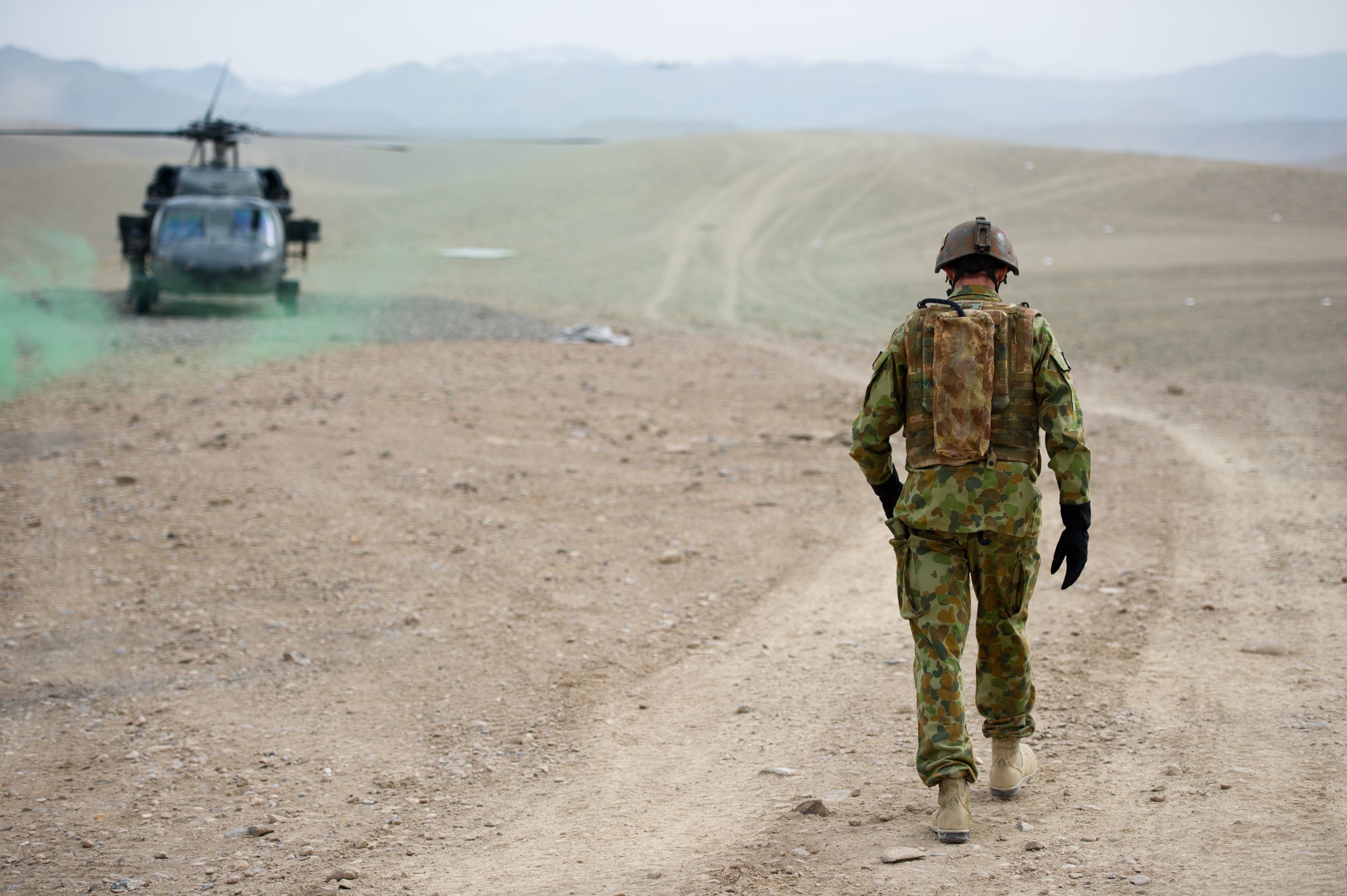
Second, the information to the Minister did not disaggregate certain groups such as special forces. In the case of Afghanistan, as reported in yesterday’s press, the Special Operations Task Group (SOTG) is involved in high-tempo operations such as Operation TEVARA SIN 24 which involve difficult tasks such as the targeting and killing of insurgents. With many having already completed multiple deployments since October 2001 (Defence, PDF), their experiences in the AfPak theatre in particular should form an important basis for the Minister’s consideration of the human effects of such conflicts.

Third, if there were no other studies available, it must be asked, what must be done to collect, analyse and disseminate data to Defence decision makers quickly and efficiently? While another study on the frequency and duration of ADF deployments has since been published, academic publication channels are admittedly slow. Therefore, in circumstances such as warfare in which time lapses have significant ramifications for those in-theatre, what can be done to produce relevant and timely information without compromising its integrity?

That our Ministers are provided such limited information with which to make decisions on matters such as deployments is a matter of concern. That the submission is unclassified is immaterial. If repeated deployments have significant mental health effects, they should be made known to the public. Together with informed debate on the strategic and political gains of engaging in such conflict, information on the effects of deployment must form part of the Australian public’s and Government’s consideration of conflicts such as Afghanistan. Hopefully, it is not too late when we understand what the costs of our departmental and even media-muteness on this side of warfare has been.

Australia-Malaysia relations: Mahathir’s ghost

This post originally appeared on the Lowy Institute’s blog The Interpreter and The Diplomat’s ASEAN Beat.

Just to be clear, Dr Mahathir Mohamad is not dead. In fact, the infamously direct style and strident anti-Westernism of the former Malaysian Prime Minister, lives on through current leader Najib Razak.

During his visit to Australia earlier this month, Najib’s rebuff of Prime Minister Gillard’s proposal for an offshore asylum-seeker processing centre in East Timor, showed hints of the former leader’s ambivalence towards Australia and its approach to the region.

During his 22 years at Malaysia’s helm, Mahathir made Australia his ‘whipping boy’. He rebuked Canberra for its colonial heritage and role as America’s deputy sheriff, stoking Malaysian pride and scoring strategic points in the process.

While the overall bilateral relationship was steady, in the background, Mahathir never shied away from publicly undermining Australian initiatives, often straining relations in the process. His notorious snubbing of the 1993 APEC summit, led then-PM Paul Keating to label him ‘recalcitrant’.

Two Malaysian leaders later, Najib invokes Mahathir’s tradition of public posturing in relation to Australia, albeit in a more muted tone. In response to questions about the East Timor processing centre, the Malaysian PM was lukewarm, at best. He explained that his country needed more time to consider the proposal and was firm that further discussion on the matter take place at the Bali summit on people smuggling, held this week.

In what could have been a proud moment celebrating Australian resourcefulness in promoting a regional solution, Australia found itself in the awkward situation of Malaysia basking in having called the shots.

In practical terms, Najib was right to ask for more time. For one, costs have not been provided. Also, it is now clear that Gillard did not circulate the idea before its announcement; the mixed reception from regional partners is telling in this regard. East Timor was briefed six months after Gillard launched the processing centre idea, in her Lowy Institute speech. This incident should give Australia a wake-up call to manage regional issues more carefully.

Moreover, Australia’s dithering on its processing centre plans, has allowed Malaysia to manoeuvre into a more favourable bargaining position. During his visit, Najib talked up Malaysia’s contribution to combating people smuggling via increased naval interdictions of SIEV suspected of heading to Australian shores.

He then proposed that Australia provide more resources to ‘front line countries like Malaysia’ to disrupt people smugglers. ‘Perhaps giving us more equipment, for example, more sophisticated equipment could help us increase our capacity’, Najib added. Add to the mix speculation of an election this year in Malaysia, and the effect is pronounced: Najib is scoring points using old tricks.

So, while the heydays of fiery Mahathir-Keating exchanges may be behind us, Malaysia’s recent capitalisation on Australia’s awkward decision-making on regional issues, suggests we haven’t seen the last of Mahathirism yet.

Photo courtesy of blog Mahathir Mohamed.

Australia-India-Indonesia ties: strategic choices and national identity

Two recent news stories—one on Foreign Minister Kevin Rudd’s pledge to strengthen ties with Indian Ocean Rim states, and the other on Australian business lobby’s plea for greater emphasis on Asian language training—got me thinking again on why Australia’s engagement with India and Indonesia warrants attention. There are pragmatic and philosophical gains from this engagement. Three points:

First, of the Indian Ocean Rim states, India and Indonesia will have an increasingly more prominent role in Asia-Pacific region. India is the world’s largest arms importer, a fact that will shape the balance of military power and stability in the region. The world’s ninth most popular investment destination, Indonesia will have the ability to transfer its economic growth into military capability. While the US remains Australia’s security guarantor and China the largest trading partner, in light of the shifting geo-strategic balance between the US and China in Asia, stronger relations with India and Indonesia may be a prudent hedging strategy. Moreover, as one scholar notes, India-Indonesia relations hold great potential; it would be opportune for Australia to investigate potential trilateralism while strengthening bilateral ties with each country.

Second, Australia’s success in capitalising on the potential stronger bilateral (even trilateral) ties will lend credence to its ‘activist foreign policy’ and its status as a middle power. Andrew McIntyre argues that Rudd’s foreign ministership is a good opportunity for Australia to maintain momentum in an active foreign policy outlook, especially where Asia is concerned given Rudd’s expertise. Taking the lead on shaping maritime security issues of concern to Australia, India and Indonesia such as piracy, narcotics, border protection, and people smuggling would be exemplary behaviour of an active and effective middle power.

Third, the emergence of India and Indonesia, and most notably the permanent geo-political significance of the latter to Australia, should provide imperative to reinvigorate Asian language training in schools. Asian languages received a considerable boost in the 1980s and 1990s based on the ascendency of the Asian Tiger economies, but now enrolment in Asian languages is on the decline. While security risks to students in Indonesia (amongst other factors) have imperilled Indonesian language training in Australia, if Australia is serious about engaging with Indonesia, government intervention via scholarships and the like is warranted. Interestingly, Indonesian is not in the first wave languages to be taught under the national curriculum. With regards to India, while English is an official language (the other being Hindi), interest in Indian languages and culture would assist somewhat in building cultural bridges in light of attacks on Indian students in Australia in 2009 and 2010.

In closing, I will lay my cards on the table. I have an interest in Australian-Indian-Indonesian relations, but this is not because I have an Indian father and an Indonesian mother, and I am Australian. Although these facts have, no doubt, shaped my view of Australia’s place in the world, I am interested in the direction this nation is heading. Questions about Australia’s choices about its place in the Asia Pacific are not just about strategic pragmatism but, as Graeme Dobell and Hugh White note, go to more philosophical questions about who we are as a nation. In my mind, there is a nexus between our strategic alignment, our self-conceptualisation as a nation, and the development of our national language curriculum. Does our national identity allow us to align more strategically to the Asia Pacific? Does the prioritisation of Asian languages sit comfortably with our national identity? Perhaps greater engagement with India and Indonesia, coupled with and bolstered by a more active domestic language policy, will help spur debate on whether our strategic alignment is based on more cultural or national roots.

Will Australia go to war in Libya?

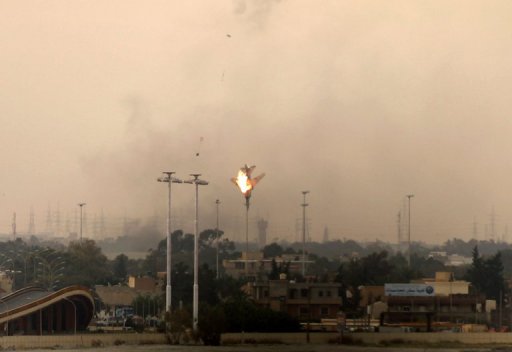
As I write this, my RSS feeds and Twitter timeline tick over with reports of fierce fighting between Libyan and rebel forces, news of the Paris summit for world leaders, and speculation on the fighting to come. Gaddafi has undeniably broken his own ceasefire. A Libyan warplane has been shot down. This will get messier still with the involvement of foreign forces, not only from enforcing a no-fly zone but also from the ground level troops required to provide tactical intelligence in support of air assets.

With Britain, the US, Canada, France, Spain, Denmark and the UAE readying their fighter jets for the Mediterranean, I can’t help but wonder when Australia’s military will be dragged into the fight for Libya.

Foreign Minister Kevin Rudd today ruled out the possibility of RAAF aircraft being used to enforce the no-fly zone, however I’m still not convinced that denies future involvement of Australian forces in other Libya-related operations. The Australian public would be forgiven for resisting the thought of sending our troops on other far-flung coalition conflicts, but best we consider the possibility now, and there are a couple.

The first and most likely of these scenarios involves Australian troops deployed as a part of an international stabilisation force after Gaddafi’s forces are pushed back swiftly. Both Foreign and Defence Ministers Rudd and Stephen Smith are correct in pointing out that this is a matter ostensibly for NATO, however, as part of a UN or coalition mission, Australia may be requested to send troops.

The second and more ominous scenario envisages a more protracted engagement with NATO and other foreign troops. President Obama will have to make good on his promise that military action will ensue if a cease-fire is not immediate; given Gaddafi is currently pushing into Benghazi, I’d say the President has few choices. While President Obama has asked for military action to exempt ground forces and be “finite”, there is still the possibility that the situation in Libya could take a turn for the worst. The UN resolution, based on Chapter 7 provisions on the responsibility to protect, mandates the protection of Libyan civilians; the door is left open for a more active intervention. In this scenario, although considerably less likely, Australian troops may contribute a small contingent for heavier fighting and more surgical tasks.

While crystal-ball gazing is an undertaking fraught with danger (and I’m happy to be wrong on these points), perhaps the Australian public, wary of political underselling of conflicts such as Afghanistan, should begin considering whether some 70 years later there might be a second coming of the Rats of Tobruk.

Photo courtesy of AFP.

Australian FETs in Afghanistan?

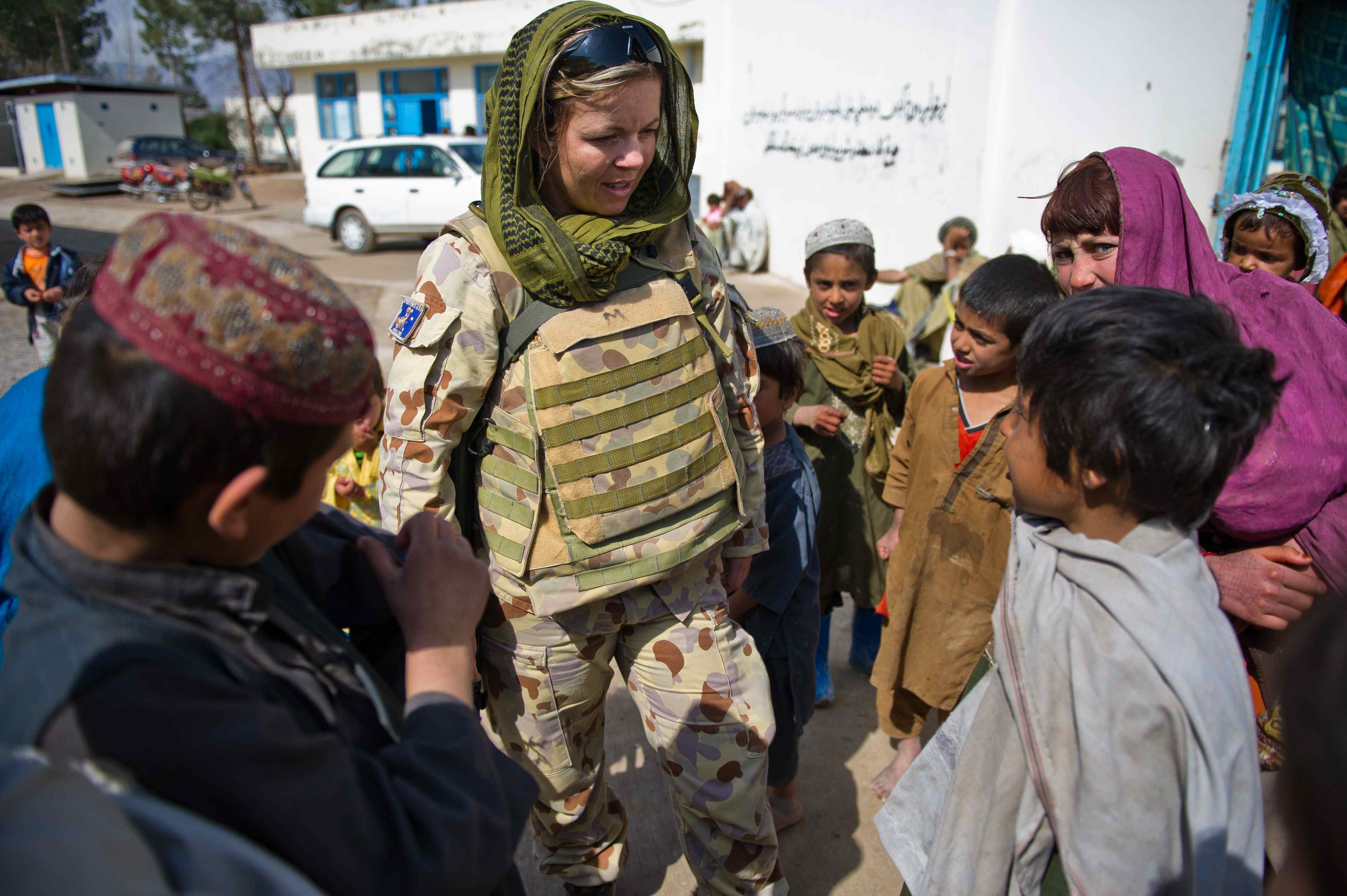
Last month, I wrote about Female Engagement Teams operating in Afghanistan, comprising American and British troops. Like their NATO counterparts, female Australian troops have been deployed to Uruzgan province and, as part of the Provincial Reconstruction Team mission, they also engage with Afghan women and children. Yet little has been reported about formal Australian arrangements that mirror FET, perhaps until now.

As part of recognising International Women’s Day, the Defence Department posted a short write-up of female ADF participation in Uruzgan province. The media release began by introducing FET as ISAF’s lead initiative in engaging women and facilitating development programs before turning to Australia’s bit.

While the media release’s build-up left the ostensible expectation that Australia was engaged in FET-like activity, it only linked FET to PRT in stating that work was done in “close conjunction” and that one PRT member had participated in a FET with a female interpreter.

While it is commendable to see more Australian female involvement in the military, especially in Afghanistan, that the bulk of this write-up consists of largely other nations’ initiatives (and our fleeting engagement with them) is rather sad. It exposes a lack of creativity in utilising our female personnel. Some may argue that our contribution of 1,550 is modest and, thus, does not necessitate a prominent female program. However, I would argue that is not the point. We have female personnel in Afghanistan and if we wish to promote in particular their ability to engage with Afghan women, let’s not wait until International Women’s Day and only do so on such an ad hoc basis.

Photo of Captain Sarah Vesey (JTF HQ) in Tarin Kot, courtesy of the Department of Defence

The problem with defence journalism


I nearly choked on my cup of tea whilst reading Ian McPhedran’s report of the latest Victoria Cross recipient Special Air Service Regiment (SAS) soldier, Corporal Ben Roberts-Smith, in last week’s Daily Telegraph. McPhedran carefully set the scene:

The brown dust from the departing choppers that carried the SAS squadron south from their base at Tarin Kowt had barely cleared when all hell broke loose. It was October 2010, at the height of the Afghanistan fighting season, and a large Taliban force had established numerous firing positions around heavy machineguns. More than 24 elite Perth-based Diggers from the Special Air Service Regiment were under withering fire. Realising his mates were in grave danger, and with no regard for his own welfare, the SAS Corporal charged headlong into the Taliban machinegun fire. The sight of the 202cm Australian warrior coming at them must have shocked the bearded Afghans.

It was a little more action-packed than your run-of-the-mill defence article, but I was still sipping at this stage. However, what I was about to read next—an excerpt from an earlier battle during which Corporal Roberts-Smith earned his 2006 Medal for Gallantry—put me off my Earl Grey:

During that fight, according to comrades, “RS” tore a Taliban fighter off his back like an insect, stood on his throat and shot him dead.

I didn’t know whether to laugh or cry.

Reporting on the conditions facing members of the Special Operations Task Group (of which the SAS is a part) is a necessary part of painting a picture of the war in Afghanistan for the Australian public. On the other hand, against a context of information scarcity on the conflict, the sexed up nature of McPhedran’s description was uncomfortably magnified.

I wish to make clear that my issue with McPhedran is not ad hominem. My issue is with the lack of consistent and informative reports available about the ADF in Afghanistan, brought to light by the nature of McPhedran’s article.

Defence’s tight grip on information flow has been striking and to its detriment. In July of last year, journalist Chris Masters imparted to an audience at the Lowy Institute the frustrations involved in trying to report on ADF activity. In November, Prakash Mirchandani pointed out an inconsistency in Defence’s stance on Wikileaks by highlighting the conflicting opinions of two frontline young officers interviewed by an embedded journalist and the Minister for Defence Stephen Smith. The same month, Monash University held a conference on information warfare during which it was revealed Australia was the most restrictive in providing access to defence correspondents in Afghanistan.

I cannot help but think that this lack of public information in turn stifles real discussion about our commitment, leaving us with only McPhedran-style action-packed postcards and, more alarmingly, lackluster parliamentary debate (see Prime Minister Julia Gillard’s opening speech here and Opposition Leader Tony Abbott’s here).

We owe it to the Australian public and to members of the ADF to depict an honest and comprehensive picture of Afghanistan. The mental image of an SAS soldier with his foot on the throat of an enemy is a rather confronting one. It would be a shame if it turns out to be the most striking.

Postscript: For those of you interested in reading about the SAS, let me steer you first towards In Action with the SAS by military historian David Horner, before pointing out McPhedran’s books, The Amazing SAS and Soldiers Without Borders: beyond the SAS. Or, Matthew Reilly.

See also, our related article ‘Losing the narrative battle: civilian deaths and Defence PR‘.

Photo courtesy of Department of Defence

Reader reply: Australia and Kopassus

Associate editor at Australian Policy Online and Researcher with the Monash Global Terrorism Research Centre at Monash University, Andrew Zammit provides comment to my post on Australia’s options with Kopassus.

Comer’s critique of the Leahy amendment highlights many flaws in its implementation, but his suggested modifications don’t really provide a way forward for dealing with Kopassus. His suggestion that Leahy should include a mechanism to re-legitimise units which have cleaned themselves up and purged human rights-abusers is perfectly sensible. But the problem with Kopassus, made clear in the human rights reports mentioned in the Deutsche Welle article you cited, is not only past violations but continuing ones, albeit on a far lesser scale. So a Leahy amendment with Cromer’s modifications would probably continue to restrict aid to many Kopassus units.

A theme underlying Comer’s piece was that efforts to tackle human rights abuses are more likely to be successful when they are consistent. I’d suggest it follows from that that Australia’s position should be closer to that of the US Congress.

US Congressional efforts to hold the Indonesian military accountable have repeatedly been undermined by those who, I’d argue, should have been supporting them. In the mid 1990s the Clinton administration provided high levels of assistance to the Indonesian military that at very least violated the spirit of the Congressional restrictions. The Bush administration criticised the restrictions publicly and repeatedly, which may have signalled to the Indonesian military that the US was not completely serious about human rights reform. As your post pointed out, Obama also undermined Congressional efforts in 2010. In addition to this, throughout these past two decades Australia provided military assistance to Indonesia with fewer restrictions than the US (excluding the period immediately after the East Timor referendum, when both the US and Australia cut off military aid).

These inconsistencies would have greatly weakened the pressure that the Leahy amendment and other restrictions were intended to apply, and may well be more important than the specific flaws in the Leahy amendment described by Comer.

Current Kopassus commander, Major General Lodewijk Paulus, has stated that he hopes America’s position on assistance to the Indonesian military becomes closer to Australia’s; I hope it’s the other way round.

Australia’s options on Kopassus and human rights

Last week, the Indonesian National Commission on Human Rights (Komnas HAM) released its preliminary report into the alleged torture of Papuans by the Indonesian military (TNI). Quoted in a Deutsche Welle report on 4 January, the head of the commission, Ifdhal Kasim, confirmed that members of TNI had “grossly violated human rights”. The DW piece finished with Phil Robe’s (deputy director of Human Rights Watch’s Asia Division) call for Australia to put pressure on Indonesia to reform TNI’s Army Special Forces, Kopassus, or risk losing credibility as a country that respects human rights. I was curious to know exactly what HRW meant by “pressure”.

In their open letter of 26 October 2010, HRW recommended two lines of action for the Australian Prime Minister: first urge the Indonesian government to undertake further investigations and disciplinary action into allegations of abuse by the military, to adopt legislation to provide civilian criminal court jurisdiction over military personnel responsible for offenses against civilians, and to investigate allegations against Detachment 88; and second tighten up and make public Australia’s vetting procedures for Indonesian security forces.

While there have been perennial calls (ostensibly by HRW but also within the Australian press, most recently here) for Australia to get involved, here I examine how much credence HRW’s recommendations deserve.

The first set of recommended actions—even if they are in keeping with Australia’s foreign policy leanings—is tantamount, from Indonesia’s perspective, to meddling in another country’s affairs; President SBY warned Prime Minister Gillard ahead of her November visit to Jakarta that Australia’s interference in torture cases was not welcome. Later, during her trip, Prime Minister Gillard accepted President SBY’s assurance that a “full and transparent investigation” would take place. In light of the resultant investigations carried out by Komnas HAM, it is highly unlikely that any other tangible and productive outcome would have transpired from more vocal chiding on behalf of Australia.

The second set of HRW recommendations—that is, for Australia to adjust its own rather than Indonesia’s approach to human rights concerns—is far more appropriate. As I have proposed elsewhere, the adoption of a legal standard against which Australia can measure human rights reform within foreign militaries is, albeit complex and ambitious, a pragmatic way of reconciling our foreign policy with our defence engagement. A useful departure point could be the Leahy Amendment to the Foreign Assistance legislation (see s502B and subsequent appropriations legislation). In short, Leahy prohibits US security assistance to military units where there is credible evidence that they have committed “gross violations of human rights”.

That said, Leahy is no silver bullet, and it is worth examining some of the challenges involved in adopting a similar legalistic approach. Many of the finer points of these challenges are elaborated further in Charles K. Comer’s critique, but here, I will draw out a few.

First, the wording of any test for human rights standards and vetting must be carefully constructed. In the case of Leahy, funding is barred for units rather than individuals where credible evidence demonstrates a gross violation of human rights. In the case of the US and Indonesia, two TNI officers with exemplary records who were denied US funding despite having been born after the violations alleged to have been carried out by their unit occurred (Comer: 63-64). This situation is somewhat mitigated by Australian vetting procedures which seek to minimise contact with individuals who have backgrounds of concern, however there remains a lack of accountability to which standards these backgrounds are compared. The framework provided by Leahy could complement current vetting procedures.

Second, if adopted, Leahy must be applied consistently to all foreign military partners. As Comer notes, “[i]n the case of Indonesia, units, either cohort or composite, receiving training must undergo full vetting to include the history of the unit itself. By comparison, unit vetting in the Philippines consists of vetting only the unit commander or most senior individual in the case of a composite unit.”

Third, Wikileaks cables released in December 2010 revealed that a ban on training (enacted by Leahy) between the US military and Kopassus was lifted due to pressure by Indonesian President SBY (Indonesia denies pressure was applied to lift the ban). Unsurprisingly, this brings to light the ways in which legal protection of human rights standards can be trumped by realpolitik concerns. In the words of Australian Defence Force Academy associate professor Clinton Fernandes, ”[t]he decision to renew links shows contempt not only to the victims of gross human rights violations but to members of the US Congress.” Nonetheless, that Leahy continues to serve as a yardstick of US expectations on human rights remains important, when applied and upheld correctly.

By no means should Australia be merely reactive to the calls by organisations like HRW, however, it is worth continuing to debate options proposed and perhaps draw closer to reconciling a desire to uphold human rights and an imperative to engage with Indonesia’s military.

Linking Matiullah Khan to Kabul

On 16 December, the Obama administration released its annual review of the strategy in Afghanistan and Pakistan. The Obama review highlights the progress made in depleting al-Qaeda’s leadership and breaking the Taliban’s momentum, and underscores the challenges of combating corruption, eliminating Pakistani sanctuaries and transferring responsibility to Afghan security forces.

In response, the Australian Defence Minister Stephen Smith noted that it was an “important opportunity to assess whether the implementation of the Afghanistan-Pakistan strategy and the transition to Afghan responsibility for security is on track.” His statement, however, concentrated on Australia’s efforts, as part of the international community, to improve governance and address corruption.

This statement reiterates our desire to support legitimate and transparent government at the national level, yet it remains disjointed from our undertakings in Uruzgan. Of these undertakings, our continued support of local warlord Matiullah Khan remains a perennial concern. While our cooperation with Khan has been defended by our military leadership as a relationship of necessity, he is a controversial figure, one with whom even the Dutch refused to work. This status quo is problematic. There remains no clear strategy that articulates the nexus between local governance structures and national ones. Several months ago, Tom Hyland (amongst others) raised concerns about our engagement of Khan in terms of its undermining of the capacity of the Afghan government. Despite calls for greater transparency in our dealings in Afghanistan and more open debate, we are still without a roadmap that links Khan to Kabul.

Compounding the problem is our Government’s lack of confidence in working with provincial level leaders; a Wikileaked cable shows Prime Minister’s Gillard’s call for Afghan President Karzai to remove the governor of Uruzgan owing to corrupt and obstructionist behaviour. While this may seem to affirm our stance on anti-corruption, it is a reminder that we are dealing with a plethora of uncertain and difficult actors. The lack of reliable partners must surely serve to undermine efforts at consistent and durable reform.

With all this talk of the 2014 handover date, there remain some hard questions to be considered. Without a clear linking strategy, how do we reconcile our desire to bolster the Government of Afghanistan with our continued support of local warlords? How do we reconcile our lack of confidence in Afghan partners with our desire to handover to Afghan civilian and military officials once we leave? Without consideration to these questions, once we withdraw, there will be few guarantees that our actions will not create more problems than the security benefits we set out to achieve.