Blame Canada! On women in combat and research

Image

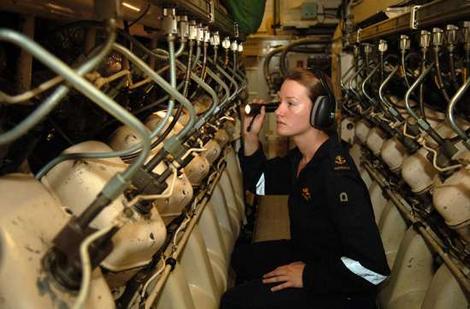
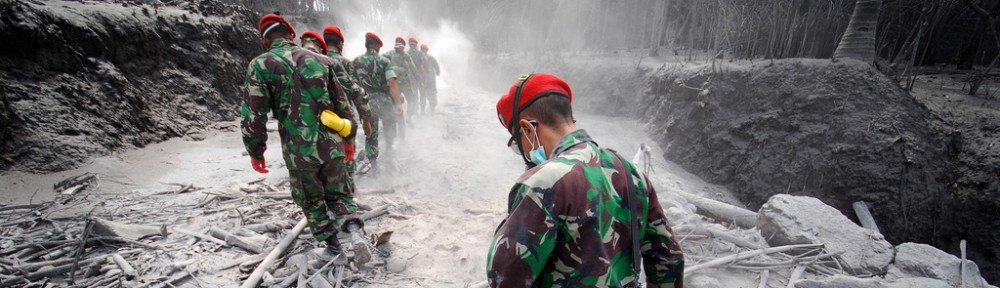
A few quick points about developments in women in combat. An article published this morning quotes Chief of the Defence Force General Hurley as saying that, as a result of examining the Canadian experience, all combat arms would now likely be opened up to women at the same time.

At Senate Estimates in May General Hurley stated the following lessons learned from the Canadians:

  • A targeted proportion of women in combat arms will not define success;
  • It is better to recruit 1 or 2 women into combat arms rather than wait until a critical mass is formed;
  • Don’t separate women into a distinctive group; they’re there to be part of a team.

The ADF was smart in engaging and hosting a Canadian military delegation in May and has now formulated a cautious approach informed by these experiences.

The bottom line is that, political decision-making aside, this issue is being developed in Australia via research. While women in combat continues to provoke emotional debate spurred by anecdotal exchanges based often on legitimate concerns, there is a lot of research available related to women in combat  that could usefully inform discussion. The following are but a few:

  • Cawkill et al, ‘Women in Ground Close Combat Roles: The Experiences of other Nations and a Review of the Academic Literature’, UK Ministry of Defence, 2009, PDF here.
  • Felman and Hanlon, ‘Count Us In: The Experiences of Female War, Peacemaking, and Peacekeeping Veterans’, Armed Forces & Society, April 2012, available here, research based on experiences of Australian female veterans.
  • Fasting and Sand, ‘Gender and Military Issues: a Categorized Research Bibliography’, The Norwegian Defence University College, 2010, PDF here.
  • Harrell et al, ‘The Status of Gender Integration in the Military: Analysis of Selected Occupations’, RAND Corporation, 2002, available here.
  • Major J. Rogers, ‘Gender Integration in the New Zealand Infantry’, US Army Command and Staff College thesis, 2001, available here.
  • Nuciari, ‘Women in the Military: Sociological Arguments for Integration’, Handbooks of Sociology and Social Research, 2006, available here.
  • Lindstrom et al, ‘The Mental Health of U.S. Military Women in Combat Support Occupations’, Journal of Women’s Health, 2006, available here.

After a decade of Afghanistan and Iraq, I’m sure we’ll see more Australian-based research emerging. Until then, some valuable thoughts from Canadian military delegation member, Lieutenant Colonel Jennie Carignan:

“The (main) lesson learned from our integration adventure is that operational effectiveness is only related to leadership and the actions of the leader. We had this twisted around, and this was another message we had for the ADF: Operational effectiveness has nothing to do with the gender of the folks composing your force.”


Image by Gary Ramage, courtesy of news.com.au
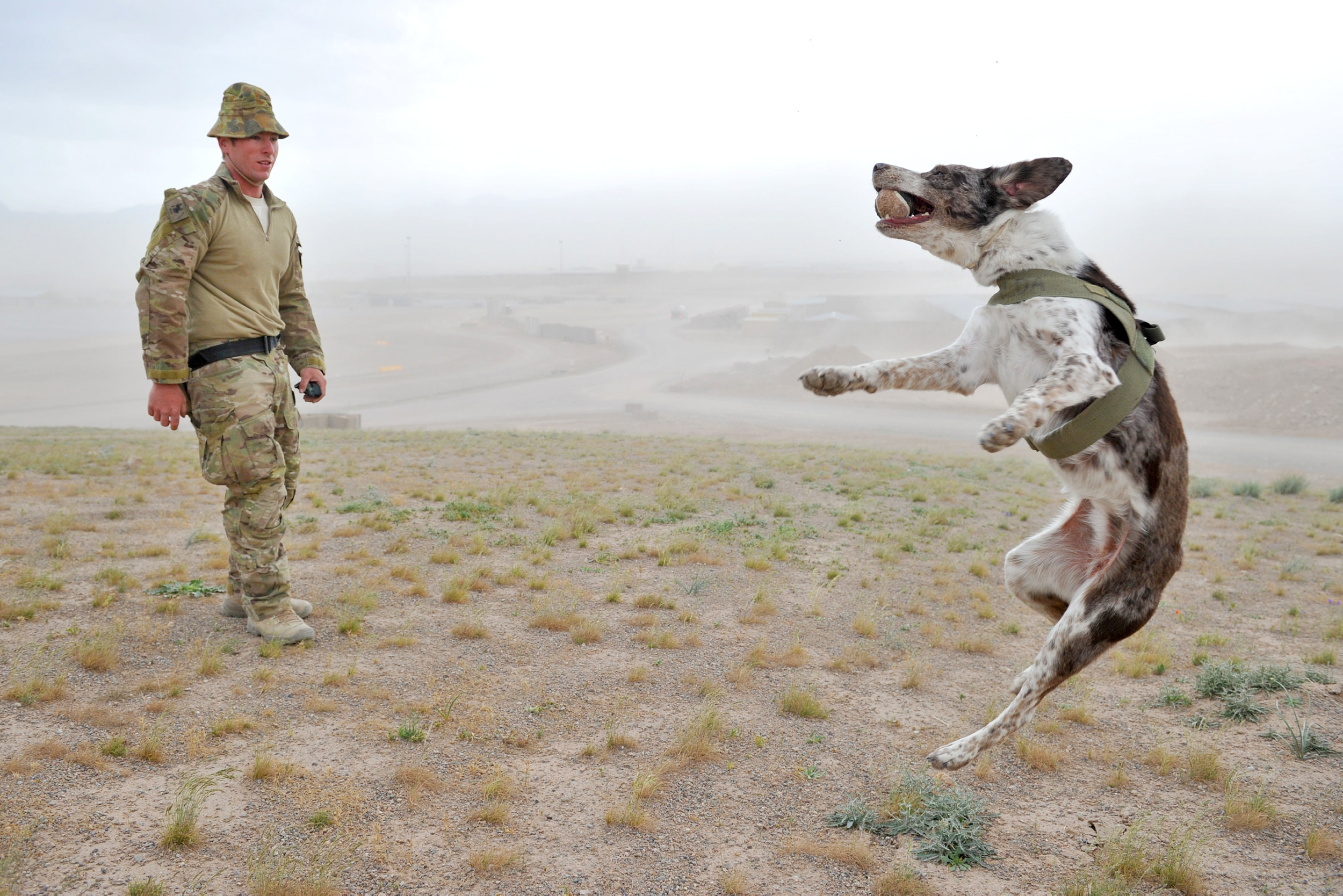
Photo of the Day

Image

This amazing mid-air shot of Australian Explosive Detection Dog, Matilda, was too good to pass up. Matilda is deployed to Tarin Kowt, Uruzgan, with her handler Sapper Adam Thomlinson as part of Mentoring Task Force 4 (MTF-4).

In 2010, then Minister for Defence, Senator Faulker, announced additional counter-IED initiatives, including $4.9 million to begin training additional dogs. The cost to maintain an EDD annually is $90,000.

Photo by Corporal Mark Doran, Department of Defence.

Indonesia: great power on our doorstep?

Two nights ago at the ANU, Professor Hugh White delivered a solid speech that lucidly and methodically explained why we, Australia, should be considering Indonesia with more care.

Projected to be the world’s fourth largest economy in a matter of decades and increasing in clout as a regional power, if not great power, Indonesia will be a force to reckon with, according to White. As such, many Australians will be forced to overturn their assumptions about Indonesia as a poor and weak country. White implored the audience to consider ways of redefining the bilateral relationship with Indonesia beyond third order issues like drug smuggling, people trafficking, border protection, and counter terrorism. Pointing to further evidence that the relationship was not as robust as Government would have us believe, White pointed to “fault lines” in the relationship caused by Australia’s involvement in East Timor’s independence which, for some time, severed diplomatic relations completely.

Against the backdrop of a shift in the strategic balance in Asia, and as Australia aligns itself towards the so-called “Asian Century”, White invited us to consider whether Indonesia would be an asset or an ally. In his view, Indonesia holds great potential to shield Australia from the threat of major powers in the region, if we get our bilateral relationship right. If we do, then we may start to think about the kinds of Defence capability that would complement the armed forces of Indonesia so that both countries could work towards a kind of “forward defence”.  White wrapped up his speech with five points to improve the relationship: 1) improve DFAT political reporting, 2) focus less on third order issues and more on China, 3) de-emphasise the role of aid in relating to Indonesia, 4) abolish travel advisories (as negative ones have tended to upset Indonesia), and 5) increase the importance of the bilateral relationship in Australian politics.

There are, however, a few extra elements in relation to Australia-Indonesia ties White might have explored in his speech (and I’m sure he would have, given more time), and I would like to take up three of his points to develop these further.

Continue reading

US drones and Indonesia-Australia relations

Image

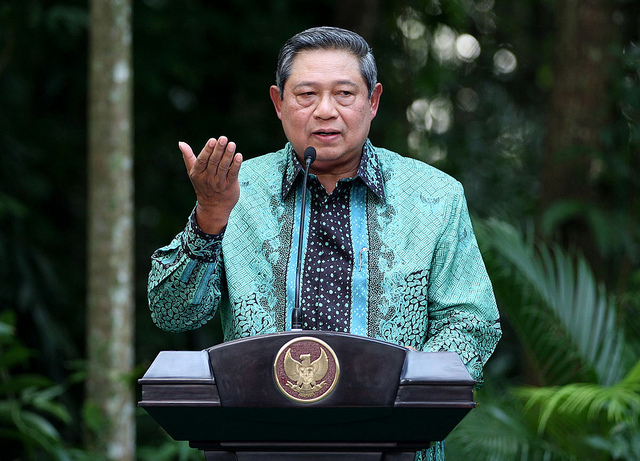
Indonesia has signalled its discontent with recent speculation in the Washington Post about American reconnaissance aircraft including Global Hawk drones flying from the Cocos Islands (a Australian territory located close to the Indonesian archipelago). Coordinating Minister for Political, Legal and Security Affairs Djoko Suyanto announced Indonesia had issued a protest note to the US and Australia. The move came after a day of restrained statements that only affirmed good relations with both partners and the benefit of US regional presence for regional disaster relief operations.

At first, it was unclear why Indonesia was so reserved. There was no substantial comment in major English and Indonesian language media in the days after. The Washington Post article provided only speculation about drones from the Cocos Islands rather than a concrete announcement. The protest note could be seen as commensurate with the significance Indonesia thinks it deserves. On the Australian side, Defence Minister Stephen Smith has played down the potential of such plans.

Yet in November 2011, the announcement of plans to base US Marines in Darwin was quickly met with strongly worded caution about containment of China from Indonesian military (TNI) chief, Admiral Agus Suhartono, and Foreign Minister Marty Natalegawa. These statements seem in keeping with Indonesia’s “dynamic equilibrium” approach. In this approach, regional institutions are strengthened and no single power dominates. A statement by Indonesia reflecting this approach and balancing the interests of the US and China in the Asia Pacific would have been expected.

Another explanation is that Indonesia was waiting to produce a consolidated message. After Suhartono’s and Natalegawa’s comments, the Indonesian President Susilo Bambang Yudhoyono softened his country’s stance in declaring the stationing plans as non-threatening, pointing to normative constraints that would prevent the use of force in the region.

Since then, a central theme in Indonesia’s reaction to US troops in Darwin has emerged: no problem. This stance was echoed by Natalegawa’s recent statements during the so-called “2+2 talks” in Australia this month and a Defence spokesperson’s comments two days ago.

This morning, international security expert, Professor Alan Dupont, had this to say:

I am 90 per cent sure the Indonesian government was blindsided on this and they are still not fully in the picture … They will look at Cocos Island, which is closer to Indonesia than Australia, and will think, good god. In Jakarta there is a well-disposed government but they will be scratching their heads and wondering where the Australians are going on this.

This view was supported by an Indonesian researcher who suggested that the TNI leadership was totally unprepared for the announcement.

Dupont goes on to argue that Australia again could be perceived as the ‘Deputy Sheriff’ of the US, a characterisation that was often used by regional leaders like Malaysia’s former Prime Minister, Dr Mahathir Mohamad, to discredit Australia’s Southeast Asian credentials. It is in Australia’s best interests to resist this characterisation. While we continue to deepen our military ties with the US, our engagement with the region should not be seen as an extension of US policy.

If Dupont is right, Australia is out of step with its most important regional defence partner. As Indonesian reactions to both US Marines in Darwin and drone launches from the Cocos Islands attest, Australia could do more to sell closer US-Australia ties as non-provocative. As recent public debate and statements from Australia’s political leadership suggest, we wish to draw closer to Indonesia, not further away.

The situation remains ambiguous on both sides. Yet, Smith, in playing down the Cocos Islands plan could have done more to reassure Indonesia that regional partners would be consulted in due course. While the future of drones from the Cocos Islands plan is yet to unfold, it is clear Indonesia is not happy.

Image courtesy of Embassy of the Republic of Indonesia, Canberra.

Small steps for Australia-Indonesia relations

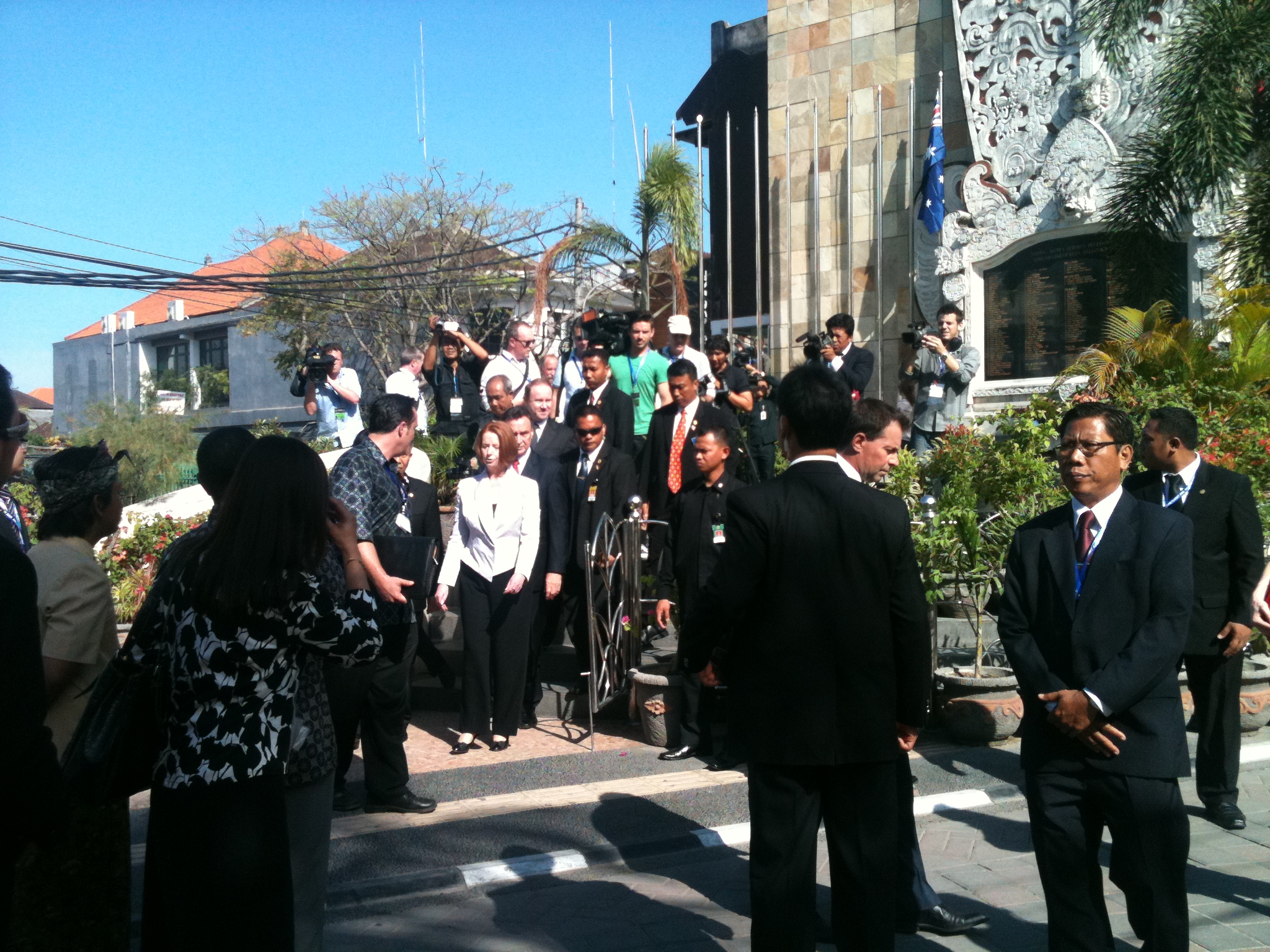
Security was tight. With the dozens of beret-clad and armed POLRI, squads of the special reaction unit (Gegana) dressed in black, military police, army, and rooftop snipers, journalists and onlookers were more concerned about getting on their wrong side that morning than of any terrorist attack.

However, once the Australian Prime Minister arrived to pay her respects to the victims of the 2002 Bali Bombing, all eyes were on her. In Bali for the ASEAN and related summits, the PM’s visit to Ground Zero was a small yet symbolically important part of her tightly-packed schedule.

Australia-Indonesia diplomatic relations have had a number troughs over the past twelve months. A few days ago, Indonesia’s foreign minister and military chief voiced their respective concerns about the newly-announced initiative to place US Marines in Darwin from 2012 (with the FM noting he’d only been told informally a few days prior to the announcement). Add to that a Prime Minister who has publicly stated that foreign affairs is not her forte, failed to coordinate with her Foreign Minister on policy changes, and announced asylum seeker initiatives without alerting the countries in question.

Continue reading

Update: Australian MultiCam Pattern (AMP)

By N.R. Jenzen-Jones

Over the last few weeks I have been in correspondence with various officials from Defence, discussing the specifics and the impact of the upcoming Australian MultiCam Pattern (AMP). This new pattern is being developed by Crype Precision for the ADF – you can read more about this in an earlier Security Scholar article, here.

The following is a series of official responses from an ADF spokesperson to some of my questions:

Will the new AMP pattern follow the British MTP example and feature Crye’s MultiCam palette with a modified design, or are the colours being adjusted in any way?

Response: The prototype pattern has retained the Crye Multicam palette as it is these colours that have proven to be effective in Afghanistan. During the testing of the Australian Multicam Pattern Defence will confirm both the pattern and the palette meet the requirements for Afghanistan as well as examining what changes, if any, would improve its performance across the range of environments where Australian troops are operating.

Continue reading

The Bali 2002 bombing: nine years on

For the next two months, I will be travelling through and writing from Indonesia; the first stop on my itinerary was Bali.

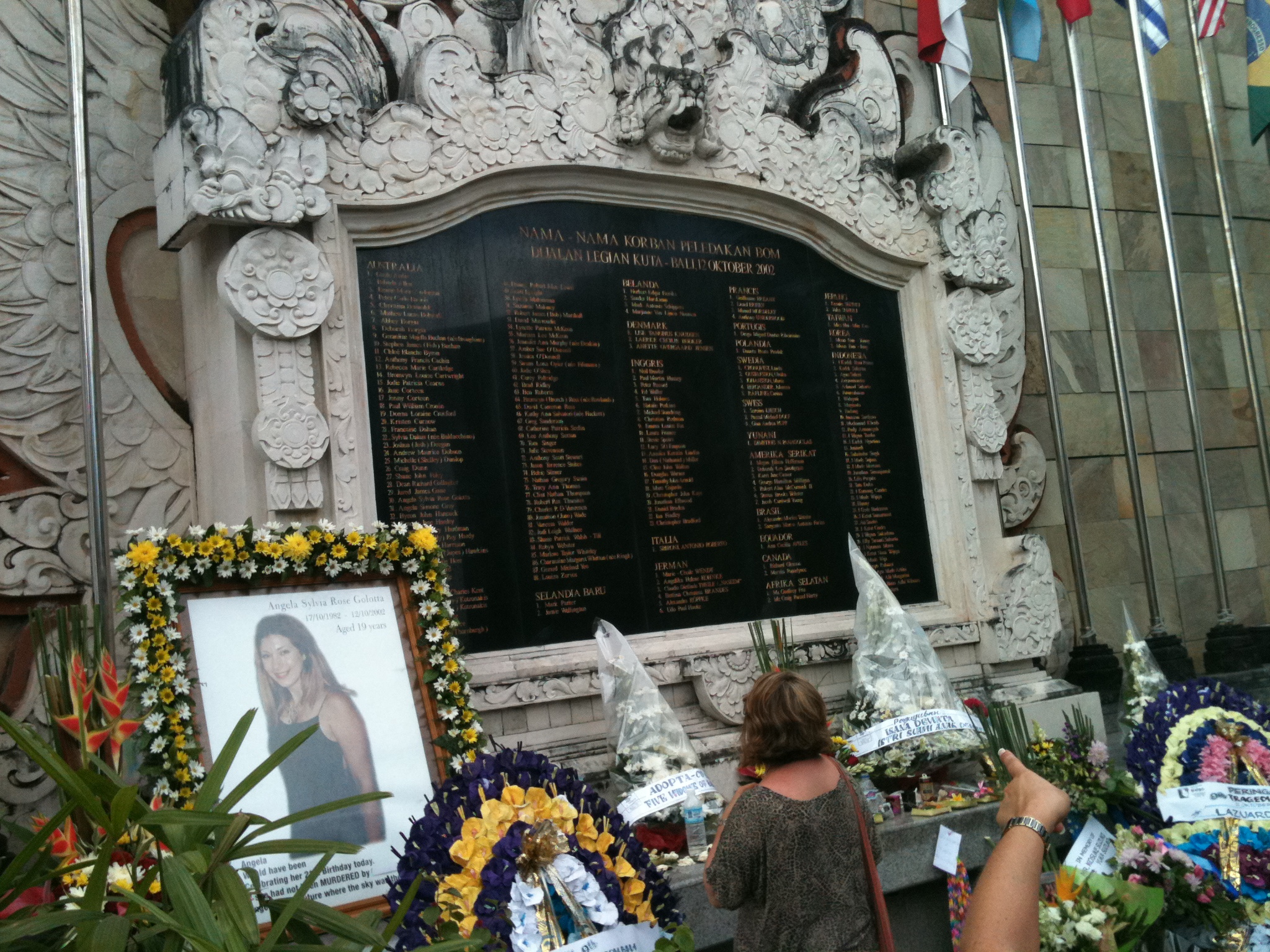
Bali is a bustling place right now: the traffic flows, the tourists chatter, the smiles are abound, and there is general busy-ness in every direction. Even the surfer dogs are upbeat. But nine years ago, it was not always like this. Today, we commemorate the ninth anniversary of the first Bali bombing that took place in 2002; an explosion that tore through the Sari nightclub on a busy Saturday evening, claiming 202 lives and injuring 240.

I spent most of the day around the bomb memorial—a magnificent Hindu carving in the wall where the nightclub once stood, with bouquets of flowers hugging its base. My aim was to get a ground-level snapshot of how life went on a day like today.

Continue reading

Nancy Wake isn’t enough: the challenges of ADF gender reform

Now women are to be allowed to serve on the front line becoming an infantry officer is a real possibility. But there are hurdles for the Australian military to overcome in these challenging, yet hopeful times.

Politics and policy

First, we cannot separate the politics from the policy. The Minister for Defence has declared that the policy of opening all ADF roles to women will be rolled out within five years.

I believe in gender equality in the armed services, but we should be clear about the timing of the announcement and its impact on this deadline.

Continue reading

The strategic implications of a gender equal ADF

In the wake of the decision to open all roles of the ADF to women, much attention has lingered on the physical and psychological dimensions of close quarter combat. There are legitimate concerns about this, and I will examine them in forthcoming posts, however less attention has been given to the strategic implications of opening up all roles in the ADF and the contribution of female personnel.

Continue reading

KRISS Vector SMG for the Australian Federal Police?

By N.R. Jenzen-Jones

In writing this post I consulted a senior representative from KRISS USA, as well as a serving member of the AFP who is familiar with current TRT practices. Their identities have been withheld at their request. I also requested an official comment from the AFP, but only received the following from a spokesperson: “For operational reasons, it would not be appropriate for the AFP to provide this type of information about its accoutrements and their use”.


By now, most people interested in small arms have at least heard of the KRISS Vector; in fact, the KRISS Vector SMG caused quite a stir when it was showcased in early 2007. It is a selective fire submachine gun featuring single, two-round burst and fully automatic modes, and chambered (currently) for .45 ACP. It has a cyclic rate of 850-1100 rounds per minute, and fires from a closed bolt using a mechanically-delayed blowback system. Built around the KRISS Super V System (KSVS), the Vector utilises in-line design and asymmetrical recoil (the ‘vectored bolt’ technology) to greatly reduce felt recoil and muzzle climb. KRISS themselves claim that the KSVS can reduce felt recoil by up to 60%, and barrel elevation by 95%; the claimed muzzle rise is about 1.8 degrees.

I attended SHOT Show 2011 in January, and had the opportunity to examine and fire the Vector SMG for myself. Whilst there are many others who have spoken on the relative merits of the weapon, I was very impressed. The Vector SMG was comfortable, well balanced, and controllable during fully-automatic fire. What really impressed me, however, was the accuracy of the weapon when firing two-round bursts. The KRISS website shows the rather impressive outcome of one such burst here.  In certain scenarios, the practical applications of being able to put two .45 ACP rounds on target with lightning speed and precision are very significant indeed.

Continue reading