US MARSEC Capability Development Programs in West Africa: Current Status and Future Prospects

By N.R. Jenzen-Jones &  LT Chad R. Hutchins, USN

This piece originally appeared at Information Dissemination.  
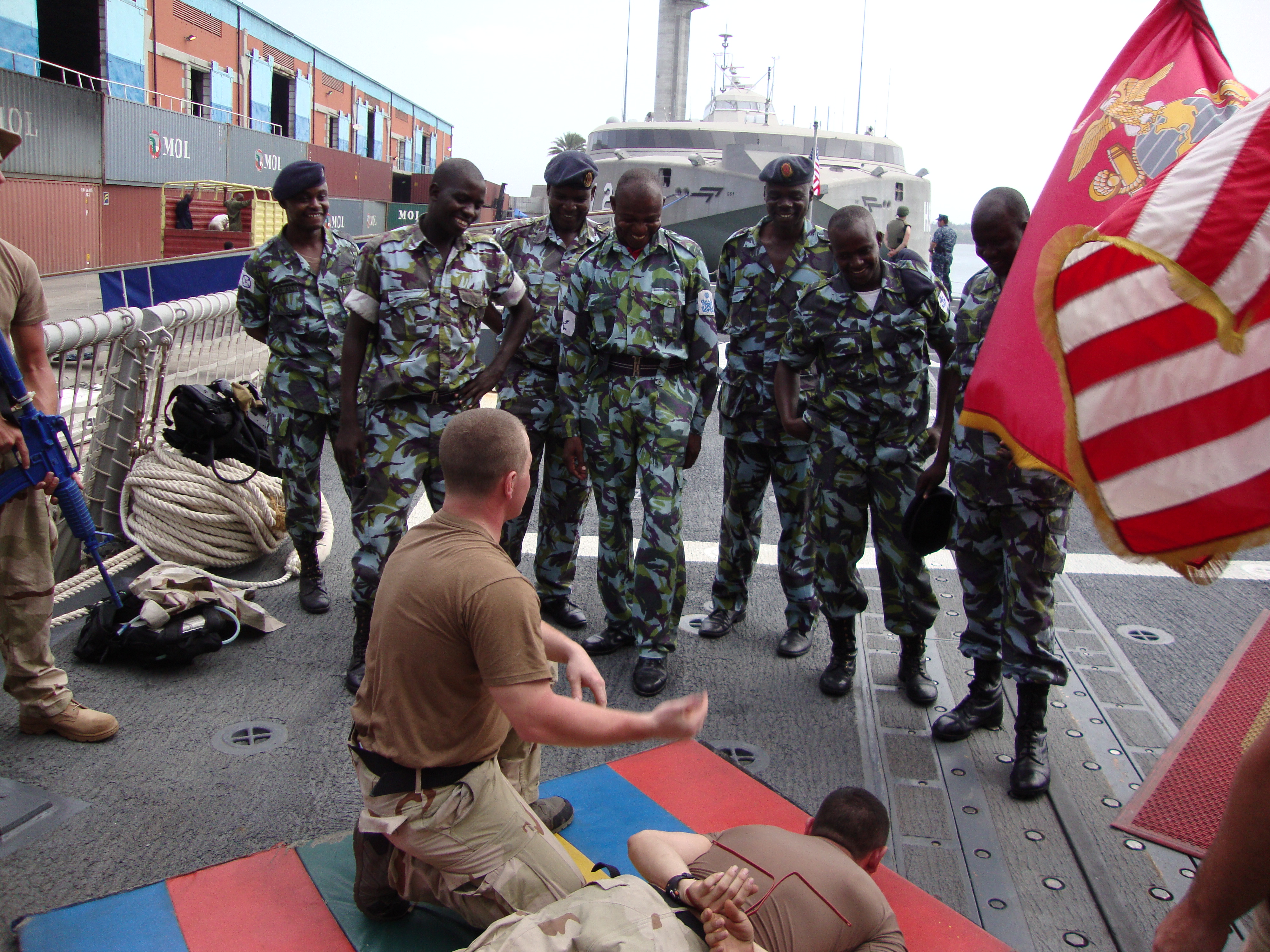
USS NICHOLAS (FFG-47) Visit, Board, Search, and Seizure (VBSS) team members train Kenyan naval personnel on proper apprehension techniques while in port Mombasa, Kenya during Africa Partnership Station – East 2010.

West Africa[1] today is plagued by a variety of serious maritime security (MARSEC) concerns. Illegal, Unreported, and Unregulated (IUU) fishing, trafficking of persons, arms, and drugs, oil bunkering, illegal migration, and piracy have contributed to a maritime environment characterized by crime and corruption. The costs of these illegal activities are significant; the cost of illegal fishing alone is over $1 billion US Dollars annually, and an estimated 600,000 people are trafficked illegally each year[2]. Pirate attacks targeting oil product vessels in West Africa are occurring with increasing regularity, and are becoming increasingly violent. Like much of the rest of Africa, the nations of West Africa have traditionally held a land-centric view of security. National navies, as well as other maritime entities such as coast guards and fisheries patrols, have never been in the vanguard of training or financial investment. Despite this, recent years have seen a renewed focus on maritime security in West Africa, driven by concerns of piracy, threats to oil production, and international programs of assistance. Many nations and organizations have strategic interests in building strong MARSEC partnerships with West African nations, most in the hopes of protecting or establishing maritime enterprise relationships. The United States Department of Defense (DoD) Strategic Doctrine for 2012, Sustaining U.S. Global Leadership: Priorities for 21st Century Defense, discusses the importance of partnerships around the world, including those in Africa. This document sets forth a goal to “become the security partner of choice” in nations of interest, and advocates an “innovative, low-cost, and small-footprint approach”, with an emphasis on exercises, rotational presence, and advisory capabilities.

Continue reading

Blame Canada! On women in combat and research

Image

A few quick points about developments in women in combat. An article published this morning quotes Chief of the Defence Force General Hurley as saying that, as a result of examining the Canadian experience, all combat arms would now likely be opened up to women at the same time.

At Senate Estimates in May General Hurley stated the following lessons learned from the Canadians:

  • A targeted proportion of women in combat arms will not define success;
  • It is better to recruit 1 or 2 women into combat arms rather than wait until a critical mass is formed;
  • Don’t separate women into a distinctive group; they’re there to be part of a team.

The ADF was smart in engaging and hosting a Canadian military delegation in May and has now formulated a cautious approach informed by these experiences.

The bottom line is that, political decision-making aside, this issue is being developed in Australia via research. While women in combat continues to provoke emotional debate spurred by anecdotal exchanges based often on legitimate concerns, there is a lot of research available related to women in combat  that could usefully inform discussion. The following are but a few:

  • Cawkill et al, ‘Women in Ground Close Combat Roles: The Experiences of other Nations and a Review of the Academic Literature’, UK Ministry of Defence, 2009, PDF here.
  • Felman and Hanlon, ‘Count Us In: The Experiences of Female War, Peacemaking, and Peacekeeping Veterans’, Armed Forces & Society, April 2012, available here, research based on experiences of Australian female veterans.
  • Fasting and Sand, ‘Gender and Military Issues: a Categorized Research Bibliography’, The Norwegian Defence University College, 2010, PDF here.
  • Harrell et al, ‘The Status of Gender Integration in the Military: Analysis of Selected Occupations’, RAND Corporation, 2002, available here.
  • Major J. Rogers, ‘Gender Integration in the New Zealand Infantry’, US Army Command and Staff College thesis, 2001, available here.
  • Nuciari, ‘Women in the Military: Sociological Arguments for Integration’, Handbooks of Sociology and Social Research, 2006, available here.
  • Lindstrom et al, ‘The Mental Health of U.S. Military Women in Combat Support Occupations’, Journal of Women’s Health, 2006, available here.

After a decade of Afghanistan and Iraq, I’m sure we’ll see more Australian-based research emerging. Until then, some valuable thoughts from Canadian military delegation member, Lieutenant Colonel Jennie Carignan:

“The (main) lesson learned from our integration adventure is that operational effectiveness is only related to leadership and the actions of the leader. We had this twisted around, and this was another message we had for the ADF: Operational effectiveness has nothing to do with the gender of the folks composing your force.”


Image by Gary Ramage, courtesy of news.com.au

Photo of the Day

Image

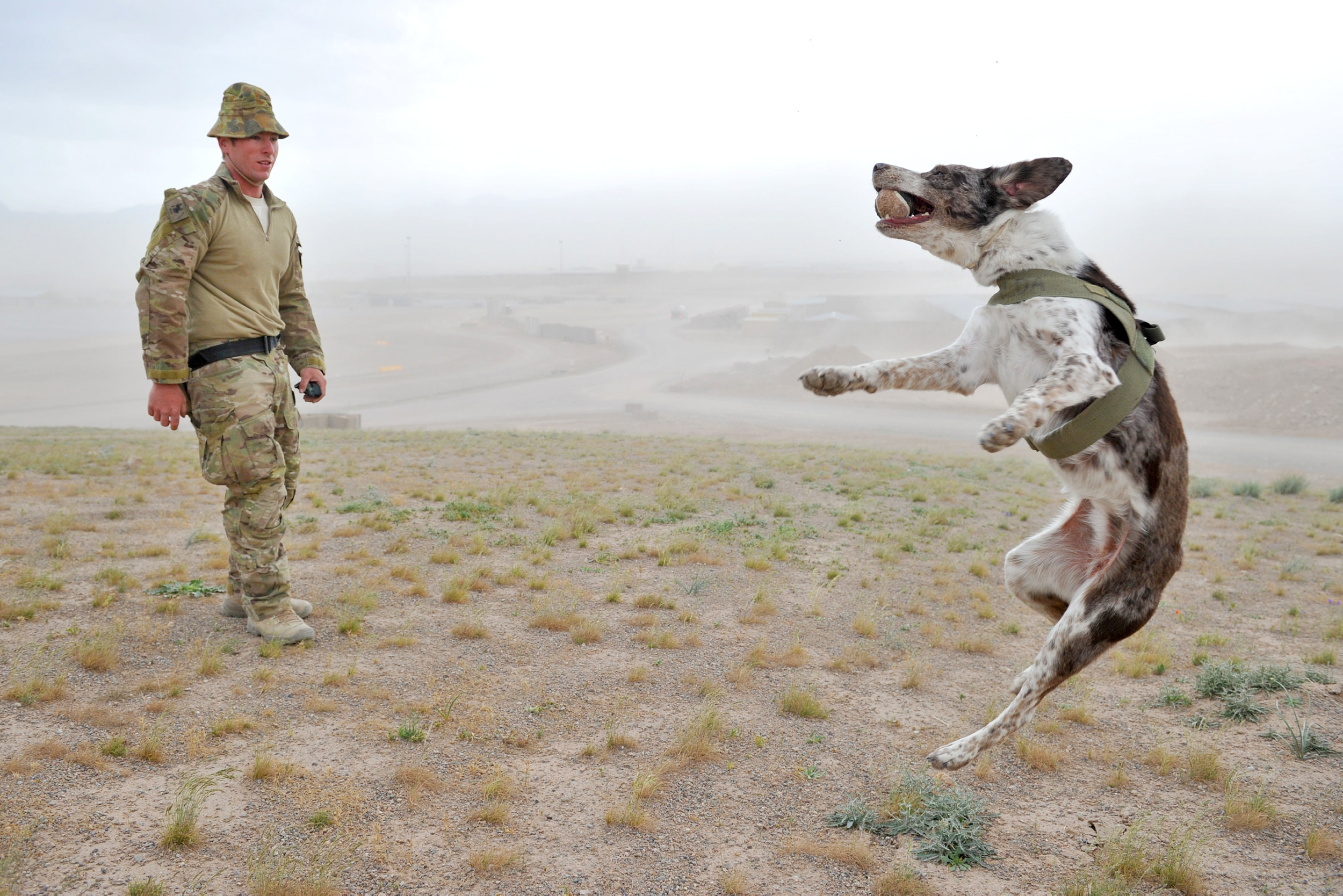
This amazing mid-air shot of Australian Explosive Detection Dog, Matilda, was too good to pass up. Matilda is deployed to Tarin Kowt, Uruzgan, with her handler Sapper Adam Thomlinson as part of Mentoring Task Force 4 (MTF-4).

In 2010, then Minister for Defence, Senator Faulker, announced additional counter-IED initiatives, including $4.9 million to begin training additional dogs. The cost to maintain an EDD annually is $90,000.

Photo by Corporal Mark Doran, Department of Defence.

Wounded warriors: disability and the military

As our overseas expeditions wind down, Australian soldiers, particularly those who have served in Afghanistan, will return home. Of those who served in Afghanistan, 226 have been wounded—that is, they have been serving in war-like conditions and hurt during contact with the enemy. Of these, many have permanent disabilities.

Image

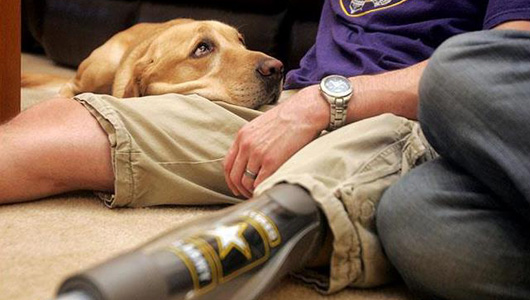
I came across commando Private Damian Thomlinson’s story on CNN in relation to the US’ “Wounded Warriors” and Canada’s “Soldier On” programs. Injured by an IED in 2009, Private Thomlinson has both legs amputated. In an interview with 60 Minutes, he indicated he was willing to go back to work. However, when his former commanding officer, Colonel Paul Kenny, was asked about this possibility, he was non-committal.

One area that remains difficult is where soldiers with disabilities or injuries wish to return to work and to their mates.

For example, I read the story of Marine Staff Sergeant Dave Marino who, despite traumatic brain injury sustained in Iraq, fought his way to remain with his corps. It was an uphill battle.

While we are doing away with various forms of discrimination—like gender restrictions in the Australian Defence Force and the Don’t Ask, Don’t Tell policy of the US military—it remains the case that employment in the military with a disability is challenging. Continue reading

Indonesia: great power on our doorstep?

Two nights ago at the ANU, Professor Hugh White delivered a solid speech that lucidly and methodically explained why we, Australia, should be considering Indonesia with more care.

Projected to be the world’s fourth largest economy in a matter of decades and increasing in clout as a regional power, if not great power, Indonesia will be a force to reckon with, according to White. As such, many Australians will be forced to overturn their assumptions about Indonesia as a poor and weak country. White implored the audience to consider ways of redefining the bilateral relationship with Indonesia beyond third order issues like drug smuggling, people trafficking, border protection, and counter terrorism. Pointing to further evidence that the relationship was not as robust as Government would have us believe, White pointed to “fault lines” in the relationship caused by Australia’s involvement in East Timor’s independence which, for some time, severed diplomatic relations completely.

Against the backdrop of a shift in the strategic balance in Asia, and as Australia aligns itself towards the so-called “Asian Century”, White invited us to consider whether Indonesia would be an asset or an ally. In his view, Indonesia holds great potential to shield Australia from the threat of major powers in the region, if we get our bilateral relationship right. If we do, then we may start to think about the kinds of Defence capability that would complement the armed forces of Indonesia so that both countries could work towards a kind of “forward defence”.  White wrapped up his speech with five points to improve the relationship: 1) improve DFAT political reporting, 2) focus less on third order issues and more on China, 3) de-emphasise the role of aid in relating to Indonesia, 4) abolish travel advisories (as negative ones have tended to upset Indonesia), and 5) increase the importance of the bilateral relationship in Australian politics.

There are, however, a few extra elements in relation to Australia-Indonesia ties White might have explored in his speech (and I’m sure he would have, given more time), and I would like to take up three of his points to develop these further.

Continue reading

US drones and Indonesia-Australia relations

Image

Indonesia has signalled its discontent with recent speculation in the Washington Post about American reconnaissance aircraft including Global Hawk drones flying from the Cocos Islands (a Australian territory located close to the Indonesian archipelago). Coordinating Minister for Political, Legal and Security Affairs Djoko Suyanto announced Indonesia had issued a protest note to the US and Australia. The move came after a day of restrained statements that only affirmed good relations with both partners and the benefit of US regional presence for regional disaster relief operations.

At first, it was unclear why Indonesia was so reserved. There was no substantial comment in major English and Indonesian language media in the days after. The Washington Post article provided only speculation about drones from the Cocos Islands rather than a concrete announcement. The protest note could be seen as commensurate with the significance Indonesia thinks it deserves. On the Australian side, Defence Minister Stephen Smith has played down the potential of such plans.

Yet in November 2011, the announcement of plans to base US Marines in Darwin was quickly met with strongly worded caution about containment of China from Indonesian military (TNI) chief, Admiral Agus Suhartono, and Foreign Minister Marty Natalegawa. These statements seem in keeping with Indonesia’s “dynamic equilibrium” approach. In this approach, regional institutions are strengthened and no single power dominates. A statement by Indonesia reflecting this approach and balancing the interests of the US and China in the Asia Pacific would have been expected.

Another explanation is that Indonesia was waiting to produce a consolidated message. After Suhartono’s and Natalegawa’s comments, the Indonesian President Susilo Bambang Yudhoyono softened his country’s stance in declaring the stationing plans as non-threatening, pointing to normative constraints that would prevent the use of force in the region.

Since then, a central theme in Indonesia’s reaction to US troops in Darwin has emerged: no problem. This stance was echoed by Natalegawa’s recent statements during the so-called “2+2 talks” in Australia this month and a Defence spokesperson’s comments two days ago.

This morning, international security expert, Professor Alan Dupont, had this to say:

I am 90 per cent sure the Indonesian government was blindsided on this and they are still not fully in the picture … They will look at Cocos Island, which is closer to Indonesia than Australia, and will think, good god. In Jakarta there is a well-disposed government but they will be scratching their heads and wondering where the Australians are going on this.

This view was supported by an Indonesian researcher who suggested that the TNI leadership was totally unprepared for the announcement.

Dupont goes on to argue that Australia again could be perceived as the ‘Deputy Sheriff’ of the US, a characterisation that was often used by regional leaders like Malaysia’s former Prime Minister, Dr Mahathir Mohamad, to discredit Australia’s Southeast Asian credentials. It is in Australia’s best interests to resist this characterisation. While we continue to deepen our military ties with the US, our engagement with the region should not be seen as an extension of US policy.

If Dupont is right, Australia is out of step with its most important regional defence partner. As Indonesian reactions to both US Marines in Darwin and drone launches from the Cocos Islands attest, Australia could do more to sell closer US-Australia ties as non-provocative. As recent public debate and statements from Australia’s political leadership suggest, we wish to draw closer to Indonesia, not further away.

The situation remains ambiguous on both sides. Yet, Smith, in playing down the Cocos Islands plan could have done more to reassure Indonesia that regional partners would be consulted in due course. While the future of drones from the Cocos Islands plan is yet to unfold, it is clear Indonesia is not happy.

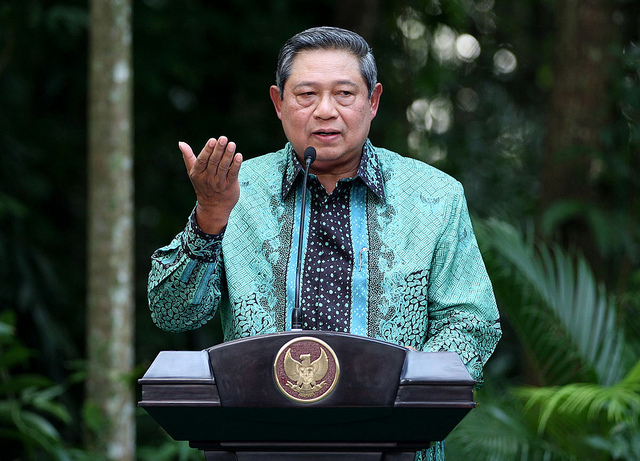
Image courtesy of Embassy of the Republic of Indonesia, Canberra.

Madness? THIS. IS. TWITTAAAAAAAH!

Twitter Fight Club, that is. Team Security Scholar is heavily involved in this year’s TFC event, with Nat being a part of the steering committee and a competitor, and yours truly as one of the judges for the competition. You can read about my part in the event (and my judging criteria) at my personal blog, The Rogue Adventurer. For the uninitiated, check out this introductory post over at the official home of Twitter Fight Club.

Continue reading

An Industry-Based Approach to Maritime Security in West Africa

by N.R. Jenzen-Jones

This piece was written in October 2011. It first appeared in the Journal of International Peace Operations (JIPO) volume 7, number 4. You can find it here

The sharp rise in piracy in West Africa, particularly in the Gulf of Guinea, has featured prominently in recent news. Piracy as a whole is costing global trade an estimated $12 billion (USD) a year, with the primary target being the oil industry – a key sector of the West African economy – which threatens the strategic interests of the United States, EU, and China.

There are other issues, along with piracy, that are prevalent in the Gulf of Guinea. Illegal, Unreported, and Unregulated (IUU) fishing in the waters of West Africa has been referred to as the ‘worst in the world’, with London-based MRAG Limited estimating illegal catches to be 40% higher than reported legal catches. The smuggling of people, arms, and narcotics is also a significant issue in the West African maritime domain. On top of these issues, a plethora of local and transnational criminal and terrorist organisations are connected either directly or tangentially to piracy in West Africa. Chief amongst them are Al Qaeda in the Islamic Maghreb (AQIM), the Revolutionary Armed Forces of Colombia (FARC), Hamas, Hezbollah, Boko Haram, and the Movement for the Emancipation of the Niger Delta (MEND).

Continue reading

A year in security

What a year 2011 has been!

Kicking off with the Arab Spring, followed by the deaths (yes, deaths) of Osama bin Laden, Muammar Gaddafi, and Kim Jong-il, and ending with the withdrawal of the US from Iraq, 2011 was mind-blowing. Add to that the Eurozone crises, disasters like Fukushima, earthquakes, floods, and volcanoes. 2011 was the year of headlines.

But, in a year of big news, it’s easy to forget the small things. In this case, I’m talking about the first anniversary of this blog, Security Scholar.

Continue reading

Why has Security Scholar been so quiet lately?

You may well ask. Well, fear not, Nat and I are both very much alive.

As a few of you probably know by now, I’m in the process of undertaking a pretty big research project. I’m attempting to compile a ‘complete-as-possible’ database of small arms used in the recent Libyan conflict. To do this, I’ve been collecting OSINT photos and video stills from a number of media outlets, social networking sites, and so on. I’m also working with some NGOs and PSCs on the ground in Libya, as well as having developed a few local sources of my own.

I have a post up at my personal, more informal blog, The Rogue Adventurer.

I would love any input from readers, particularly detailed photos of weapon receivers (serial numbers, factory marks etc.) or weapon crates, or just photos of unusual small arms that have cropped up. I’m also keeping an eye out for different types of optics that have turned up, for a smaller side project.


Nat’s been pretty active as well. As many of you know she is travelling throughout Indonesia, conducting research on a few different topics and also brushing up her Indonesian language skills. You can follow her most recent adventures on her new blog, Notes From The Field.

Her last few posts have explored the fascinating Balinese ceremonial traditions, showcasing everything from blessings given to firearms to cremations!

As you can see, both of us are still working away. Nat continues to bring us fascinating updates from the field, and I’m up to my eyeballs in picture of unusual firearms that have cropped up in Libya. Business at Security Scholar is just as it has always been – unpredictable, unusual, and fascinating.

In the meantime, don’t forget you can keep track of us on Facebook as well!