Indonesia series post #6: Australia-Indonesia Relations by the Numbers

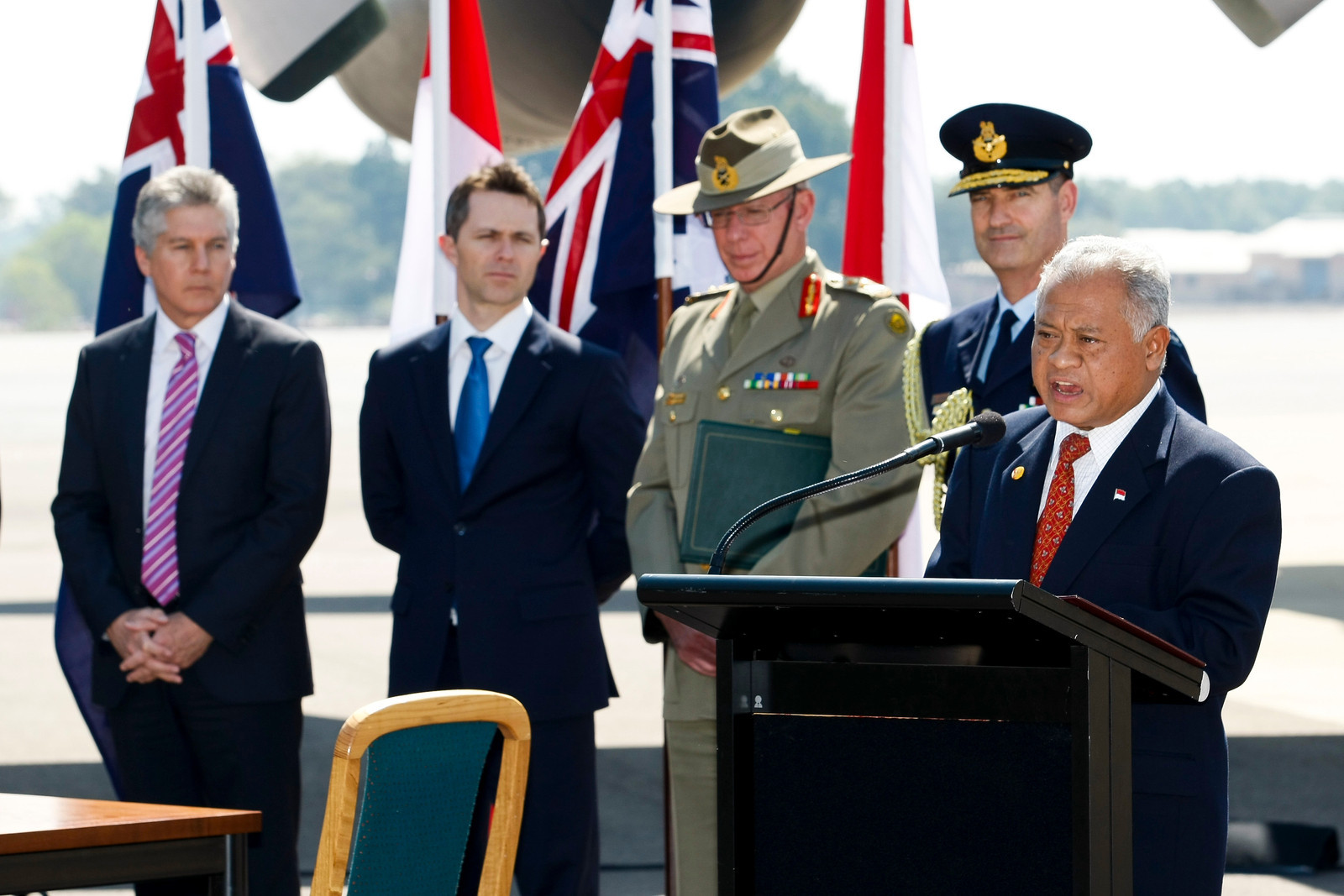
Inspired by Cogitasia’s regular blog feature ‘By the Numbers: the data driving Asia’, as the final post in this week’s Indonesia series, I’ve put together a snapshot of developments in Australia-Indonesia relations using figures from this week’s Annual Leaders’ Meeting.

4

The number of refurbished C-130H aircraft granted to Indonesia by the Australian Government for boosting its humanitarian operational capability. Indonesia will be responsible for future maintenance costs of these aircraft. According to President Yudhoyono, “This is half-grant, half-purchase.”

$578.4 million

The amount pledged by Australia to assist poverty reduction in Indonesia in 2012-13. Funding will support Indonesia’s development priorities in areas such as education, infrastructure and social protection.

1000

The number of visas that will be available annually (increased from 100) to Indonesians to work and holiday in Australia. Only a small proportion of Indonesians will be able afford the pricey trip downunder but it gets the ball rolling in helping to build people to people links.

2 and 1

The number of new bilateral and trilateral initiatives announced. Charles Darwin University and Nusa Cendana University in Kupang will forge new ties as the Australia-Indonesia schools partnership program (BRIDGE) is expanded this year.  A bilateral table-top exercise between the ADF and TNI—Exercise Garuda Kookaburra—and a new trilateral exercise between the US, Australia and Indonesia (and possibly Chinese observers) will take place in the Northern Territory in 2013.

0

The number of translators ABC News 24 had on hand to translate the President’s State Dinner address in Darwin delivered in Indonesian. Thankfully, this was corrected the next day during Prime Minister Gillard and President Yudhoyono’s joint press conference.

Indonesia series posts I, II, III, IV and V.

Image courtesy of Department of Defence.

Indonesia series post #5: Like a Boss

Image

Indonesian Army Sergeant Poltak Siahaan is chaired by his team members to receive the trophy for Champion Shot International from Chief of Army, Lieutenant General David Morrison, at this year’s Australian Army Skill at Arms Meeting (AASAM).

AASAM is open to all ADF members and also attracts champions from 16 international defence forces.

Image by Sergeant John Waddell, courtesy of Department of Defence.
Indonesia series post #4: Need to know about Indonesia’s military (TNI)?

Friend and online colleague Evan Laksmana has compiled an excellent reading list of books on the Indonesian military (TNI), and I encourage those interested in Australia’s relations with Indonesia to check it out. Understanding the military’s role in Indonesia is necessary in understanding the opportunities and limitations of closer cooperation with Australia.

If you’re pressed for time or unable to access a library with those books, here are some relevant reports on the state of TNI’s reform (in reverse chronological order):

  • Evan Laksmana, ‘Stirring from Beyond the Borders? American Military Assistance and Defense Reform in Indonesia’, Asia Centre, Paris, July 2011, available here.
  • Leonard C. Sebastian and Iisgindarsah, ‘Assessing 12-year Military Reform in Indonesia: Major Strategic Gaps for the Next Stage of Reform’, RSIS Working Paper, April 2011, PDF here.
  • Bruce Vaughn, ‘Indonesia: Domestic Politics, Strategic Dynamics, and U.S. Interests’, Congressional Research Service, January 2011, PDF here.
  • Human Rights Watch, ‘Unkept Promise: Failure to End Military Business Activity in Indonesia’, 2010, available here.
  • Marcus Mietzner, ‘The Politics of Military Reform in Post-Suharto Indonesia: Elite Conflict, Nationalism, and Institutional Resistance’, East-West Center Washington, 2006, PDF here.

Alternatively, Samantha Michaels and Ulma Haryanto produced this three part series on the state of TNI’s business practices, published in the Jakarta Globe in May this year.

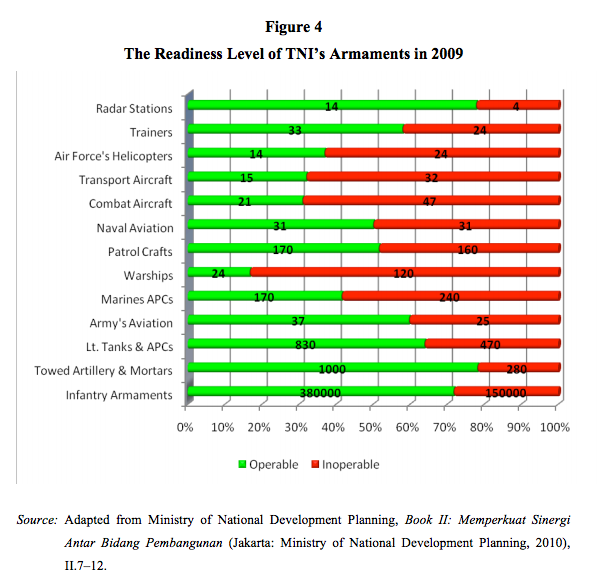
Of note is Sebastian and Iisgindarsah’s report for its graphs and diagrams that show Indonesia’s defence spending, annual peacekeeper contributions, country origin of TNI armaments (the US ranks 1st, Australia 9th), and comparisons with other Southast Asian nations’ defence spending.

From the same report is a snapshot of the readiness levels of TNI’s armaments:

 Image

If I’ve missed anything, feel free to send me suggestions. Happy reading!

Image source: Sebastian and Iisgindarsah, 2011.

Indonesia series post #3: special forces and foreign policy (part II)

In yesterday’s post (part I), I touched on how the goals of drawing closer to Indonesia and developing counter terrorism capabilities were met by encouraging joint exercises between SASR and Kopassus, starting in 2003. In this post, I explore the trickle down effects this relationship has had on Asian Pacific partners, their respective foreign policies, and regional security.

First, SASR’s long-standing and robust engagement with Kopassus has provided a testbed for US engagement with the unit. The US has been able to observe Australia’s handling of challenges such navigating sensitivities over human rights records. For instance, in 2003 Kopassus’ commander was denied entry into Australia for a meeting on joint exercises as he was at that time still on trial for suspected human rights abuses. In retaliation, the commander in question Major General Sriyanto cancelled the visit. But times have changed. Continue reading

Indonesia series post #2: Insight into Indonesia’s President SBY

Unfortunately, the Indonesian President’s speech at the State Dinner in his honour last night was cut short as the ABC News 24 lacked Indonesian translators. In absence of that speech, here are some recent yet important speeches that provide some insight into his sentiments about Australia and about Indonesia’s place in the Asian Century.

Speech delivered to the Australian Parliament, Canberra, 10 March 2010, available here.

  • Shorter SBY: Australia and Indonesia have a strong relationship as friends, neighbours and strategic partners. Both countries should work together as equal stakeholders in a common future, overcome stereotypes and tap into potential of the relationship.
  • Memorable moments: SBY paying respects to Australians who died during humanitarian operations in Indonesia, praising early Australian support for Indonesian independence, and using the words “fair dinkum”.

Keynote Address to IISS Asia Security Summit, Shangri-La Dialogue, Singapore, 1 June 2012, available here.

  • Shorter SBY: Asia Pacific requires more durable security architecture achieved by “dynamic regionalism” and a sense of Asian Pacific community. Middle and small states should work to ensure relations between major powers are stable and peaceful.
  • Indonesia’s increased defence spending to be used for increasing capacity to protect borders, to counter transnational threats, to increase its contribution to peace-keeping operations worldwide, to be better prepared for military operations other than war, and to conduct special operations.
  • Memorable moments: SBY using the words “win-win strategic culture”, citing the successful rescue of Indonesian hostages from Somali pirates by the navy and special forces, and being super optimistic.

Speech ‘The Development of Asia-Pacific Geopolitics in the 21st Century and the Effect on Indonesia’ to TNI and POLRI Officer Candidate School, Bandung, 29 June 2012, excerpts here and here (in Indonesian):

  • Shorter SBY: Strong and sustainable peace in the region is achievable. Transparency in increasing military capability and confidence building measures are essential in preventing mistrust between states. Indonesia will continue to build comprehensive partnerships and conduct constructive diplomacy in the region.
  • Memorable moments: SBY losing his cool and berating students in the front row for falling asleep.

Overall, these speeches represent a determination on behalf of SBY to engage with the region and really promote Indonesia’s burgeoning presence in regional and international terms.

Indonesia series post #1: SASR, Kopassus and foreign policy (part I)

Image

In today’s Canberra Times, Athol Yates highlights the foreign policy use of the ADF. He states:

Employing the military internationally for both hard (military) and soft (non-military) power purposes has become an effective sign of the government’s international relations intent. For example, having the Air Force’s C-17 with its distinctive Australian livery arrive in Japan following last year’s tsunami visibly signals Australia’s solidarity with the country far more than providing funds to country-independent organisations such as the Red Cross or funds such as the Pacific Disaster Appeal.

Another example is the relationship between the SASR and Indonesia’s special forces unit Kopassus as an important part of Australia-Indonesia relations and an extension of Australia’s regional foreign policy goals.

The relationship has been an important component of rebuilding Australia-Indonesia military ties after they were cut in 1999 in response to allegations of human rights abuses by TNI in East Timor. The reinstatement of SASR-Kopassus ties in 2003 simultaneously addressed a need to further develop a counter terrorism capability as well as repair the defence relationship.

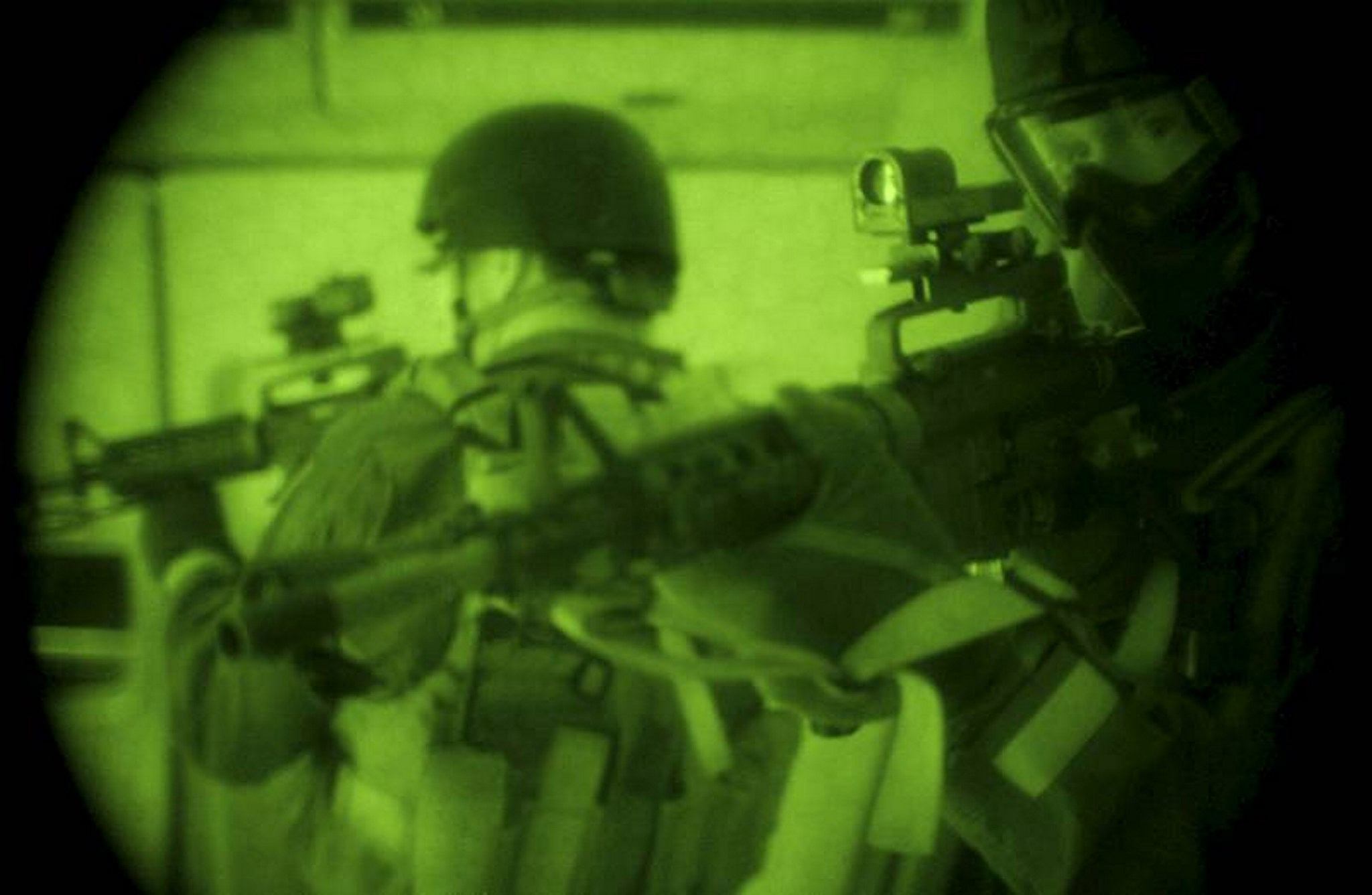
The units now conduct a number of training exercises, sharing skills and cooperation in areas such as counter terrorism and jungle warfare. The relationship has also extended into other capability areas with a number of Kopassus members undertaking Defence-sponsored English language study from May to June this year, supervised by SASR personnel.

Part II: More on special forces units and foreign policy

Image taken by Corporal Ricky Fuller, courtesy of Department of Defence.

Indonesia week on Security Scholar

Indonesia’s President Yudhoyono is visiting Australia from today and so I’ll be writing short posts on Indonesia this week and, where possible, live tweeting some of the events broadcast on TV.

Accompanied by a delegation of ministers, SBY will meet with Prime Minister Julia Gillard in Darwin for the second annual Indonesia-Australia Leaders’ Meeting. Hopefully, it will also be an opportunity to discuss the upcoming Defence White Paper in 2013.

The full text of the Joint Communiqué from the inaugural meeting in Bali can be found here. In terms of defence and security, this passage is of note:

Our cooperation on traditional and non-traditional security issues has never been stronger, underpinned by the Lombok Treaty and its Plan of Action. We reaffirmed our commitments under the Treaty, including to one another’s sovereignty and territorial integrity.  Australia was pleased to announce it would provide support to a new Indonesian Armed Forces Peacekeeping centre.

Reinforcing our comprehensive security cooperation, both leaders directed senior officials of both countries under the Security Cooperation Consultation Group to review existing cooperation, and to coordinate and set priorities under the Plan of Action of the Lombok Treaty.  Both leaders also further encouraged the finalisation of the Defense Arrangement as a basis for an enhanced defense cooperation between the two countries.

In light of discussion on Australia-Indonesia defence cooperation, encouraged in particular by Prof Hugh White, this seems an appropriate departure point at the political level for deepening ties. More on Lombok later this week.

Photo of the Day: Pacific Partnership 2012

Image

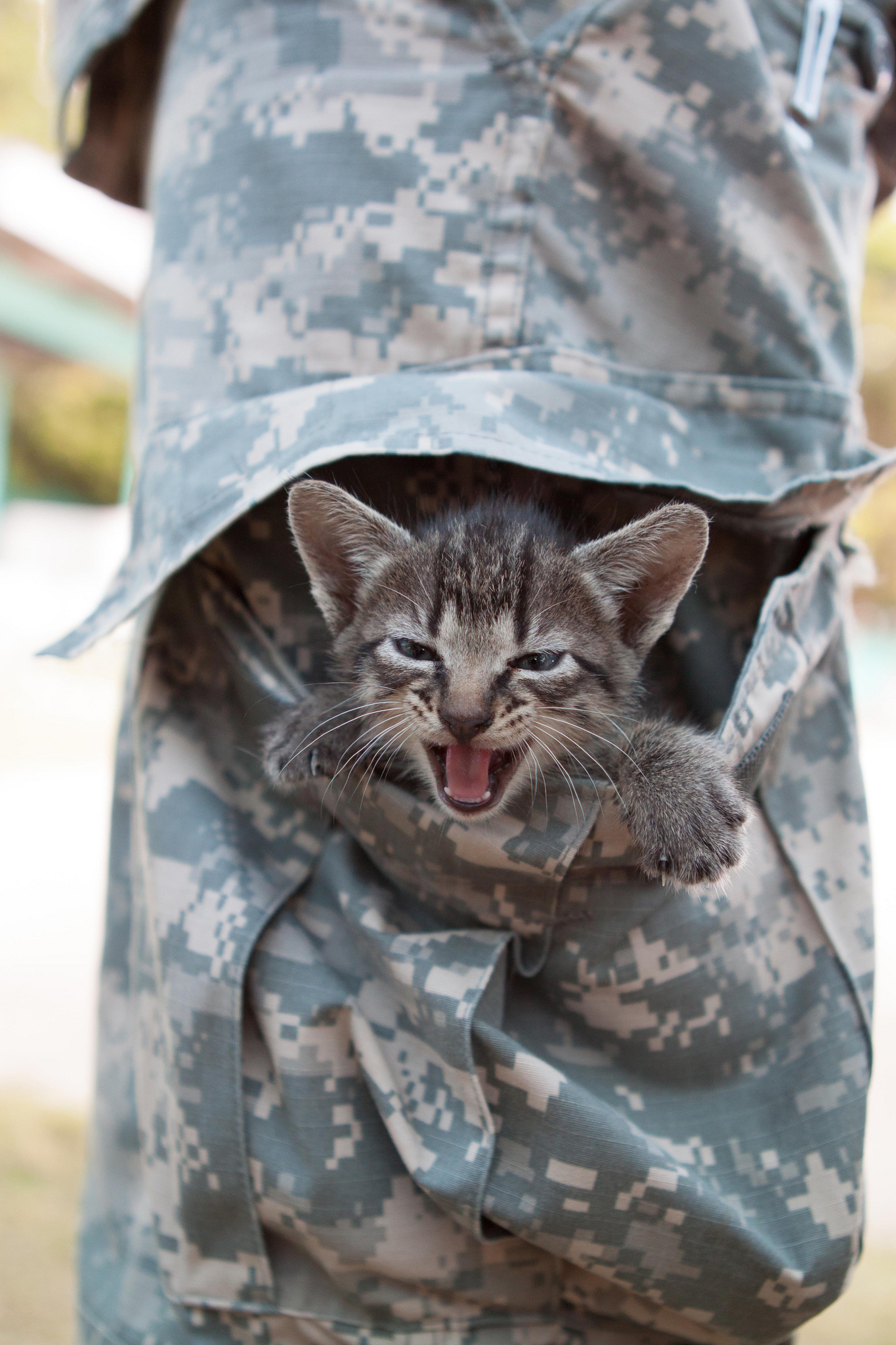
This kitten was photographed during a Pacific Partnership 2012 veterinary project in the town of San Juan in Samar province, Philippines.

Pacific Partnership is a US Pacific Fleet humanitarian and civic aid mission designed to strengthen regional relations and develop disaster response capabilities, involving military and NGO personnel.

The Australian Defence Force has been involved since 2006, with 41 personnel assigned this year from 23 May to 11 August to deliver engineering and medical aid to Indonesia, Philippines, Vietnam, and Cambodia.

Image by Camelia Montoy, courtesy of Flickr user DVIDSHUB.

240mm Heavy Mortars in Syria – a closer examination

By N.R. Jenzen-Jones

This post originally appeared at The Rogue Adventurer.

Identifying weapons systems can sometimes be a tricky business. Often, practitioners are forced to make educated guesses, or give ‘best estimates’ to stakeholders. Nonetheless, it is important that any such assessments are characterised accurately any time they are repeated, and the requisite caveats included. One recent incident highlights this pertinently.

Some video footage from conflict in Syria featured remnants of massive 240mm mortar rounds – the largest calibre mortar currently in active service. These are fired from two weapons in active service, both of Soviet/Russian origin: the M-240 heavy mortar, and the 2S4 Tyulpan self-propelled heavy mortar (a mechanised mortar carrier). Bjørn Holst Jespersen appears to have been among the first to have identified the tail end of what is likely an 53-F-864 240mm HE round, publishing a brief piece on the find on his blog on the 16th of February. The source of the original video screen captures can be found here.

Continue reading

All of the Teams! On CST, FET and Lioness Teams

A quick note on female teams in Afghanistan and Iraq. There is an excellent interview with a female member of a US Cultural Support Team (CST) and Special Forces enabler who deployed to Afghanistan. It sheds light on women in combat from first-hand experiences, but tells us very little about CSTs.

Image

At present there is only limited publicly available information of CSTs’ function and deployment conditions. Objective analysis of their challenges or efficacy is scarce.

There has been however an increase in academic research into Female Engagement Teams (FETs). When I wrote this piece in February last year, there was little analytical material, just media releases and news coverage.

In supplement to my piece earlier this week on research and women in combat, here are some articles for those interested in FETs:

  • Stephanie K. Erwin, ‘The Veil of Kevlar: An Analysis of the Female Engagement Teams in Afghanistan’, March 2012, available here.
  • Keally McBride, Annick T. R. Wibben, ‘The Gendering of Counterinsurgency in Afghanistan’, Humanity: An International Journal of Human Rights, Humanitarianism, and Development, Summer 2012, see here.
  • Thomas W. Moore et al, ‘Opinion Dynamics in Gendered Social Networks: An Examination of Female Engagement Teams in Afghanistan’, December 2011, PDF here.

Like FETs, Lioness Teams were established to engage the population, particularly women and children, during Operation Iraqi Freedom. There are news stories and even a movie about their work, but only a few academic articles:

  • Major Sheila S. McNulty, ‘Myth Busted: Women are Serving in Ground Combat Positions’, Air Force Law Review, July 2011, PDF here.
  • Major Karen J. Dill, ‘Removing the Rose Colored Glasses: Exploring Modern Security Environment’s Effect on the Army Assignment Policy for Women’, US Army Command and General Staff College thesis, 2009, PDF here.

McNulty’s chapter documents the history of the US Army’s Lioness Team program and the development of the Marine Corps equivalent, as well as discussing FETs in Afghanistan. Dill’s thesis analyses the documentary ‘Team Lioness’ to demonstrate how the understanding of women’s roles in the military have evolved.

In summary, this is still a developing area of academic literature, and I’m sure there are some references I’ve missed, so feel free to supplement this with suggestions. Happy reading!

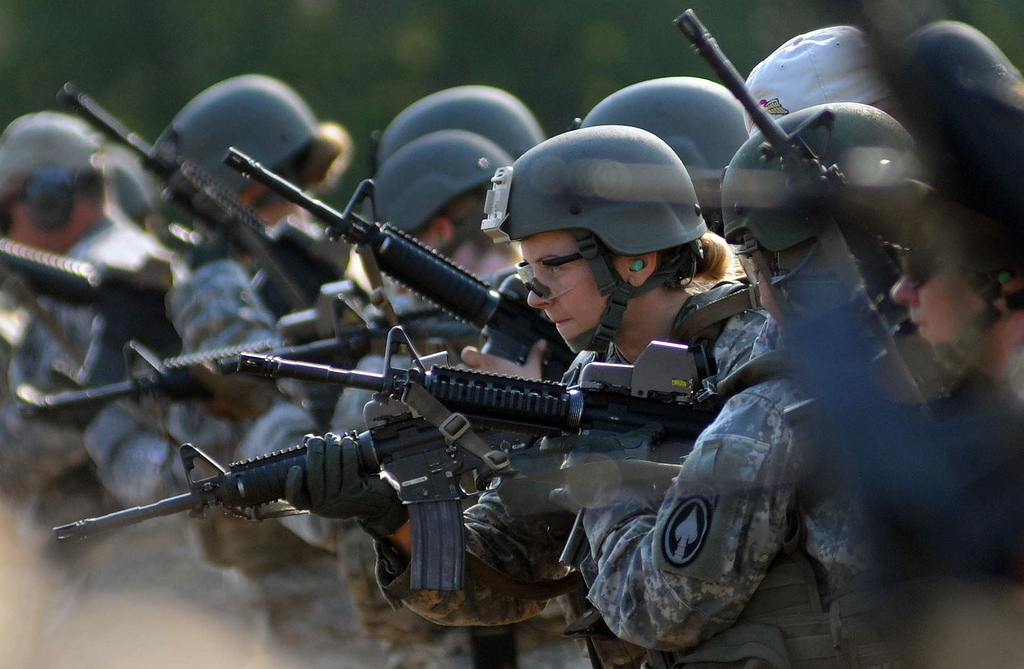
Image by US Army SSG Russell Lee Klikam, courtesy of Flickr user USAJFKSWCS.