Australia’s spend on counterterrorism: how much is enough?

Over the weekend, the Minister for Defence, Stephen Smith, made a poor defence of the Government’s purported spend of $30 billion on security since 9/11 during his appearance on ABC’s Insiders (view here). Several analysts, including Australian Strategic Policy Institute’s Mark Thomson, arrived at the figure by examining expenditure on the conflicts in Afghanistan and Iraq, domestic counterterrorism and boosts to intelligence and law enforcement agencies. The question posed to the Minister was, has this been worth it? His answer:

I haven’t tried to test that Barrie. What I do know is that our annual Defence expenditure for the Department that I’m responsible for on the civilian and military side is $26 to $27 billion. So I haven’t done the tally but I’d make this very simple point: When we are in the sure and certain knowledge that we are in the face of an international terrorist threat, it’s not the money that we spend, it’s the preventative measures that we take and the effectiveness of those measures. So it may well be a very large amount of money. The key thing is, are we better prepared, are we doing better and has that money been well spent? And I think we are much better prepared.

The Minister does not state why the figure of $30 billion dollars is justified. He simply states that it is. But it is not enough to shrug one’s shoulders and state being better prepared is your measure of success. For instance, could the Government have spent $10 billion to achieve the same outcome?

Counterterrorism should be costed with a system of accountability for expenditure, otherwise the Government can effectively write itself a blank cheque. If any level of spending on counterterrorism is justified because the measure of success is the absence of terrorist incident, by that logic, any amount is enough. The challenge, therefore, is discerning how much expenditure, especially what minimum amount, is actually required to achieve this state; that is, a sense of feeling secure.

But the Government has no system to measure whether the amount of $30 billion dollars is justified in achieving either a sense of security or actual security.

Unlike Defence’s 2009 white paper (PDF), which outlines strategic aims, capability projects and projected costs through to 2030, the 2010 Counter-Terrorism White Paper (PDF) provides no projected costs to meet the strategy outlined therein. It would be possible to disaggregate some of the costs by examining the contribution of departments such as Defence and agencies such as the AFP, but the Government does not even attempt to provide such figures.

It is difficult to measure the benefit derived from activities like counterradicalisation but that does not mean other areas of counterterrorism cannot be costed. The costs of related capability and equipment, upgrades to intelligence agencies, recruitment, and facilities can be determined and provide part of an assessment of whether the costs are commensurate with security dividends.

If analysts like Mark Thomson are able to cost Australia’s national security then the Government has an obligation, if it chooses to not refute that amount, to break down and justify the spend of taxpayers’ money.

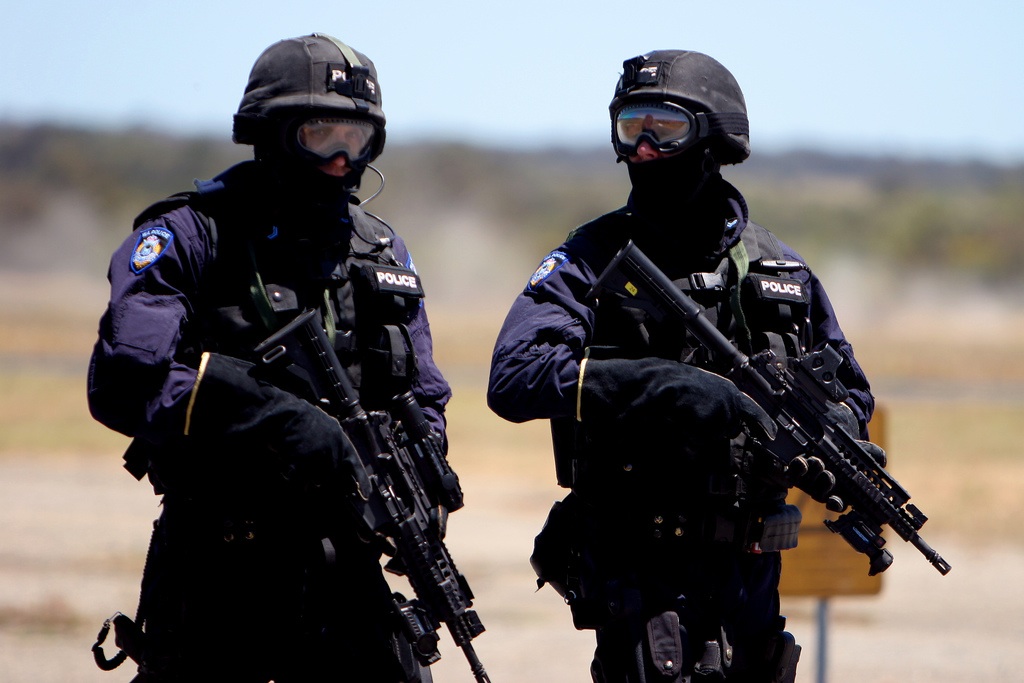
Image courtesy of Flickr user Devar.
Female commentators in IR: we’re here, on our terms

Rodger Shanahan makes two dubious assertions in his post on the ‘forgotten sex’ in international relations (IR). First, that to be commentating and engaging publicly is to be present in the field of IR, and second, to be visible is to be present in the practice of IR. Both these observations are incorrect.

It is true that, due to the dominance of males in foreign policy and IR, and the gendering of issues such as hard power and violence, women do not appear as prominent. Still, the burden of proof should not fall to women to demonstrate our direct public engagement with the field. A cursory glance at the blogosphere and the Twitterverse should leave no doubt as to the presence of female commentators. Just because our presence is not noted on certain fora, does not mean we are unwilling to engage or, worse still, absent.

There are a number of women who regularly blog, comment, exchange, tweet and debate in IR. Most prominently, these include Australian Prime Minister Julia Gillard, Shadow Minister for Foreign Affairs Julie Bishop, US Secretary of State Hillary Rodham Clinton and former director of Policy Planning for the US State Department and Princeton Professor Anne-Marie Slaughter; Australians bloggers and commenters, Leah Farrell (counter terrorism), Sheryn Lee (Southeast Asian politics), Nina Markovic (national affairs), Trish Jha (politics) and Danielle Chubb (North Korea), to name a few; on TV, Aussie journalists and presenters Leigh Sales, the fiesty Virginia Trioli, and Jenny Brockie; on international screens, the indomitable BBC anchor Zeinab Badawi, and countless others at think tanks, NGOs, academia and in the public service.

However, it is more than not looking in the right places to find women. There is a latent issue of discrimination in IR. My blogosphere colleague, Caitlin Fitzgerald, raises the point that our absence can be explained, in part, by the ‘old boys’ feel of foreign policy circles (also, h/t Matthew Hill) which can either be offputting for women or bar involvement. Particularly, in the subfields of international security and defence, this issue persists, and requires serious redress.

Second is Shanahan’s conceptualisation of female participation in the international relations realm. In Shanahan’s view, events such as the Arab Spring have appeared to be a largely male affair. There were countless numbers of women working to achieve change in Arab states. It’s not about looking for as many Amazonian women as you can wielding AK-47s, rolling around in pickup trucks, getting their rebel-ution on. It’s not about taking up a male image of a ruthless, bloodthirsty autocrat that qualifies women as being present. It’s Shanahan’s narrow conceptualisation of “International Relations Woman” and his parameters of reference that merely serve to highlight his idea of their absence.

The point is, we are out there, we are participating, we are commenting, we are engaging publicly but we aren’t always doing it on Shanahan’s terms. As the field of international relations continues to evolve, so too will the markers of presence and participation. So, next time you have something to say about this, Rodger, come and write on my blog. Not the other way around.

Strategy: a symphony, not a solo

By ClosetIdealist

@ClosetIdealist is a security and risk advisor in the private sector, having previously served in the Australian Public Service and in the ADF. 

Since my last post, there have been several developments in the debate about ‘civilian strategists’, including a 15 August contribution from Professor Hugh White.  Hugh, with his conservative definition of strategy as the bridge “between the organised violence … and the political purpose”, has dragged our debate back to first principles.  Before we debate the finer points of what a ‘civilian strategist’ might be, we need to agree on strategy.

At the risk of opening a can of worms with a ‘grand strategy’ label, surely the modern experience of conflict has evolved strategy into something beyond Hugh’s restrictive definition (which I would call military strategy). Most people now instinctively conceive of strategy as implying a more general means-ends relationship.  Clausewitz once wrote that in some cases:

the political object will not provide a suitable military objective.  In that event, another military objective must be adopted that will serve the political purpose and symbolise it in the peace negotiations.

But in modern conflict the use of organised violence may not achieve certain political ends.  The political object might not be the surrender or battlefield defeat of an opposing nation; contemporary goals are more ambitious and require something beyond organised violence.  Liddell Hart wrote that the role of grand strategy is “to coordinate and direct all the resources of a nation, or a band of nations, towards the attainment of the political object of the war”. For the purposes of our debate, this serves as a useful, contemporary definition of strategy.

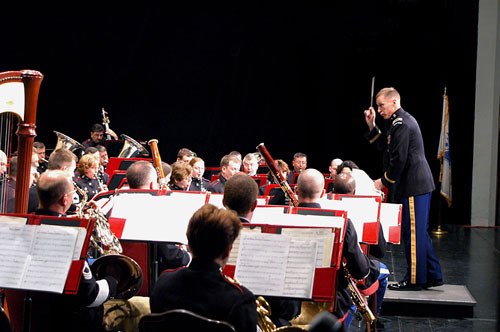
To slightly twist Rodger’s orchestra analogy, as political goals have become more ambitious the “orchestra” of means available to any given nation has also grown, requiring the team of composers (strategists) to exercise an interdisciplinary approach.  Military musicians once dominated the orchestra’s membership, but now there is a different range of measures that can augment, enhance or replace organised violence.  Progress towards political objects might now involve the application of diplomatic pressure to other nations, the use of aid to equip rebel groups or build infrastructure, the manipulation of economic markets or the conduct of cyber-attacks to cripple an adversary’s systems.  To touch briefly on another aspect of the debate, when civilian musicians were accepted into the orchestra, perhaps ‘civilian strategists’ were required to bridge the gap between their means and the political object ends.

To extend the analogy slightly, when governments set their requirements and request that a musical piece be written, they expect their strategists to compose a strategy that considers all of the means available to a nation; no listener would be satisfied if they expected to hear an orchestral piece, but instead were subjected only to a drum solo of organised violence!  In the modern era, strategic goals are pursued with “whole-of-nation” strategies, requiring the orchestra to contain musicians with experience in diplomacy, aid, economics, cyber-security, intelligence and perhaps even private business.   As anyone who has played music in a band or orchestra will tell you, teamwork is key – all of the instruments must play their part in time, each instrument must be played well and in a way that complements or enhances the overall performance.

Putting these arguments aside, Rodger is unsure as to whether “Australia’s political, diplomatic or security circumstances demand, or allow us to produce these types of people” (i.e. strategists).  This is a very scary thought.  Australia will very likely face a myriad of strategic challenges over the next half-century: the rise of China, shifting regional dynamics and power, global financial instability, the list goes on.  To suggest that we cannot produce the people required to respond to these challenges is the equivalent of throwing in the towel at a national level.

Some of Australia’s strategic policy decisions in recent times have proved disappointing, while some have proven successful not due to skill, insight or forethought, but rather sheer dumb luck.  There are of course many challenges in generating a culture of strategic excellence, but surely these challenges do not excuse failure. For years we have been known as the lucky country and recent global events have surely reminded us of this fact, but will the adage of ‘better lucky than good’ continue to hold true for Australia?  If Rodger is correct – if we are unable to identify, train and position Australian strategists to confront these challenges – then we had better hope our luck holds out indefinitely.

Image courtesy of the United States Military Academy Band.

In defence of civilian strategists

@ClosetIdealist is a security and risk advisor in the private sector, having previously served in the Australian Public Service and the ADF. 

I read Rodger Shanahan’s recent post with much interest and a little despair.  My background also crosses several disciplines, including a brief stint in the Australian Army.  A key principle in Rodger’s argument – that junior leaders in the ADF are expected ‘to take into account the strategic environment’ – doesn’t exactly accord with my experience in uniform.  Sure, training activities noted that in some circumstances things had to be done differently due to the ‘CNN test’ – the possibility that someone was filming you – but that was about it.  So let’s not pretend that section and platoon commanders are patrolling Oruzgan with a copy of Clausewitz in their day-pack or Evelyn Goh’s ‘omni-enmeshment’ theory at the front of their minds.  The better ones might be thinking about the practical application of COIN doctrine, but I’m not sure that this compares to strategy at the highest levels.

I’m also a ‘putative strategist’: I studied at the Strategic and Defence Studies Centre at the Australian National University and served in the Australian Public Service before moving to the private sector.  Interestingly, many of Rodger’s ‘putative strategists’ – often post-graduate qualified public servants or intelligence analysts – have keenly sought to serve Australia’s national interests in Afghanistan.  Many saw room for an expanded AusAid presence, one focussed not on Canberra’s goal of ‘spending the budget’ but on achieving results through integration with ADF operations.  When it became clear that an increased Australian presence was not politically feasible, some sought to work for the Americans in other areas of Afghanistan.  In my experience, these ‘putative strategists’ do not consider themselves as superior to those in uniform.  Many have expressed a willingness to serve their country in dangerous roles overseas, some have done so and still others have found their dreams frustrated by weak decision-making in Canberra.

I don’t think the ‘lack of mutual understanding’ is helped by the fact that some in the ADF feel that only those in uniform have the moral right and professional expertise to comment on Defence policy.  It’s forever humbling to remember that while I served in uniform I was a willing participant of this culture, where civilian commentators and strategists were routinely dismissed as ‘<expletive> civvies’.  It is certainly true that those in uniform have a unique and indispensible perspective, one rarely attained by non-combatants.  And I think the broader thrust of Rodger’s argument – that ‘civilian strategists’ should endeavour to understand the pressures and challenges faced by those who carry out the operations that achieve strategic priorities – is valid and worthwhile.

But the ADF has also reached a point where some painful, honest introspection might be beneficial.  Put simply: ADF members should remember that they, ultimately, do not define the Australian Government’s strategic goals.  Civilian decision-makers, hopefully in conjunction with senior ADF officers, will set strategic goals, identify risks and will indirectly determine, through this strategic planning process, what operations the ADF will conduct.  But those decision-makers probably won’t ever have crawled out of their sleeping bag – wet, cold and hungry – to do the graveyard shift of picket duty.  Nor will have they experienced the ‘two-way rifle range’.  So, it is the job of the senior military officers in any strategic planning process to ensure that the ‘ground-truths’ are not overlooked; that the operational objectives derived from strategic intent are realistic and achievable.

Importantly, it must be remembered that strategic intent drives the operational goals.  Rodger has commented that a well-regarded (civilian) scholar was ‘caught up in the emotion of the moment’ when writing a blog post, because the author showed ‘a complete lack of understanding of what motivates soldiers’. I think Rodger’s argument overlooks the fact that soldiers are employed to conduct operations, which in turn are meant to progress towards – and eventually achieve – strategic goals.  That some who argue for a withdrawal from Afghanistan choose to omit from their argument ‘the impact of such a suggestion on the tactical environment outside the wire’ does not automatically suggest a callous disregard for ADF members in Afghanistan, rather it implies that the strategic priorities of the Australian Government are more important that the feelings of those in uniform, a counterpoint noted (by a civilian) here.  This has always been the case and to suggest a reordering of priorities would be the equivalent of putting the operational cart before the strategic horse.

I chuckled when I read that Rodger is unsure as to what a ‘civilian strategist’ looks like.  Aside from some notable American exceptions, I am at a loss to identify what a modern-day ‘military strategist’ looks like!  Where is strategy taught to ADF officers?  At the Australian Command and Staff College?  Based on a recent round of job advertisements, it seems that someone in the ADF must hold the ANU’s ‘civilian strategists’ in high regard!  I fully agree with Rodger’s point that “’strategist’ is not a qualification – it is an appellation one can give oneself”, but we mustn’t forget that this sword cuts both ways, applying equally to both those in suits and those in uniform.  For effective strategic policy, Australia needs strategists in uniform, strategists wearing suits at Russell Offices, and strategists elected to Parliament.

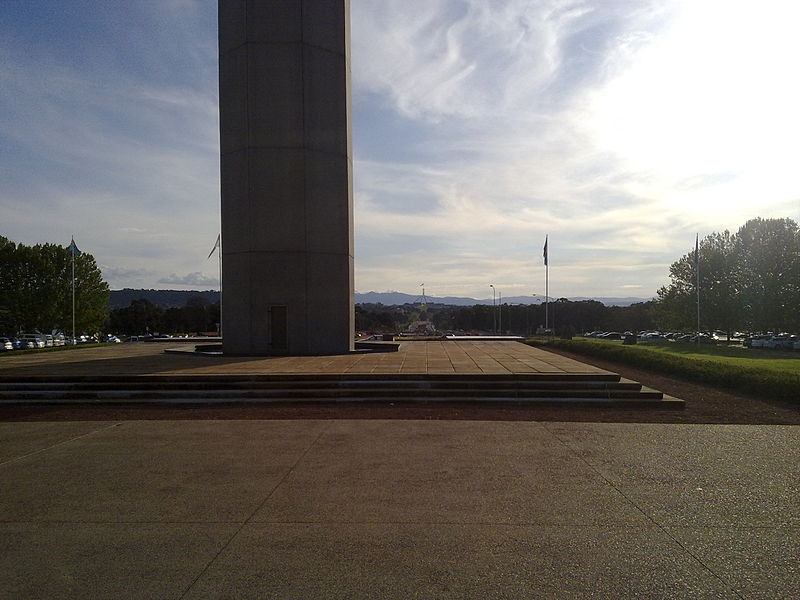
Image courtesy of Wikipedia. The view from the Department of Defence, Russell Offices to Parliament House in Canberra.

There is no justification for risking Australian lives in Afghanistan: a review

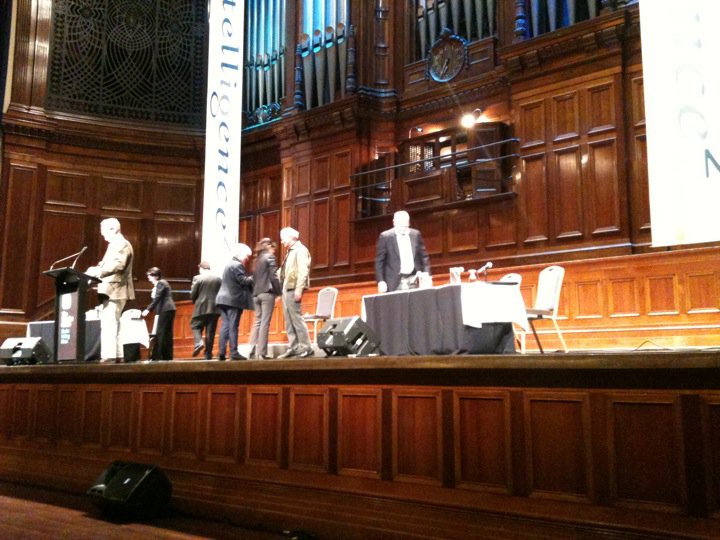
On a chilly Thursday night, we descended upon Melbourne Town Hall to listen to our friend and colleague, Raoul Heinrichs, partake in the Wheeler Centre debate on Afghanistan. We came to hear whether the war effort would be savaged, whether Australian lives would be needlessly lost, whether there was hope for the Afghan people, or whether we, as a country, were wasting our time. We came to hear a lawyer, a scholar, a prominent feminist, a retired general, a young Afghan woman, and a philosopher. We came to hear their perspectives and experiences. We came to observe the public’s reactions; to hear how everyday people received and digested narratives of Afghanistan. I wanted to see whether people still remembered we were in war.

The topic of Thursday’s debate, “There is no justification for risking Australian lives in Afghanistan”, was always going to be hard to stick to. There was a sense of mission creep; a tendency for speakers to appeal to the broader merits of foreign intervention in Afghanistan, rather than centring on the specific risk to Australians (civilian and military) serving there. The affirmative team took the view that the intractability of the conflict dictated that no further Australian lives were worth risking. While each speaker had their own spin on this theme, they all concentrated on what they saw as the dire security situation on the ground, the lack of proper resourcing, and the lack of strategic interests beyond the ANZUS treaty (which, in Heinrichs’ view, we have already satisfied).

Central to the affirmative’s case was that the war in Afghanistan has been a debacle from the start. It lacked strategic direction and caused more problems than it sought to solve. Sadly, overlapping and slightly wayward directions by the first and third speakers undermined the overall coherence of their message, but in their moments, each speaker shone. In particular, lawyer Kellie Tranter impressed upon the audience that, in an environment of information shortages from the Department of Defence and Australian Government, it is difficult to appraise whether this war is worth our while. Strategist and scholar, Heinrichs, for his part, concentrated on the specific strategic interests to Australia in evaluating whether more lives lost in Afghanistan was worth the gain. Lastly, feminist Eva Cox’s gem was highlighting the disjuncture between our purported concern for the Afghan people and our treatment of Afghan asylum seekers with the recent Malaysia solution. While this was slightly off the mark, it nonetheless reflected the human complexities of the issue that the audience, no doubt, would react to.

On the negative side, MAJGEN (rtd) Jim Molan’s strong and authoritative introduction outlined the parameters of their case. The negative side would prove that there are sufficient strategic and moral imperatives for Australia to pursue in Afghanistan, and this was worth Australian lives. And indeed they did. Molan provided a frank assessment of the reasons why the strategic imperatives of regional stability and alliance management buttressed our cause there, but introduced more moral elements of the case. This latter theme dovetailed well with the impassioned and personal speech by Sonia Zaiee who reflected on her war-tainted childhood in Afghanistan. She contrasted these anguishing images with the hope of education and promise of reconstruction now possible from Australian presence, it seemed. Philosopher Peter Singer further ran with moral arguments for intervention, citing the plight of Afghan women, taking pains to stress that a vote for the motion signalled a ‘no’ for Australian aid workers in Afghanistan. While the negative team started on a strong note, the generalist approaches of the second and third speakers allowed the topic to stray away from the central element of the topic, namely “Why Australia?”

Overall, the debate represented the myriad views of the Australian public. And yet people have these divergent views about the conflict because of the piecemeal information and public narrative on offer. These opinions, coupled with questions from the audience, also highlighted, importantly, the lack of certainty with which we can say Australia’s presence there is a good or bad thing. There are indeed good things in Afghanistan for which Australian soldiers fight but there are inordinate and acute risks for what is a seemingly unclear overarching strategic interest.

And all while the debate continued, my live tweets of the event were punctuated with reports of an attack on Uruzgan province, the slice of Afghanistan for which Australia fights. The revelation of this attack, with its perfect timing, could have brought down the case of either side: for the affirmative, in support of a deteriorating security situation, and for the negative, in support of the need to maintain presence. For me, each side’s unwitting ignorance of the exact and immediate situation on the ground, with all its complexities, reflected the incomplete way in which we, the Australian public, seek to understand this conflict. And all the while, our theorising and arguing parallels another reality on the ground. Such is the nature of how this conflict plays out in the Australian psyche. Either way, the audience decided that the negative case had been the more compelling, and that there was justification for risking Australian lives in Afghanistan.

What Wibowo means for Australia

Natalie Sambhi is an ANU Hedley Bull Scholar graduate and co-editor of Security Scholar.

Greta Nabbs-Keller, in her 7 July post  on the promotion of Lieutenant General Pramono Edhie Wibowo to Army Chief of Staff, is right to highlight the tenacity of Indonesia’s martial roots in its present-day democratic setting. However, this and other recent posts on Indonesia’s military (TNI) miss the implications of such developments for Australia. In the case of Wibowo, there are three questions for Australia.

First, what does Wibowo’s immediate promotion mean? Greta does not mention that Wibowo is the former head of the Indonesian Army Special Forces (Kopassus). The good relationship enjoyed between Australian special forces units (particularly the Special Air Service Regiment) and Kopassus is indicative of strong ADF-TNI cooperation. Security cooperation has, after all, been a significant and enduring part of Australian engagement with Indonesia, and these links have served us well, particularly in times of diplomatic strain.

Second, to what extent will Wibowo’s promotion affect military ties with other partners? Indonesia has stepped up its cooperation with Chinese and US special forces. Exercise Sharp Knife, a joint anti-terrorism exercise held between Kopassus and Chinese special forces in early June, marked a step towards thawing military relations between the two countries. The US lifted its ban on engaging with Kopassus in June of last year. Since then, the relationship — seen by some as the ‘barometer’ of overall US-Indonesia relations — has been steady.

Third, if Wibowo rises to greater political heights, how will Australia reconcile this with his track record on human rights and the perceived nepotism behind his appointment? As I have argued here previously, reconciling our democratic values with regional strategic imperatives is not impossible, but no cakewalk.

If generals are, as Greta suggests, what Indonesian political parties want, then Australian leaders, both civil and military, should fully appraise the role that figures like Wibowo will play and should use the relationships we have built with them.

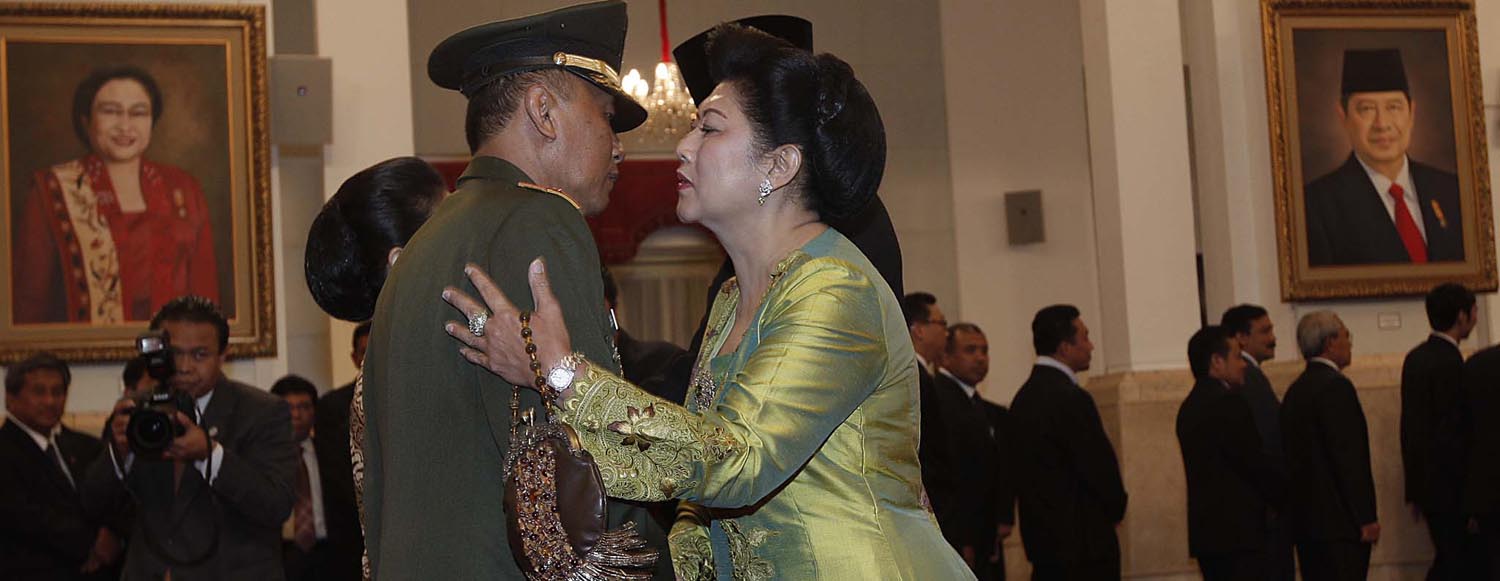
Photo courtesy of official website for the President of the Republic of Indonesia: First Lady, Ibu Ani Yudhoyono congratulations her brother, LTGEN Wibowo, at his promotion ceremony.

A version of this post first appeared on the Lowy Institute’s blog, The Interpreter.

Separating strategy and tactics in the Afghanistan debate

By Natalie Sambhi and N.R. Jenzen-Jones

While we do not subscribe to all that Raoul Heinrichs proposes in his 31 May Lowy Interpreter post, we feel it necessary to outline our position relative to some of the claims Rodger Shanahan makes in his 1 June rejoinder to Raoul. In short, while Raoul is wrong about the ADF, Shanahan is wrong about strategy.

Nowhere in Shanahan’s post does he acknowledge the final note upon which Raoul’s piece actually hinges: that is, there is a need to measure our tactical and operational gains and losses against a clear strategy for Australia’s continued involvement in Afghanistan which, in Raoul’s opinion, is absent. Against a weak strategy, human costs are magnified, and it is the responsibility of those in the strategic realm but more importantly the political realm to do so. In fact, to not do so would violate the very covenant Shanahan holds sacred, that of the social contract between soldier and government.

Soldiers do not fight for strategy; on that point Shanahan is correct. But neither do they fight simply to “leave the area for which you have responsibility in better shape than you found it”. This idea in itself is a strategic concern, and certainly not always the goal of warfare. Shanahan appears to use this point as a fulcrum for suggesting that gains made to date directly translate to current strategic imperatives. Of course, these fluctuate with time and circumstance; and we have been in Afghanistan for near on ten, strategically-shifting years.

At the end of the day, both Shanahan and Raoul are focussed on the tactical level manifesting in their concern for the welfare of the soldier, except that Shanahan has also left considerations of strategy behind.

Postscript: For further views on this debate, Crispin Rovere advances similar arguments to the above in a 2 June Lowy riposte while @ClosetIdealist further teases out Australia’s strategic interests in Afghanistan on a 3 June Pynx blog post.

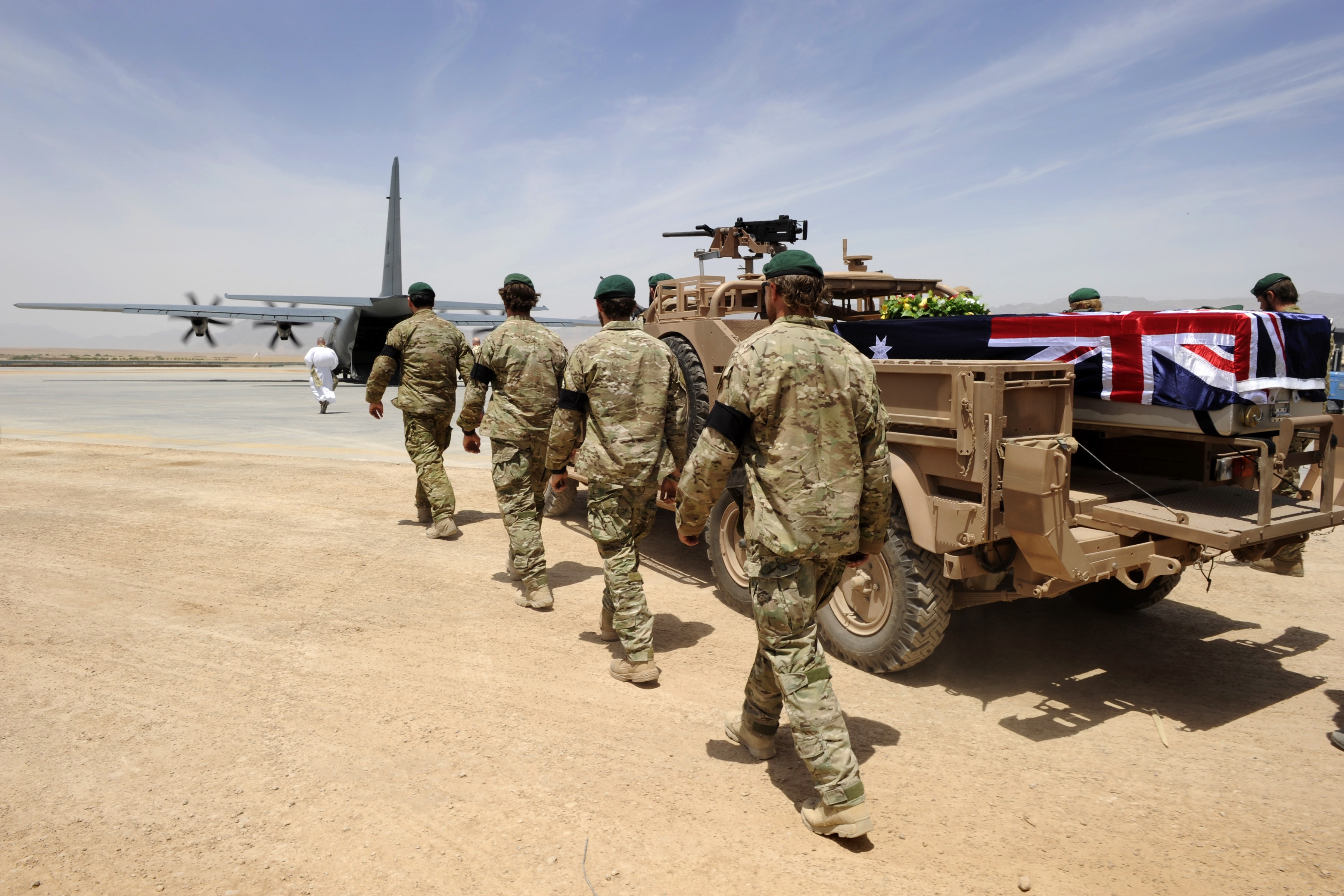
Image courtesy of Department of DefenceMembers of commando SGT Brett Wood’s platoon escorted his coffin at Tarin Kot airfield where a C-130 waited to commence his repatriation.

An SOTG squirrel so secret …

By Natalie Sambhi and N.R. Jenzen-Jones

By chance, we stumbled across an interesting addition to the Department of Defence’s Afghanistan frontpage: video footage of Australian troops in Afghanistan, including the SOTG.

The latest SOTG footage (video here) relates to an incident on 6 May 2011 in which members of the SOTG administered first aid to Afghan civilians injured by an IED. While the faces of SOTG soldiers and Afghan civilians have been obscured, the footage (which appears to have been recorded with a helmet-mounted camera) provides only momentary insight into operations there.

Moreover, there appears to be no announcement of what seems to be a step towards greater visibility of Australian operations in Afghanistan.

Defence still appears to be lurching towards greater (though currently modest) openness but lags behind coalition partners. ISAF partners including US, UK, Germany and the Netherlands to name a few, have defence ministries and departments that have extensive and regular video footage as a part of their Afghanistan media operations. We acknowledge that some of these partners may have greater capacity to conduct media operations. It seems as though the Dutch have no shortage of video footage of their troops in Afghanistan. In comparison, one decade into the conflict, Defence’s output is sparse.

We have been critical of Defence’s PR machinery here at Security Scholar and can only hope this development marks a milestone on a road towards modernising the public image and accessibility of the ADF. With any luck, an announcement will be forthcoming from Defence so that this latest step towards greater accessibility is not lost on the general public.

Photo courtesy of Flickr user ISAFMedia.

Defence ambiguity on Female Engagement Teams

There appears to be some confusion as to whether Australia has deployed Female Engagement Teams (FETs) in Afghanistan. Last month, around the time of the ADFA sex scandal and the ensuing (but somewhat unrelated) debate on the role of women in combat, the ABC’s Sally Sara reported that the ADF does indeed employ FET to engage with Afghan women.

Other than one March 2011 media release alluding to female ADF participating in a FET, the lead nation of which is unclear, there have been no explicit statements supporting Sara’s claim. This does not necessarily mean her claims are false; rather Defence has remained coy on the matter (I deconstructed the ambiguity of the media release in this March post).

One would think that, at the height of the women in combat debate, it would have been an ideal time either to back up Sara’s statement on ADF FET by way of clarification, or even take the opportunity to talk up the work of female ADF members in Uruzgan and beyond. Sadly, no such statements have been forthcoming.

Image courtesy of Department of Defence.

Reader reply: Defence PR still stuck in first gear

Tom Hyland is currently International Editor of the Sunday Age:

I wish it was true, but I’m not sure I agree with you when you say defence is getting its PR into gear. The pics and press release relating to the SOTG coming to the aid of survivors of the IED blast were issued a week after the event. Even allowing for the torturous ADF decision-making process, and the possible op-sec issues, reporting something one week after an event means it’s not news, it’s old.

Secondly, the pics and press release were issued on a Friday afternoon, timing that is almost certain to guarantee an item won’t be published in any of the major dailies on Saturday, because of early print deadlines.

Thirdly, the faces of the people in the pics – the doctors, medics and victims – are all pixillated. There may be reasons for this, but it doesn’t enhance chances of these images being reproduced in the media.

And finally, the press-release is written in a wooden style, with no emotion or human content. Where are the quotes from the troops involved? And where did this incident happen? Who were the people involved? Where were they from? Where were they going? Now maybe the target audience for this press release and associated pics wasn’t the Australian media. Who knows.

As for the surge in official reporting of SOTG activities, at least some of the ADF releases were issued well after ISAF had reported these incidents.

Again, I hope you’re right, but I’m not sure this indicates the ADF has got its PR act together, or that it’s decided to be more candid.

There’s an interesting piece on page 13 of the latest edition of Army newspaper. It quotes soldiers in Deh Rawoud, recounting combat in December, including one contact that lasted more than seven hours. Yet this stuff wasn’t the focus of any ADF press releases at the time.

Of course this wouldn’t be an issue if the Australia media thought it worth their while to base reporters full-time in Oruzgan. But don’t start me on that one.

Image courtesy of The Age.